
Here’s what you’ll find in this guide:
- Practical Ahrefs alternatives for small businesses
- Updated 2025 pricing and features
- Clear picks for bloggers, service sites, and small teams
Ahrefs alternatives for small businesses aren’t about finding a cheaper clone of Ahrefs. They’re about finding an SEO tool that actually fits how a small business works: limited time, limited budget, and zero patience for tools that feel powerful but impractical.
Ahrefs is an excellent platform, but for many small businesses it’s simply too much. Too expensive. Too deep. Too focused on power users who live inside SEO dashboards every day. If you’re running a local business, a growing blog, a small eCommerce store, or a service site, you don’t need the biggest backlink index on the planet — you need clear answers and actions that move the needle.
This guide exists for that exact reason.
Reasons Why Small Businesses Start Looking Beyond Ahrefs
Most small businesses don’t leave Ahrefs because it’s bad. They leave because the return on investment stops making sense.
You might recognize some of these situations:
- You mainly need keyword ideas, rank tracking, and basic site health checks
- You’re paying for features you rarely touch
- You want simpler reporting without exporting everything to spreadsheets
- You need predictable monthly costs, not usage anxiety
At a certain point, Ahrefs feels less like a growth tool and more like overhead.
That’s where smarter alternatives come in — platforms built to balance data quality, usability, and cost, without assuming you have an in-house SEO team.
What “Ahrefs Alternative” Really Means for a Small Business
For small businesses, an Ahrefs alternative doesn’t mean “less powerful.” It means more focused.
The right alternative should help you:
- find keywords you can realistically rank for
- monitor rankings without obsessing over noise
- understand basic technical issues before they become problems
- keep an eye on backlinks without drowning in data
Most importantly, it should help you make decisions faster, not slower.
Some tools specialize in keyword research. Others shine in rank tracking or site audits. A few manage to combine all of this into one platform that small teams can actually use consistently.
One example that often comes up in this context is SE Ranking, which many small businesses adopt as a more balanced, cost-effective alternative once Ahrefs feels excessive. You can see a full breakdown of how it compares feature-wise in the SE Ranking Review 2025, especially if you’re looking for an all-in-one tool rather than multiple point solutions.
Who This Guide Might Benefit
This article is written for:
- small business owners handling SEO themselves
- freelancers managing a few client sites
- bloggers and niche site builders monetizing through content
- eCommerce stores that rely on organic traffic for sales
If you’re running enterprise SEO campaigns or managing massive link-building operations, Ahrefs may still be the right fit. But if SEO is one growth channel among many, the alternatives below are often a better match.
What You’ll Get From This Comparison
Instead of listing every possible SEO tool, this guide focuses only on Ahrefs alternatives that make sense for small businesses in 2025. Each tool is evaluated based on:
- how practical it is in daily use
- whether the pricing aligns with small business budgets
- how much SEO knowledge it assumes
- where it saves time compared to Ahrefs
You’ll see clear use cases, realistic expectations, and honest trade-offs — not marketing promises.
Why Small Businesses Outgrow Ahrefs Faster Than They Expect
For many small businesses, Ahrefs starts out feeling impressive. The data is deep, the interface looks professional, and the backlink reports seem endless. But once the novelty wears off, a more practical question shows up: am I really using enough of this tool to justify the cost and complexity?
This is where a lot of small business owners pause. They might be checking backlinks once or twice a month, running occasional keyword research, and glancing at rankings to see if content is moving in the right direction. In those situations, Ahrefs can feel less like a growth tool and more like a heavy control panel that rarely gets touched.
That’s why searches for Ahrefs alternatives for small businesses have grown steadily. People aren’t looking for a downgrade. They’re looking for tools that feel more proportional to their needs.
What Small Businesses Actually Need From an Ahrefs Alternative
When you strip SEO back to what most small businesses genuinely rely on, the requirements are far simpler than most enterprise tools assume.
Keyword research needs to answer one thing clearly: can I rank for this without wasting months of effort? Rank tracking should show trends without forcing you to interpret complex graphs. Site audits should flag issues that matter, not bury you in technical edge cases. And backlink data should help you spot opportunities and risks without overwhelming you with raw numbers.
This is why many small businesses end up switching tools after a few months with Ahrefs. The depth is impressive, but the day-to-day usefulness doesn’t always match the price or learning curve.
That’s also why all-in-one platforms designed with smaller teams in mind have become popular alternatives. One example that frequently comes up is SE Ranking, which balances keyword research, rank tracking, site audits, and backlink monitoring in a way that feels more approachable for growing businesses. Its positioning as a practical Ahrefs alternative is explored further in the SE Ranking Review, especially for users who want fewer tools and less friction.
Budget, Simplicity, and Predictability Matter More Than Raw Data
Another reason small businesses move away from Ahrefs is predictability. Enterprise-grade tools often assume fluctuating usage, multiple users, and flexible budgets. Small businesses usually want the opposite: stable pricing, clear limits, and a tool they can rely on month after month without surprises.
This is where Ahrefs alternatives often shine. They may not have the largest backlink index in the world, but they focus on consistency and clarity. For a business owner juggling marketing, operations, and sales, that trade-off makes sense.
If your SEO strategy revolves around publishing content consistently, tracking progress, and fixing issues before they snowball, the “best” tool isn’t the one with the most data. It’s the one that helps you act faster with fewer distractions.
That’s also why many small teams end up comparing multiple tools side by side before settling on one. Broader overviews, like the Best SEO Tools for Small Businesses, often help narrow the field before committing to a single platform.
The Shift From Power Tools to Practical SEO Platforms
There’s a noticeable trend among small businesses in 2025: fewer standalone power tools, more integrated platforms. Instead of using one tool for backlinks, another for rank tracking, and a third for audits, businesses prefer solutions that cover the essentials in one place.
This doesn’t mean sacrificing quality. It means prioritizing workflow over raw capability.
Ahrefs remains a strong choice for advanced link analysis and competitive research at scale. But for many small businesses, alternatives provide a better balance between insight and usability. They reduce time spent learning tools and increase time spent actually improving rankings.
That shift is exactly what the rest of this guide focuses on.
SE Ranking: The Most Practical Ahrefs Alternative for Small Businesses
When small businesses look for Ahrefs alternatives, SE Ranking is usually the first serious option they consider — and not because it tries to copy Ahrefs feature by feature. It succeeds because it focuses on what smaller teams actually need to manage SEO without turning it into a full-time job.
SE Ranking positions itself as an all-in-one SEO platform, but the experience feels noticeably lighter than Ahrefs. You’re not dropped into massive reports or forced to interpret dozens of metrics before taking action. Instead, the platform is built around recurring tasks: researching keywords, tracking rankings, fixing site issues, and monitoring competitors at a level that makes sense for growing sites.
For many small businesses, this balance is exactly what Ahrefs lacks.
Keyword Research That Prioritizes Opportunity
SE Ranking’s keyword research is designed to help you answer one practical question: is this keyword worth going after right now? Rather than overwhelming you with raw data, it combines search volume, difficulty, competitive context, and historical trends in a way that’s easier to act on.
This is especially useful for small businesses targeting long-tail keywords, service-based searches, or local intent phrases. You can quickly identify keywords with realistic ranking potential instead of chasing terms dominated by high-authority sites.

SE Ranking Keyword Research Dashboard
Because of this focus, SE Ranking works well for content planning and ongoing optimization, not just one-off research. That’s one of the reasons it’s often recommended as a long-term Ahrefs alternative for small businesses rather than a temporary replacement.
If you want a deeper look at how this compares across platforms, the Best Keyword Research Tools for 2025 breaks down where SE Ranking fits among other popular tools.
Rank Tracking That Feels Built for Real Businesses
Rank tracking is where SE Ranking clearly separates itself from many lightweight Ahrefs alternatives. Instead of treating rankings as a secondary feature, SE Ranking makes them central to the platform.
You can track keywords daily, choose precise locations, monitor competitors, and group keywords by pages or topics. Over time, this gives you a much clearer picture of what’s actually driving growth and where performance starts to stall.
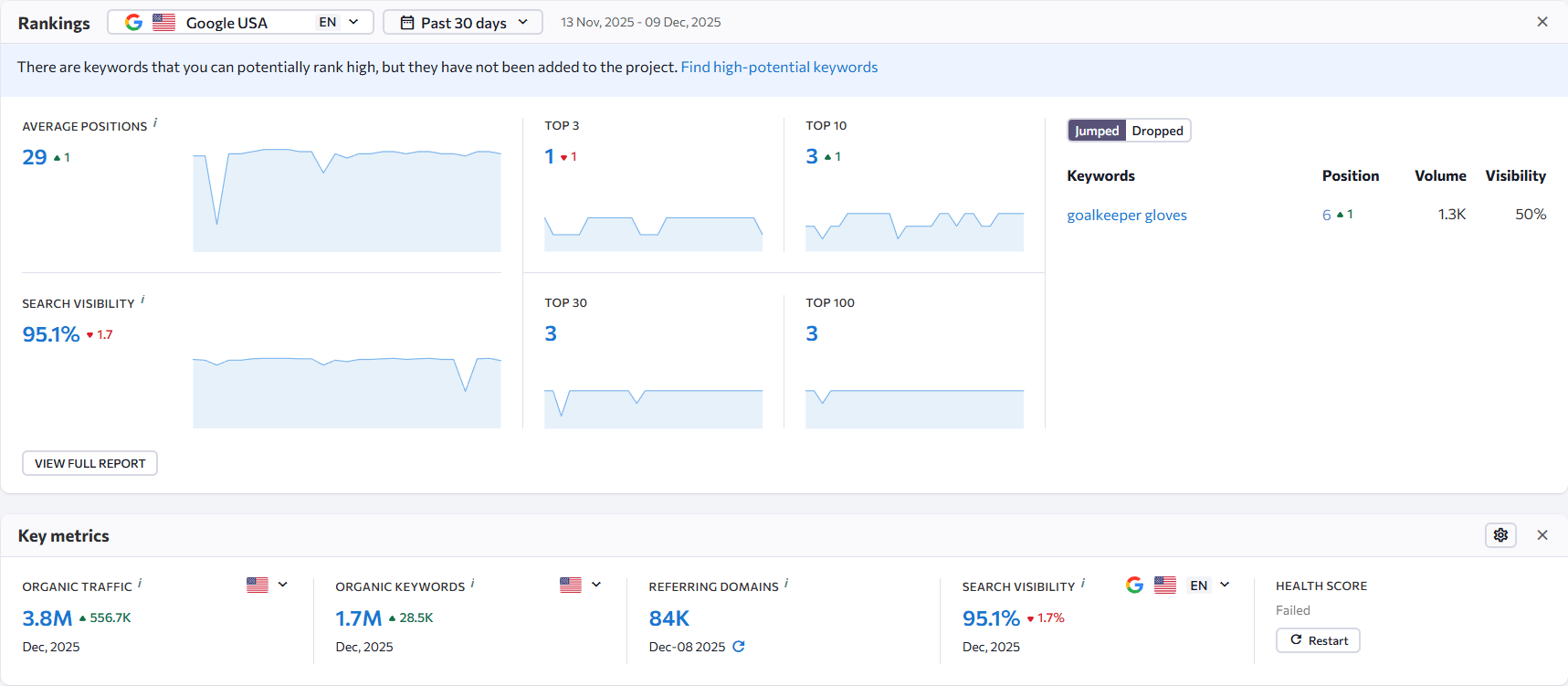
SE Ranking Rank Tracker Overview
For small businesses that rely on organic traffic for leads or sales, this level of tracking removes guesswork. You’re not just seeing whether rankings moved — you’re seeing patterns you can act on.
Site Audits That Help You Fix Problems, Not Just Find Them
SE Ranking’s site audit is another area where it stands out as a strong Ahrefs alternative. Instead of dumping a long list of technical issues, the audit organizes problems by severity and tracks progress over time. This makes it far easier to prioritize fixes without needing advanced technical SEO knowledge.
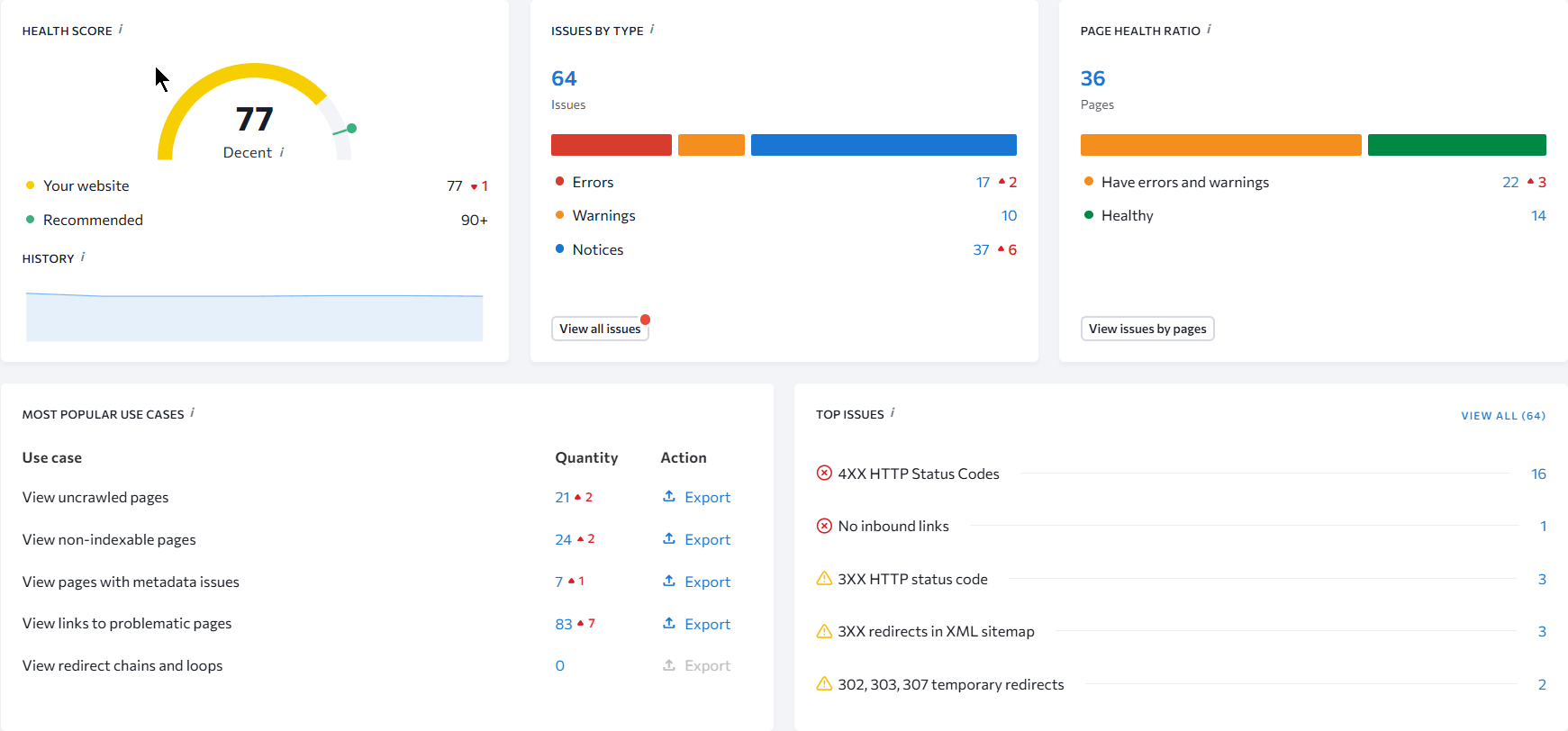
SE Ranking Site Audit Health Score
For small businesses managing their own sites, this turns technical SEO into a manageable process rather than an intimidating one. You can see what changed, what improved, and what still needs attention — without hiring a consultant for every update.
Backlink Monitoring Without the Enterprise Overhead
SE Ranking doesn’t try to compete with Ahrefs on backlink index size alone. Instead, it focuses on backlink monitoring that’s actually useful for small teams. You can track new and lost links, review anchor text patterns, and keep an eye on competitor link profiles without drowning in data.
This makes SE Ranking especially appealing for businesses that want to monitor link growth and spot issues early, rather than run massive link-building campaigns.
Readers who want to compare backlink depth across platforms often pair this with a more specialized tool, which is why many eventually explore options covered in the Ahrefs Review 2025 for deeper link intelligence.
Why SE Ranking Converts So Well for Small Businesses
What makes SE Ranking a strong Ahrefs alternative isn’t just the feature set. It’s the fact that the platform scales with you. You can start small, track a manageable number of keywords, and expand as your site grows — without switching tools every year.
That’s why it’s often recommended for:
❯ small businesses managing SEO in-house
❯ freelancers handling a few client sites
❯ bloggers and content-driven projects
❯ service businesses focused on local and regional search
Lighter Ahrefs Alternatives for Simpler SEO Needs
Not every small business needs the depth or complexity that comes with Ahrefs. In many cases, the real challenge isn’t lack of data, but lack of clarity. Business owners and small teams want tools that help them make decisions quickly, without forcing them to interpret advanced SEO metrics or manage sprawling dashboards.
This is where lighter Ahrefs alternatives come into play. These tools don’t try to replicate Ahrefs at scale. Instead, they focus on the parts of SEO that small businesses interact with most often: keyword research, basic competitive insight, ranking visibility, and general site health.
Used correctly, they can support consistent growth without overwhelming the workflow.
Mangools: A Clean, Keyword-Focused Alternative to Ahrefs
Mangools appeals to small businesses that approach SEO primarily through content. If your strategy revolves around publishing blog posts, optimizing service pages, and targeting long-tail keywords, Mangools feels immediately approachable.
The platform’s strength lies in how it presents data. Keyword research through KWFinder is fast and intuitive, with difficulty scores that are easy to interpret even if you don’t live and breathe SEO. SERP snapshots make it clear what kind of pages you’re competing against, which helps avoid wasted effort on unrealistic targets.
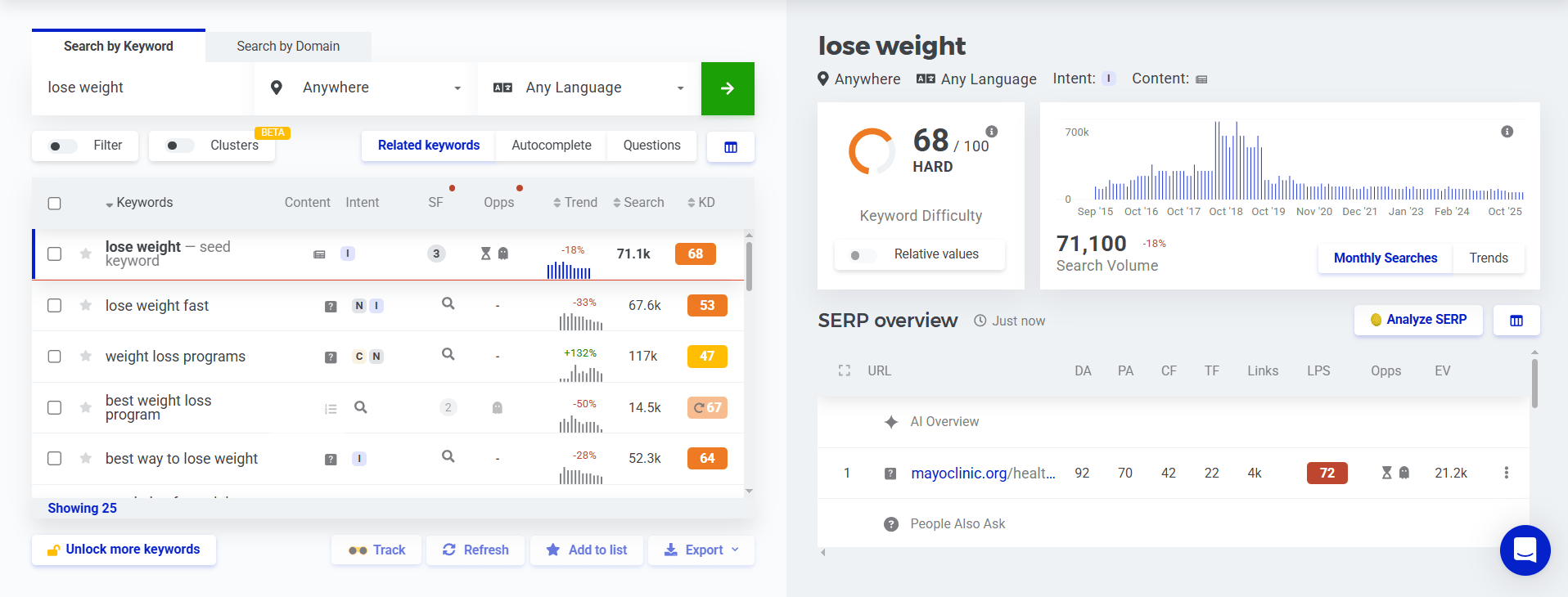
Mangools KWFinder Keyword Overview
Mangools also includes SERPChecker and SERPWatcher, which help users evaluate competition and track visibility trends without turning rank tracking into a complex analytical exercise. For small businesses that want reassurance that their content is moving in the right direction, this level of tracking is often enough.
Where Mangools starts to show its limits is depth. Backlink data is useful for surface-level checks but not designed for serious link analysis. Technical SEO insights are minimal, which means growing sites often need supplementary tools or manual checks.
That trade-off is intentional. Mangools isn’t trying to manage your entire SEO operation. It’s designed to keep keyword research and content planning efficient and low-friction.
Ubersuggest: Accessible SEO Insights With Clear Boundaries
Ubersuggest often enters the conversation when small businesses look for an Ahrefs alternative because of its accessibility. The platform is designed to feel unintimidating, even for users with little SEO experience. Keyword ideas, basic backlink data, content suggestions, and site audits are all presented in a straightforward interface.
For early-stage businesses, this simplicity can be valuable. You can explore keyword opportunities, review top-ranking pages, and identify obvious site issues without needing to understand advanced SEO concepts.
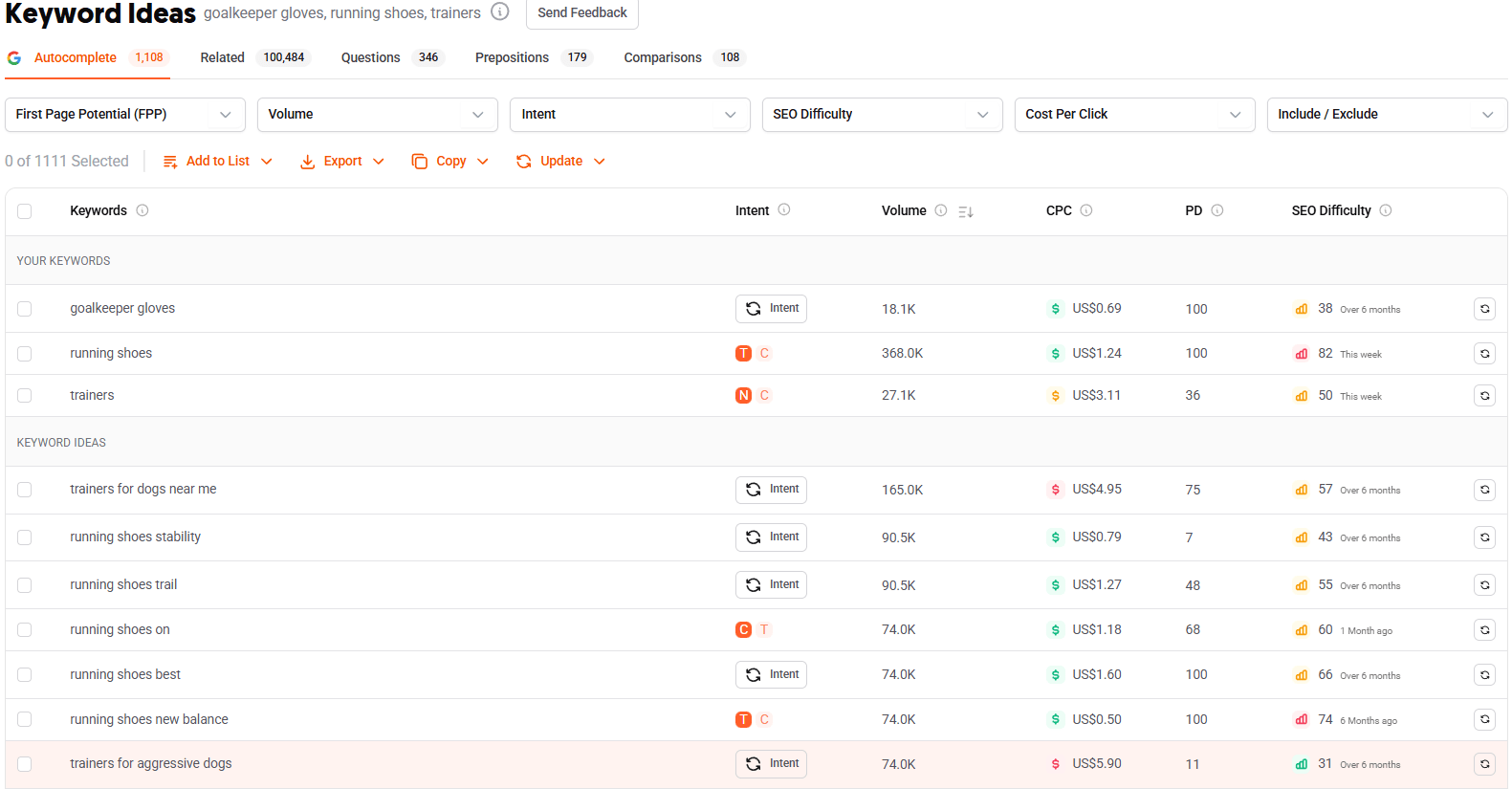
Ubersuggest Keyword Ideas Dashboard
Ubersuggest also includes basic rank tracking and content idea generation, which helps users move from research to execution quickly. For small sites publishing occasionally, this can be enough to build early momentum.
However, Ubersuggest’s limitations become more noticeable as a site grows. Daily search limits, shallow backlink indexing, and limited historical data can restrict long-term planning. Many small businesses start with Ubersuggest, then look for more robust tools once SEO becomes a consistent growth channel.
This makes Ubersuggest a practical entry point, but rarely a long-term replacement for Ahrefs in competitive niches. A more detailed breakdown of where it works and where it falls short is covered in the Ubersuggest Review 2025.
Moz Pro: Authority Metrics and Technical Insight Without Ahrefs’ Complexity
Moz Pro occupies a middle ground among Ahrefs alternatives for small businesses. It offers more depth than lightweight tools like Mangools or Ubersuggest, but remains more approachable than Ahrefs for many users.
One of Moz’s defining strengths is its authority metrics. Domain Authority and Page Authority are still widely referenced across the SEO industry, especially for evaluating link quality and competitive strength. Moz’s Link Explorer provides structured backlink insights, spam scoring, and anchor text analysis that go beyond basic link counts.
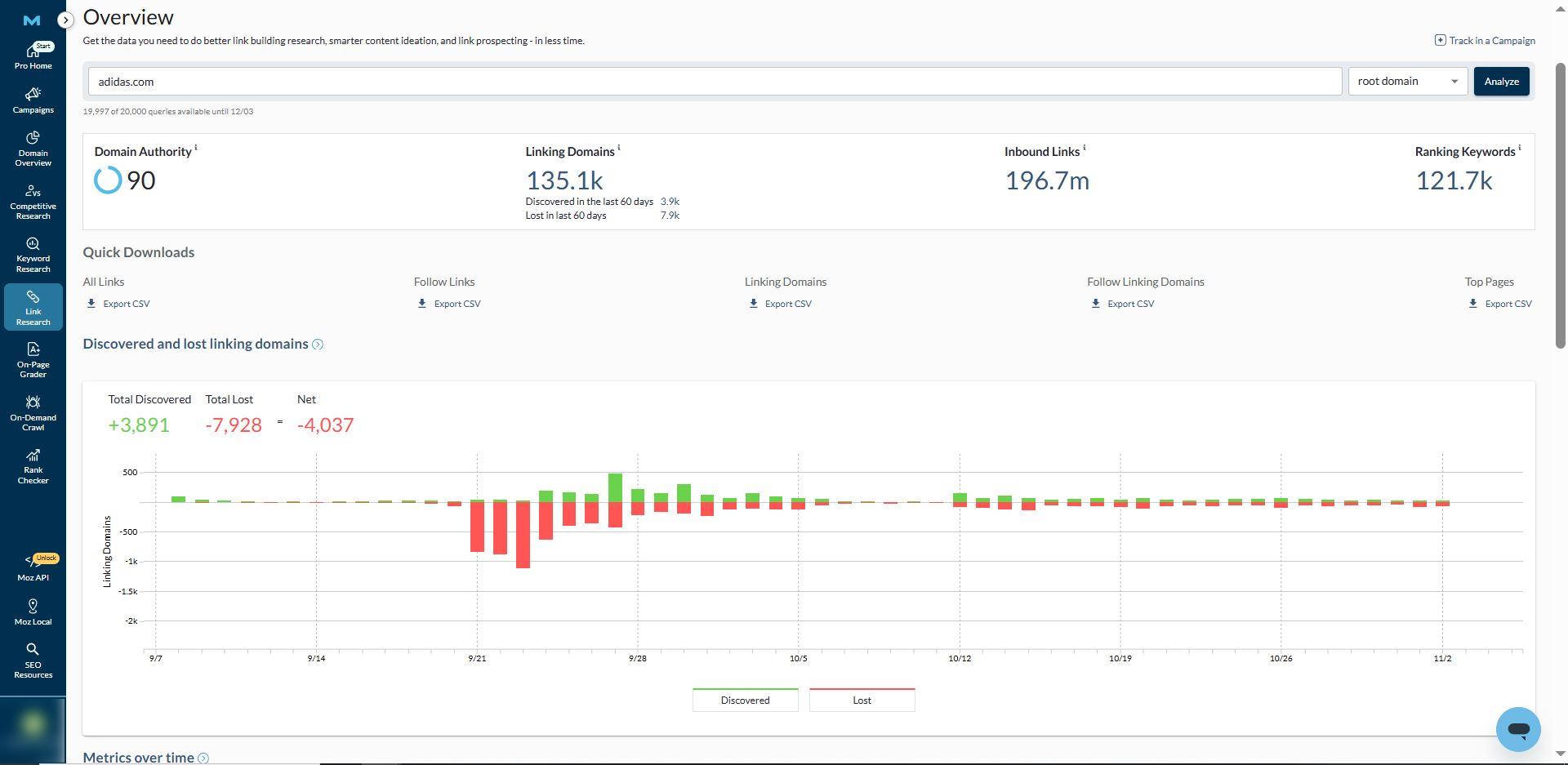
Moz Pro also includes a site crawler that identifies technical issues related to indexability, metadata, and on-page optimization. While not as granular as enterprise-level audits, it offers enough insight for small businesses to maintain technical health without drowning in data.
The trade-off with Moz Pro is workflow speed. The platform feels more methodical than fast, and some users find it less intuitive than newer tools. However, for businesses that care about authority building, link quality, and steady technical oversight, Moz Pro remains a reliable alternative.
Readers considering this balance often explore detailed evaluations like the Moz Review before deciding whether it fits their SEO style.
Why These Tools Work as Ahrefs Alternatives for Small Businesses
Lighter Ahrefs alternatives succeed, because they may align better with how small businesses actually operate. They prioritize usability, predictable pricing, and faster decision-making over raw data volume.
For many businesses, this results in better outcomes. Less time spent navigating tools means more time spent publishing content, improving pages, and responding to real performance signals.
In the final section, we’ll bring everything together and help readers decide which Ahrefs alternative fits their current stage best, supported by a clear, mobile-friendly comparison and conversion-focused CTAs.
Final Verdict: The Best Ahrefs Alternatives for Small Businesses (2025)
For small businesses, replacing Ahrefs isn’t about downgrading. It’s about choosing a tool that fits your actual workload, not an enterprise SEO playbook.
Ahrefs remains powerful, but power comes with complexity and cost. If SEO is one part of your growth strategy rather than the entire business model, the alternatives covered here often deliver better value and less friction.
What matters most at this stage is not how much data a tool can generate, but how clearly it helps you decide what to do next.
Which Ahrefs Alternative Makes Sense for You Right Now?
If you want one platform that grows with your business
SE Ranking is the strongest all-around alternative for small businesses that take SEO seriously but don’t want to juggle multiple tools. Keyword research, rank tracking, site audits, and backlink monitoring live in one place, and the platform scales naturally as your site grows.
If content and keyword research drive most of your SEO
Mangools is ideal when your main focus is finding keywords, validating SERPs, and publishing consistently. It keeps things fast and understandable, which is exactly why many bloggers and service businesses stick with it long term.
For authority, backlinks, and site health
Moz Pro remains a solid Ahrefs alternative for businesses that care about domain authority, link quality, and technical stability. It’s more structured than lightweight tools, but still far less overwhelming than Ahrefs.
If you’re just getting started with SEO
Ubersuggest works as an entry point when budgets are tight and SEO experience is limited. It’s not built for scale, but it can help early-stage sites understand keywords, competitors, and basic site issues.
Quick Comparison: Ahrefs Alternatives for Small Businesses
| Tool | Best For | Free Trial / Free Plan | Starting Price (USD/month) |
|---|---|---|---|
| SE Ranking | All-in-one SEO for growing small businesses | 14-day free trial (no credit card required) | 65 |
| Mangools | Keyword research + simple rank tracking for content-focused teams | Free plan (time-unlimited) + 10-day Free+ for new users (no credit card) | 49 |
| Moz Pro | Authority/backlink + technical SEO suite for structured teams | Try it free (trial offered on pricing page; length not stated on the page snippet I could access) | 49 |
| Ubersuggest | Beginners who want simple SEO workflows + lifetime option | 7-day free trial (monthly subscriptions) | 29 |