

- A clear breakdown of the best SEO tools for small businesses and how they actually perform in 2026
- Up-to-date pricing, plan limits, and realistic usage expectations for small teams
- Practical walkthroughs of core SEO workflows with exact in-tool click paths
- Honest comparisons between popular platforms, including strengths, limitations, and trade-offs
- Clear guidance to help you choose the right SEO tool based on budget, experience level, and business goals
Best SEO tools for small businesses determine how efficiently limited resources turn into visibility, leads, and sales in 2026. Search competition continues to intensify, and smaller companies now operate in an environment shaped by AI-powered SERPs, aggressive affiliates, and increasingly sophisticated local competitors.
For small businesses, SEO tools influence far more than rankings. They shape which opportunities get prioritized, how quickly teams move from insight to action, and whether organic search becomes a dependable acquisition channel or an ongoing experiment with unclear outcomes.
This guide evaluates SEO platforms based on how they perform inside real small business workflows in 2026. The focus is on execution, clarity, and sustained value rather than feature volume or marketing claims.
The Practical Role of SEO Tools in Small Business Growth
In 2026, SEO tools function as operational systems rather than analytical accessories. They guide planning, execution, and measurement across content, technical SEO, and competitive positioning.
For small businesses, effective SEO tools typically support:
- Opportunity discovery that aligns with commercial intent
- Clear prioritization across pages, keywords, and fixes
- Progress tracking that reflects meaningful visibility changes
- Decision-making without constant manual interpretation
Tools that streamline these processes tend to create momentum. Tools that complicate them slow progress, regardless of how advanced their datasets appear.
Who This Guide Is Written For
This comparison is written for teams and individuals responsible for outcomes.
That includes business owners managing SEO internally, marketing managers working with limited headcount, consultants supporting small organizations, and founders who rely on organic search as a primary or secondary growth channel.
The recommendations assume that SEO competes for attention alongside other marketing responsibilities. Tools that require continuous tuning or specialized expertise were evaluated with that constraint in mind.
How These SEO Tools Were Assessed
Each platform included in this guide was assessed using criteria grounded in small business execution. The goal was to measure how well a tool supports progress over time, not how impressive it looks in isolation.
Execution Speed
We examined how quickly users can move from setup to a clear next action. Platforms that surface priorities early and reduce setup friction scored higher.
Workflow Clarity
Tools were evaluated on how naturally core tasks fit together, including keyword research, page optimization, rank tracking, and competitor analysis. Clear workflows matter more than feature depth when teams are small.
Entry-Level Plan Usability
Pricing tiers were assessed based on what a small business can realistically accomplish without upgrading. Keyword limits, project caps, crawl depth, and tracking allowances were all considered.
Data Reliability in 2026
We reviewed how well each tool reflects current search behavior, including keyword update cadence, SERP responsiveness, and backlink discovery speed. Data lag leads to misaligned priorities.
Reporting and Decision Support
Reporting was evaluated based on whether it supports planning and communication. Dashboards that clarify trends and highlight movement scored higher than those that simply list metrics.
Long-Term Fit
Tools were assessed on whether they remain useful as a business grows. Scalability, collaboration features, and expansion paths were all part of the evaluation.
Why Tool Selection Has Become a Strategic Choice
Search visibility in 2026 is shaped by intent interpretation, topical authority, and execution consistency. Small businesses rarely win by doing everything. They win by doing the right work repeatedly.
The SEO tool used daily plays a central role in that process. It influences how priorities are set, how progress is measured, and how confidently teams invest time and budget into organic search.
Choosing the right platform reduces friction and builds compounding gains. Choosing poorly often results in stalled execution and constant reassessment.
Best All-In-One SEO Tools for Small Businesses (2026)
All-in-one SEO platforms appeal to small businesses because they centralize execution. Keyword research, tracking, audits, and competitor analysis live in one environment, which reduces context switching and keeps SEO work consistent over time.
That said, “all-in-one” does not mean “one-size-fits-all.”
The tools below are grouped together because they cover the full SEO workflow, but they differ significantly in depth, cost structure, learning curve, and long-term fit. Understanding those differences is where most buying decisions are made.
SE Ranking
SE Ranking is one of the most practical all-in-one SEO tools for small businesses in 2026. Its strength lies in how clearly it translates SEO data into structured, repeatable workflows.
SE Ranking is commonly adopted by small teams that want visibility into performance without managing multiple disconnected tools. Projects, keywords, competitors, and site health are organized in a way that makes ongoing SEO work predictable rather than reactive.
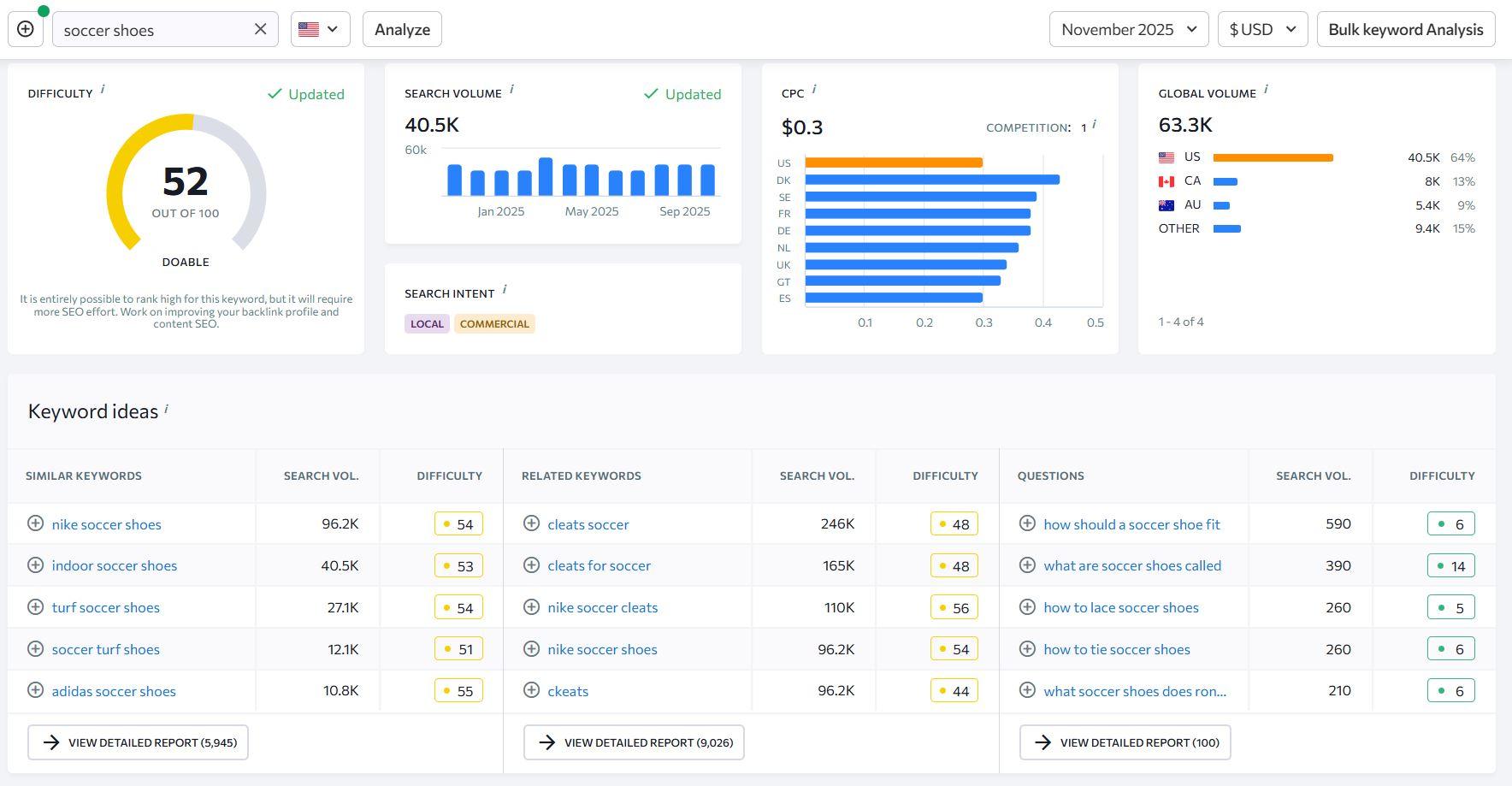
SE Ranking Keyword Research Dashboard
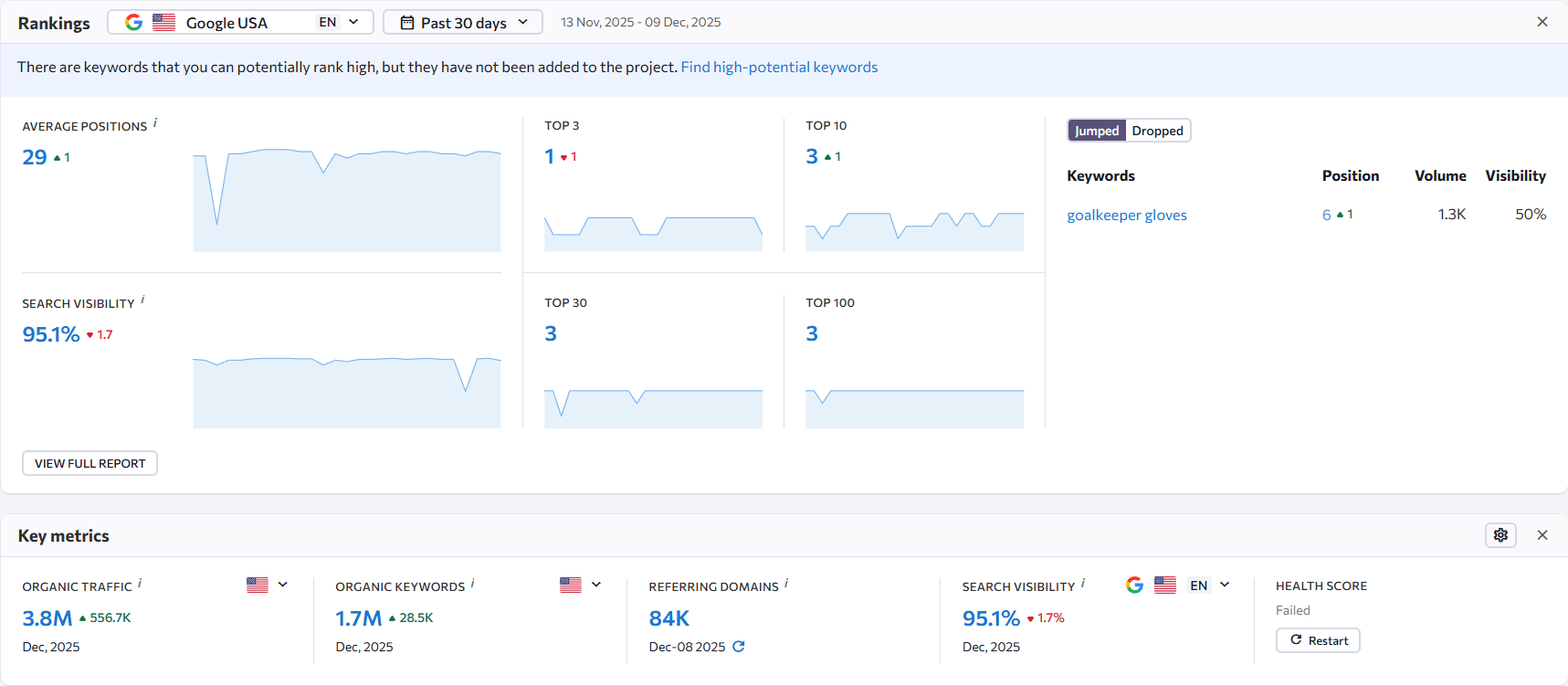
SE Ranking Dashboard Rank Tracking Overview
From a day-to-day perspective, SE Ranking excels in areas that matter most for small businesses:
- Rank tracking that supports both national and local SEO without unnecessary configuration
- Keyword research that balances competitive insight with ease of interpretation
- Project-based organization that scales cleanly as sites add pages or locations
The platform’s backlink data is accurate and sufficient for most small business needs, though it does not aim to match the depth of enterprise-focused tools. For businesses primarily focused on content growth, on-page optimization, and rank progression, this limitation rarely becomes a blocker.
SE Ranking is often chosen as a long-term solution rather than a temporary entry-level tool, particularly by teams that want consistency without enterprise pricing.
For a deeper breakdown of features, limitations, and pricing tiers, check out our SE Ranking review.
Serpstat
Serpstat positions itself as a cost-efficient SEO suite with broad functionality. In 2026, it remains a popular choice for small businesses that want access to keyword research, audits, and competitor data at a lower price point.
Serpstat’s strongest use case is competitive research. The platform makes it easy to analyze domains, uncover keyword overlaps, and identify gaps without navigating complex workflows.
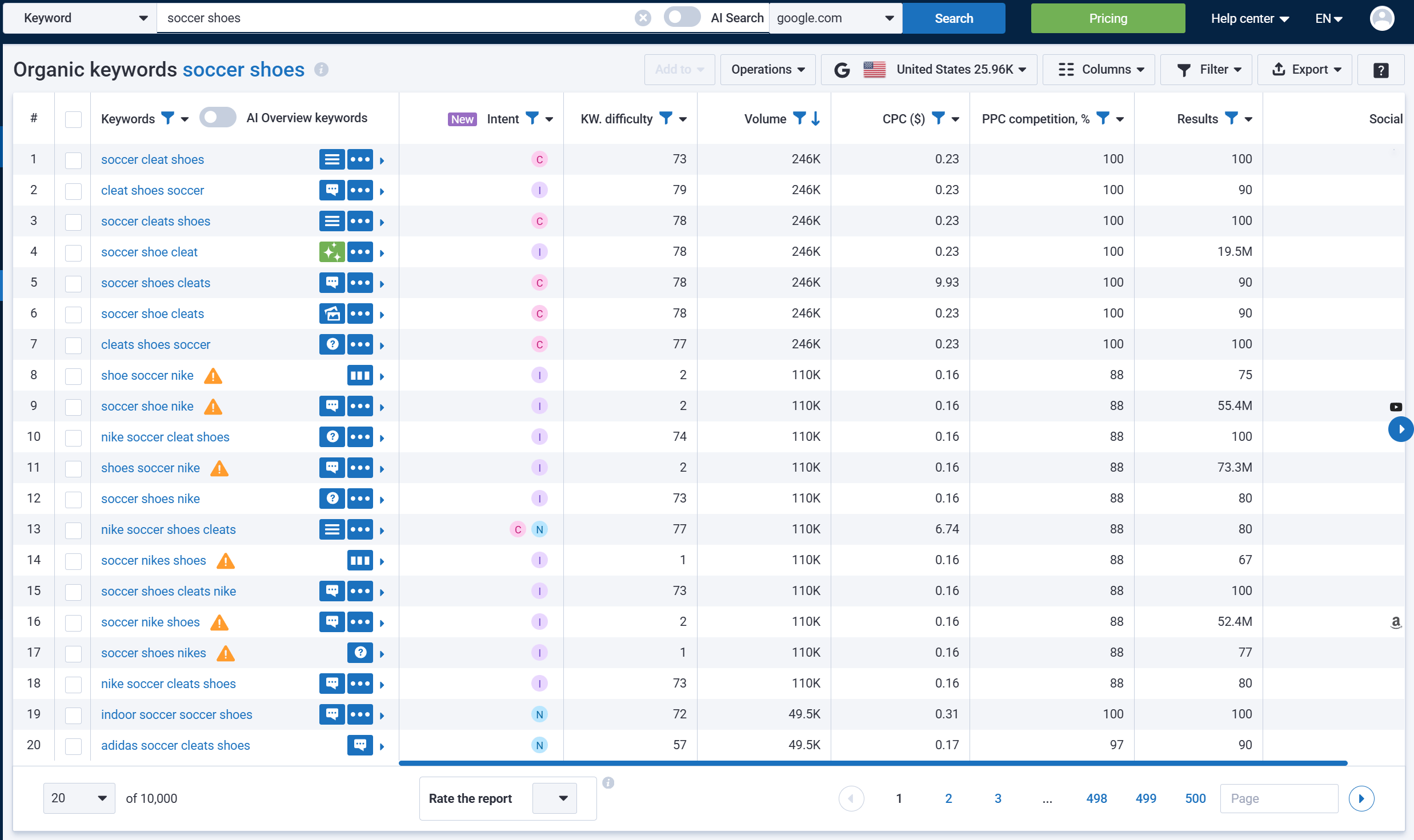
Serpstat Keyword Research Overview
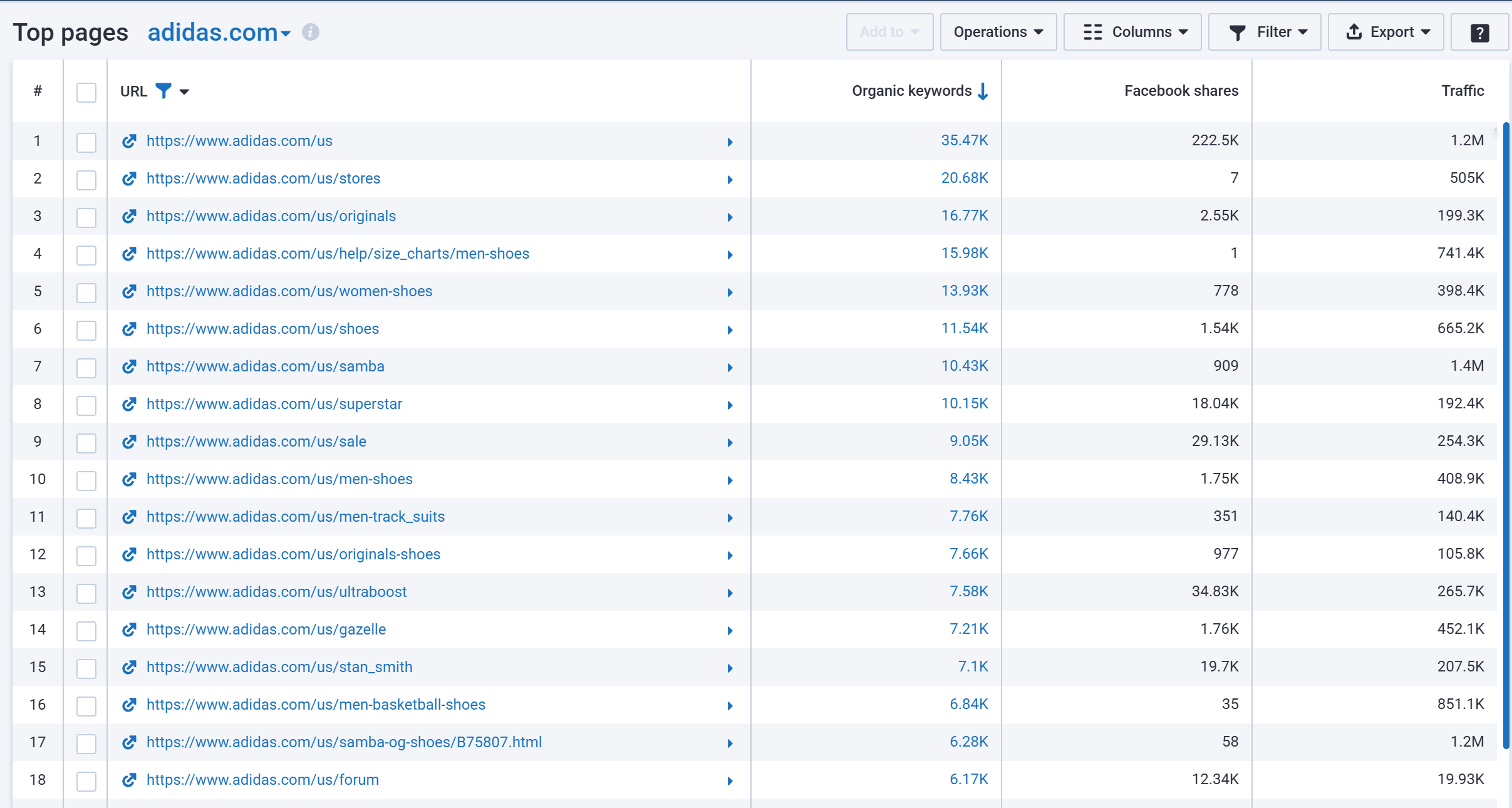
Serpstat Copetitor Analysis Overview
Where Serpstat performs well:
- Competitive keyword analysis across multiple regions
- Solid site audit capabilities for small to medium sites
- Accessible pricing compared to most all-in-one platforms
The trade-off appears in usability and depth. Some reports require interpretation, and the interface can feel dense for users new to SEO. Rank tracking and backlink analysis are functional but less refined than higher-priced alternatives.
Serpstat is best suited for teams that are price-sensitive but still want access to a broad SEO toolkit. It is often considered by businesses comparing options beyond entry-level tools.
A detailed breakdown is available in our Serpstat Review.
Ahrefs
Ahrefs continues to set the benchmark for backlink analysis and competitive intelligence in 2026. While it is often associated with advanced SEO professionals, some small businesses choose Ahrefs for its data depth and reliability.
Ahrefs is less guided than other tools in this category. It assumes users know what they are looking for and how to interpret it.
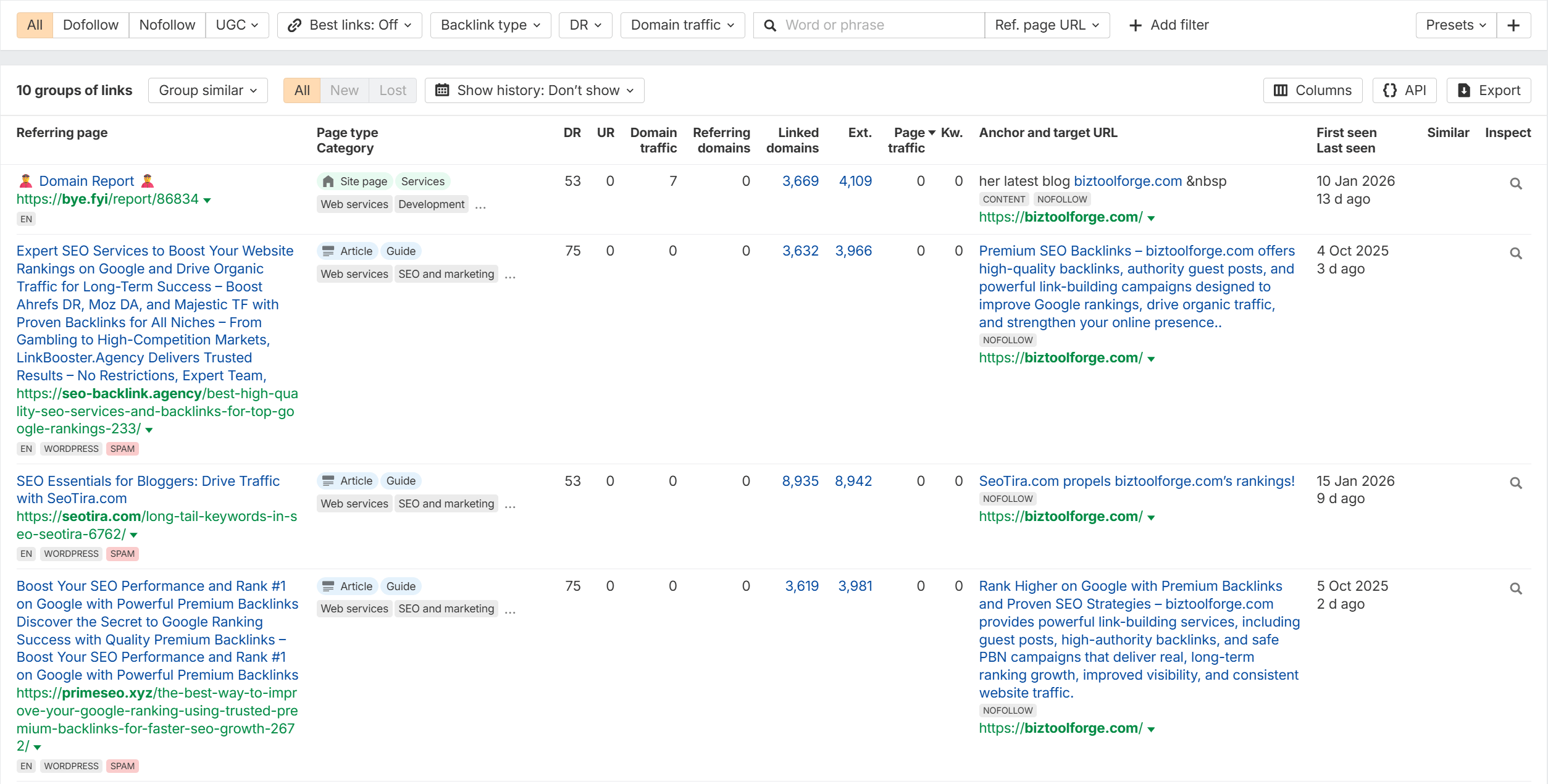
Ahrefs Backlinks Analysis Dashboard
Strengths include:
- Industry-leading backlink index
- Deep competitor and content gap analysis
- Highly reliable keyword and SERP data
For small businesses, the main consideration is cost and workflow complexity. Ahrefs offers little hand-holding, and pricing reflects its enterprise-grade data infrastructure.
It is typically chosen by small teams that already understand SEO fundamentals and place heavy emphasis on link building or competitive research. Check out our Ahrefs review.
Moz
Moz remains a familiar name in SEO, particularly among small teams and consultants. In 2026, its appeal continues to center around approachability and educational support.
Moz’s interface is structured to guide users through common SEO tasks without overwhelming them. Domain Authority, keyword tracking, and site audits are presented in a way that is easy to communicate internally.
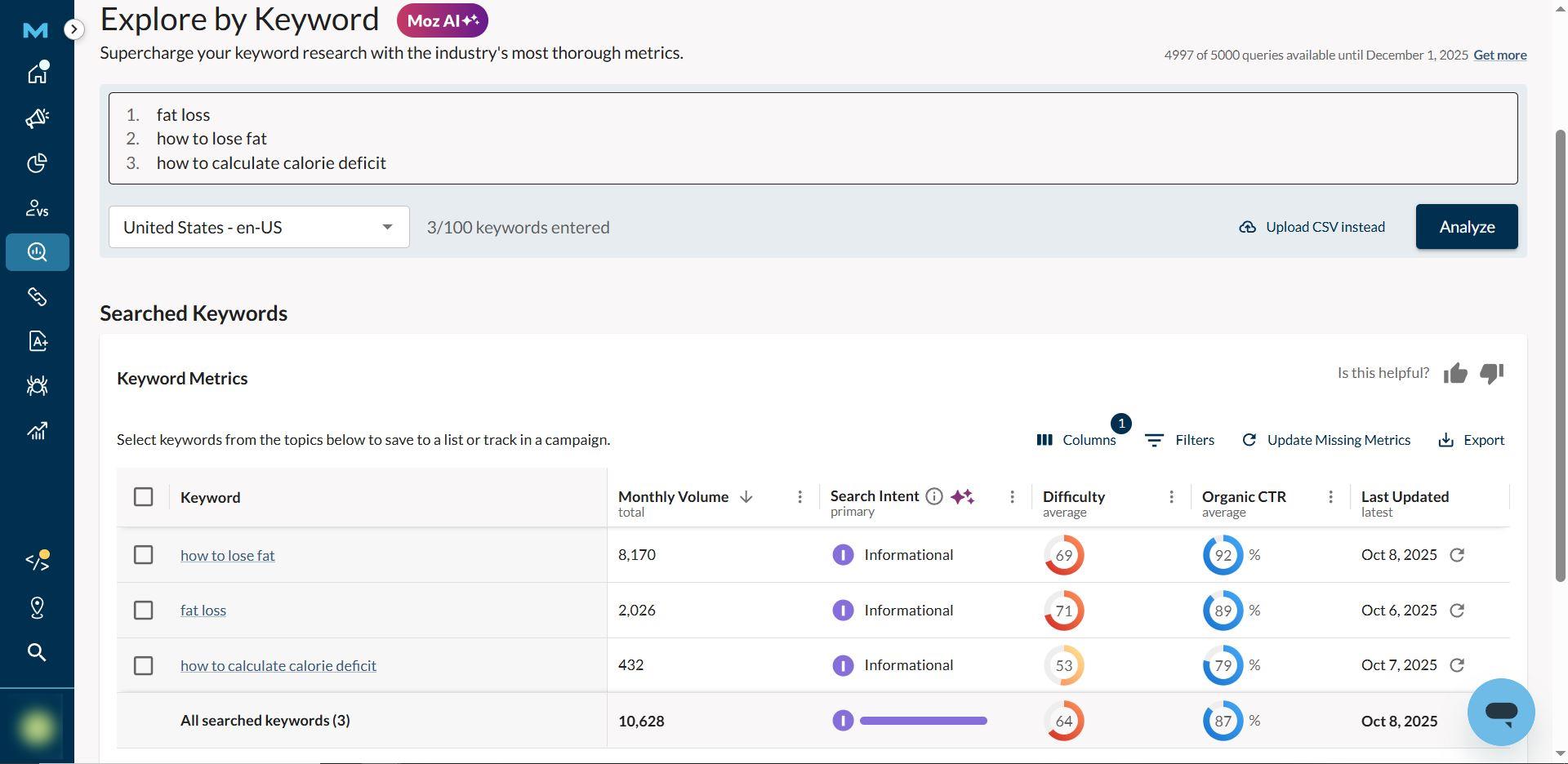
MOZ Keyword Research Overview
Moz performs well when SEO is managed by generalist marketers or small teams that value clarity over depth. Its limitations tend to surface in competitive analysis and backlink freshness when compared to Ahrefs or SE Ranking.
Moz is often selected by teams that prioritize usability and educational context.
For a full evaluation, see why Moz is often chosen for its beginner-friendly interface.
Best SEO Tools for Beginners (2026)
SEO tools aimed at beginners in 2026 are built around one core requirement: decision confidence. Small businesses rarely struggle because they lack data. They struggle because they are unsure which signals matter and which actions are worth prioritizing.
Beginner-oriented tools succeed when they reduce ambiguity early. They help users understand whether SEO is worth pursuing, where opportunity exists, and how competitive the landscape really is, without requiring deep technical interpretation.
These tools are typically adopted when SEO is:
- Newly introduced into the business
- Handled by a generalist rather than a specialist
- Being re-evaluated after inconsistent performance
The platforms below are chosen not for maximum depth, but for how effectively they help small businesses move from uncertainty to action.
Ubersuggest
Ubersuggest in 2026 operates as a visibility-first SEO workspace rather than a traditional keyword tool. Its evolution reflects how many small businesses now approach SEO: they want to understand direction and momentum, not manage endless reports.
The platform is structured around three practical questions:
- Is organic visibility improving or declining?
- Which topics are realistically within reach?
- Where are competitors gaining ground?
AI Search Visibility provides a consolidated view of organic presence across tracked keywords. Rather than focusing attention on individual rankings, it highlights broader visibility trends. For beginners, this framing is critical. It allows progress to be measured without obsessing over daily position changes.
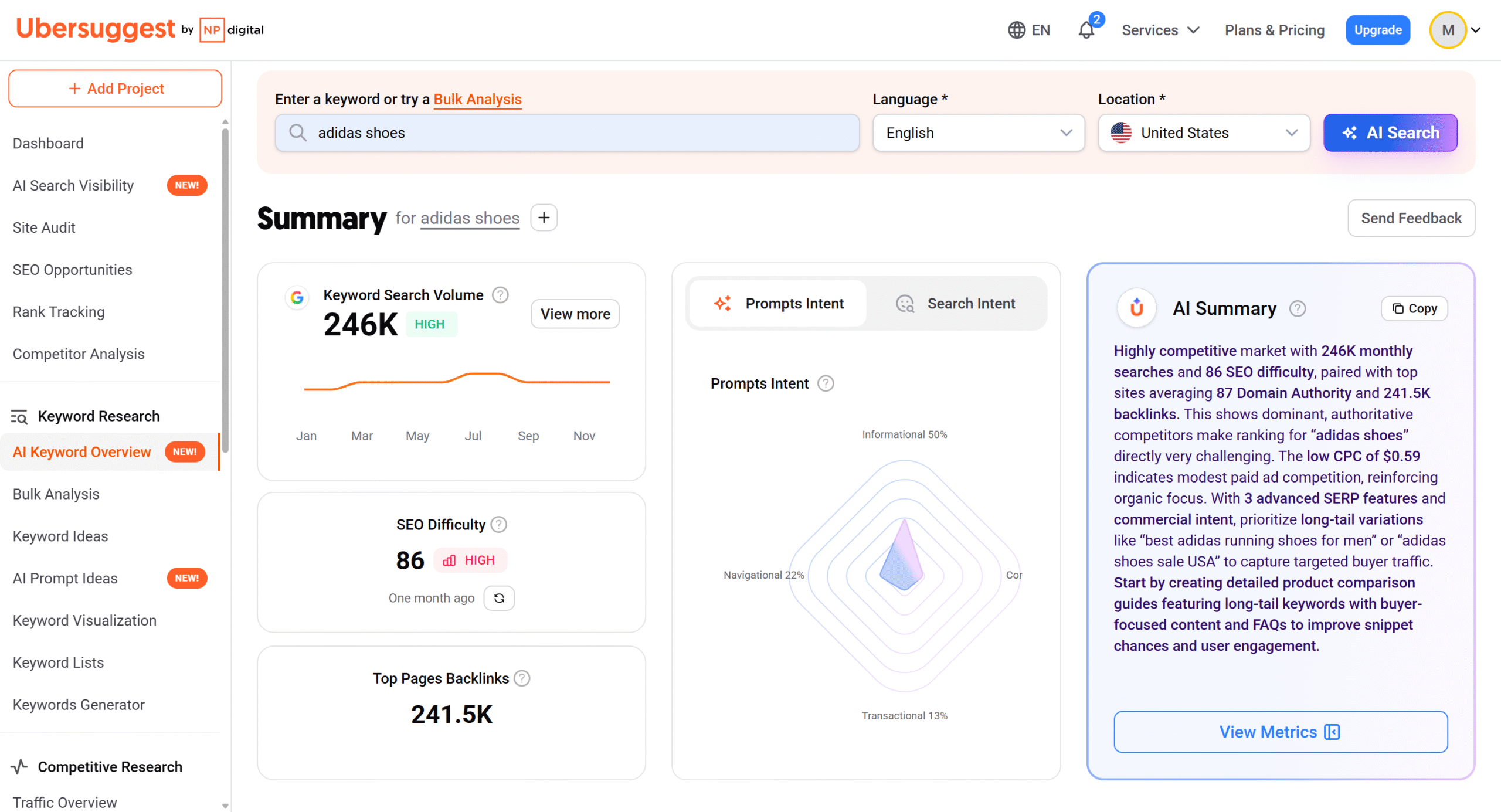
Ubersuggest AI Keyword Overview
Keyword research inside Ubersuggest is intentionally segmented. Discovery, expansion, visualization, and organization are treated as separate steps, which prevents early users from being overwhelmed.
In practice, Ubersuggest is most often used to:
- Validate whether a keyword or topic is viable
- Identify content gaps relative to competitors
- Group keywords into manageable content plans
Competitive insights focus on traffic-driving pages and keyword overlap rather than deep SERP modeling. This aligns well with how small businesses typically assess competitors at an early stage.
Backlink insights are positioned as opportunity signals rather than exhaustive audits. The emphasis is on identifying possible link sources and gaps, not building a full link profile analysis.
Ubersuggest still has clear ceilings. Advanced SERP diagnostics, long-term historical comparisons, and backlink depth remain limited compared to larger platforms. As SEO programs mature, businesses often supplement or replace Ubersuggest with a more comprehensive system.
For a detailed breakdown, see why is Ubersuggest often the first SEO tool beginners try.
Mangools
Mangools takes a different approach to beginner SEO. Instead of framing SEO around dashboards and trends, it emphasizes visual understanding of competition.
Mangools breaks SEO tasks into focused tools, each designed to answer a specific question clearly. This structure helps users build intuition around why pages rank, not just whether they do.
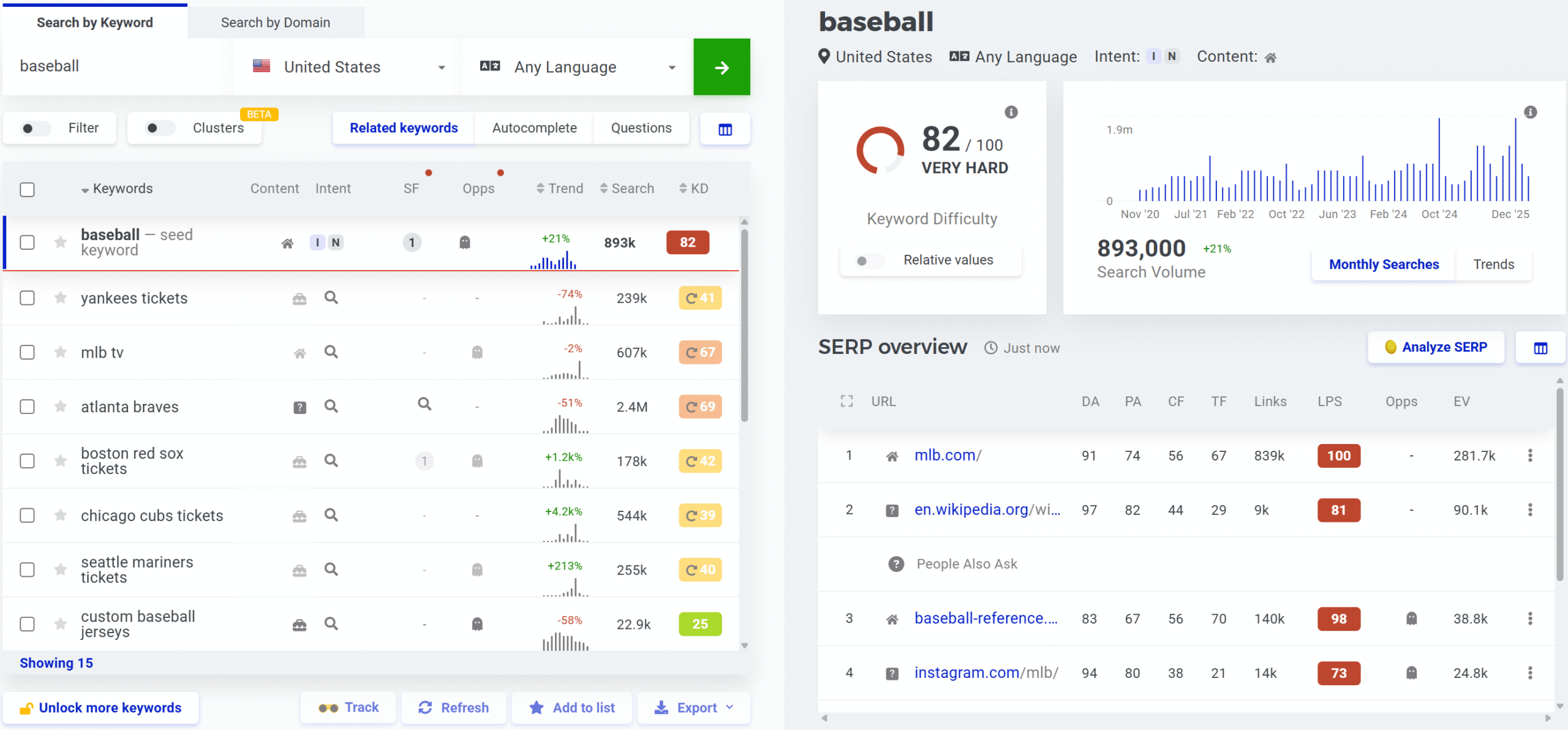
Mangools Keyword Research Dashboard
KWFinder is the centerpiece of the platform. Keyword difficulty is contextualized with live SERP previews, making it easier to assess competition strength visually. This reduces reliance on abstract metrics and helps beginners understand ranking feasibility faster.
Mangools performs especially well when:
- Keyword selection depends on visual SERP comparison
- SEO decisions are made without deep technical analysis
- Rank tracking needs to be simple and readable
Rank tracking and competitor snapshots are clean and require minimal setup. This makes Mangools suitable for teams that want ongoing visibility without constant configuration.
The platform’s limitations are intentional. Technical audits, backlink analysis, and large-scale competitive research exist, but they are not designed for aggressive expansion or large sites. Mangools is best suited for smaller projects where clarity matters more than depth. Check out our Mangools review here.
Best SEO Tools for Content & On-Page SEO (2026)
As SEO programs mature, keyword discovery becomes less of a bottleneck. The challenge shifts toward execution quality. Pages need to align more closely with search intent, topical coverage, and competitive benchmarks.
Tools in this category focus on improving how content performs rather than managing the entire SEO ecosystem.
Surfer SEO
Surfer SEO is built for this execution phase. It integrates SEO guidance directly into content workflows, translating SERP patterns into actionable direction.

Surfer SEO Content Editor Dashboard
Surfer SEO is most effective when content production is already active and rankings depend on refinement rather than discovery. It provides guidance on structure, topical coverage, and optimization depth based on what already ranks.
Surfer SEO is commonly used when:
- Existing pages need to be rewritten to compete
- Multiple writers require consistent optimization standards
- Content decisions need validation against live SERP data
Its scope is intentionally narrow. Surfer SEO does not aim to manage rank tracking, backlink analysis, or site health at scale. Because of that, it is usually paired with an all-in-one SEO tool rather than used independently.
For a side-by-side comparison, see SE Ranking vs Surfer SEO.
How Beginner and Content Tools Fit Into SEO Growth
Beginner tools establish direction. Content tools improve execution. Small businesses often move between these categories as SEO maturity increases.
Understanding this progression helps avoid premature upgrades, underpowered setups, and unnecessary tool churn. Choosing tools that match the current stage of SEO development leads to steadier progress and clearer results.
Best SEO Tools (Under $75/Month) for Small Businesses (2026)
Small businesses often face a critical inflection point with SEO tools: they can’t justify enterprise pricing, but they still need usable SEO outputs, not empty dashboards. This block focuses on tools with entry-level plans under $75/month that let you do real SEO work — research keywords, monitor rankings, audit your site, and track competitor activity.
Below are platforms that stand out for balancing cost, capabilities, and long-term usability in 2026.
SE Ranking – Best All-Around Budget SEO Platform
SE Ranking earns top billing in this price bracket because it is one of the few full all-in-one SEO suites usable at entry pricing. Its plans start below typical mid-range competitors while offering keyword research, rank tracking, site audits, and backlink analysis all in one place.
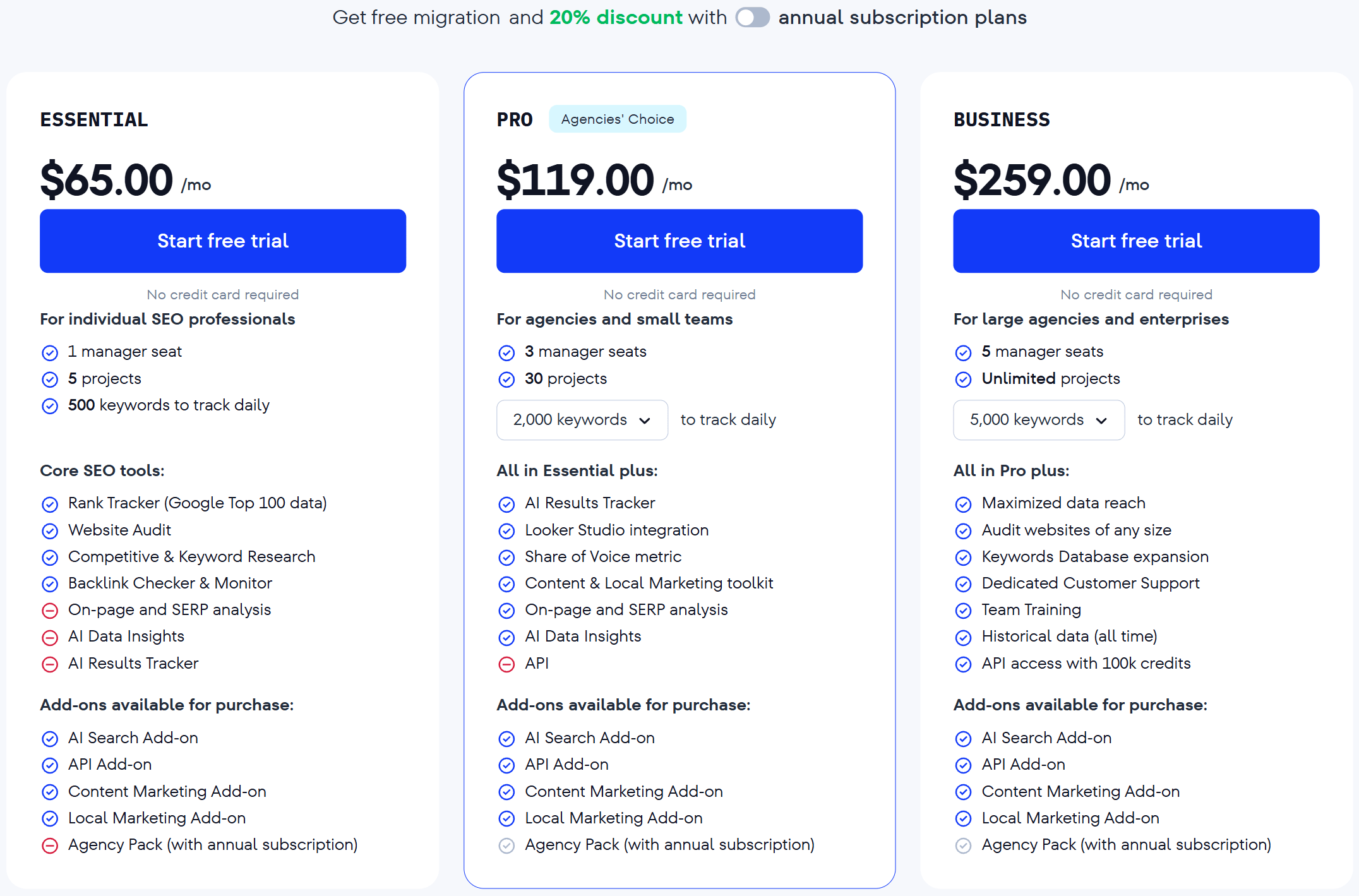
SE Ranking Monthly Pricing
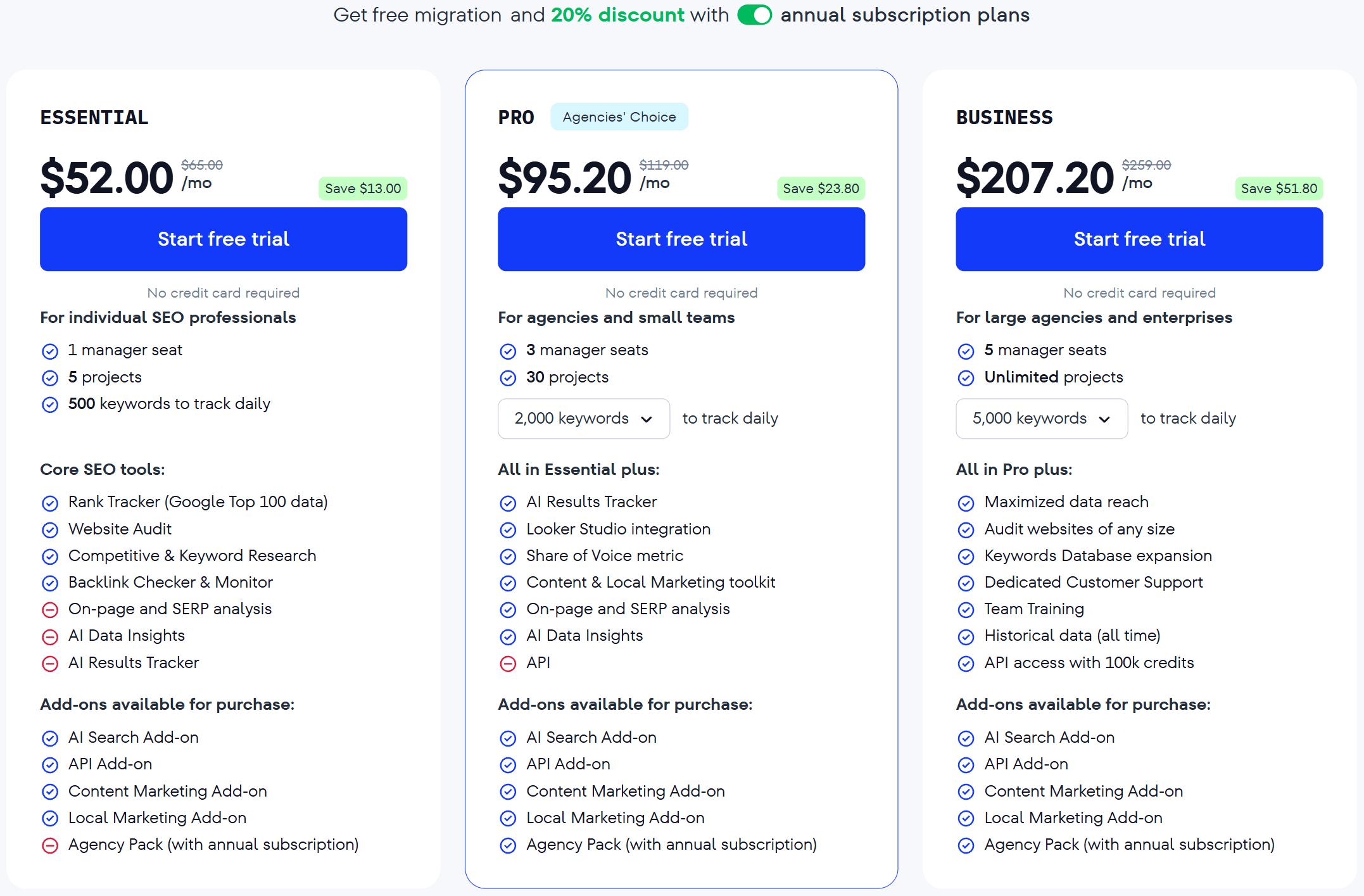
SE Ranking Yearly Pricing
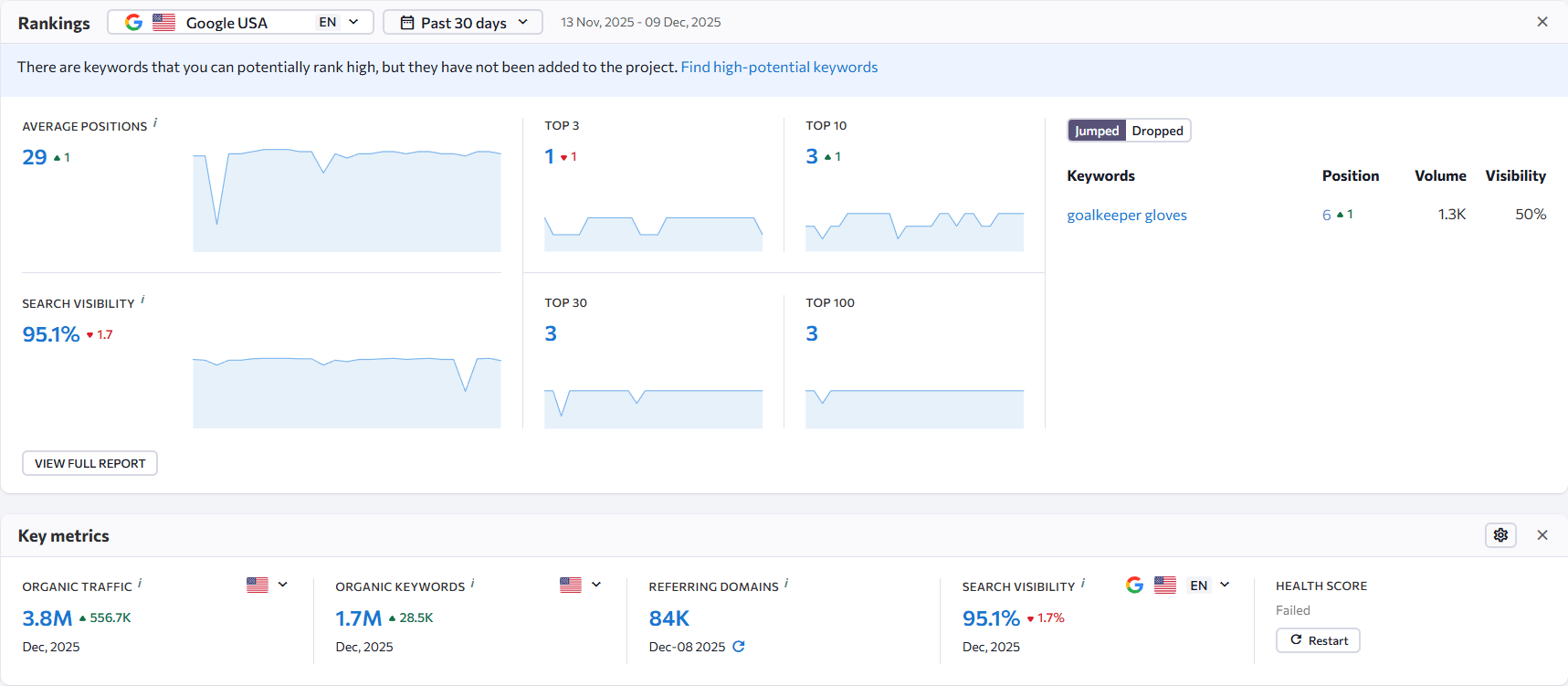
SE Ranking Rank Tracking Interface
Current entry pricing: starting at $65/month for the Essential plan, or at $52/month for the yearly plan which includes:
- Rank tracking for multiple keywords
- Site audits with actionable fixes
- Competitor analysis tools
- Backlink monitoring
- Flexible project limits that scale with needs
Why it’s a top pick under $75
- Combines core SEO functions in one platform
- Strong rank tracking accuracy and reporting
- Flexible configuration without frequent forced upgrades
Who it suits best
- Small teams that want one platform for most SEO work
- Businesses balancing keyword research, auditing, and ranking oversight
- Users who plan to grow with the tool over time
This balance of depth and price is why SE Ranking is often recommended over Semrush in this budget category.
See how SE Ranking performs compared to Ubersuggest for small businesses.
Ubersuggest (Entry-Level & Lifetime Access Option)
Ubersuggest occupies a distinct position in the sub-$75 SEO tool landscape. Rather than competing on depth or scale, it focuses on accessibility, speed of insight, and cost flexibility, including a lifetime access option that remains uncommon among mainstream SEO platforms.
This makes Ubersuggest particularly attractive for small businesses that want predictable costs and a low barrier to entry while still covering core SEO workflows.
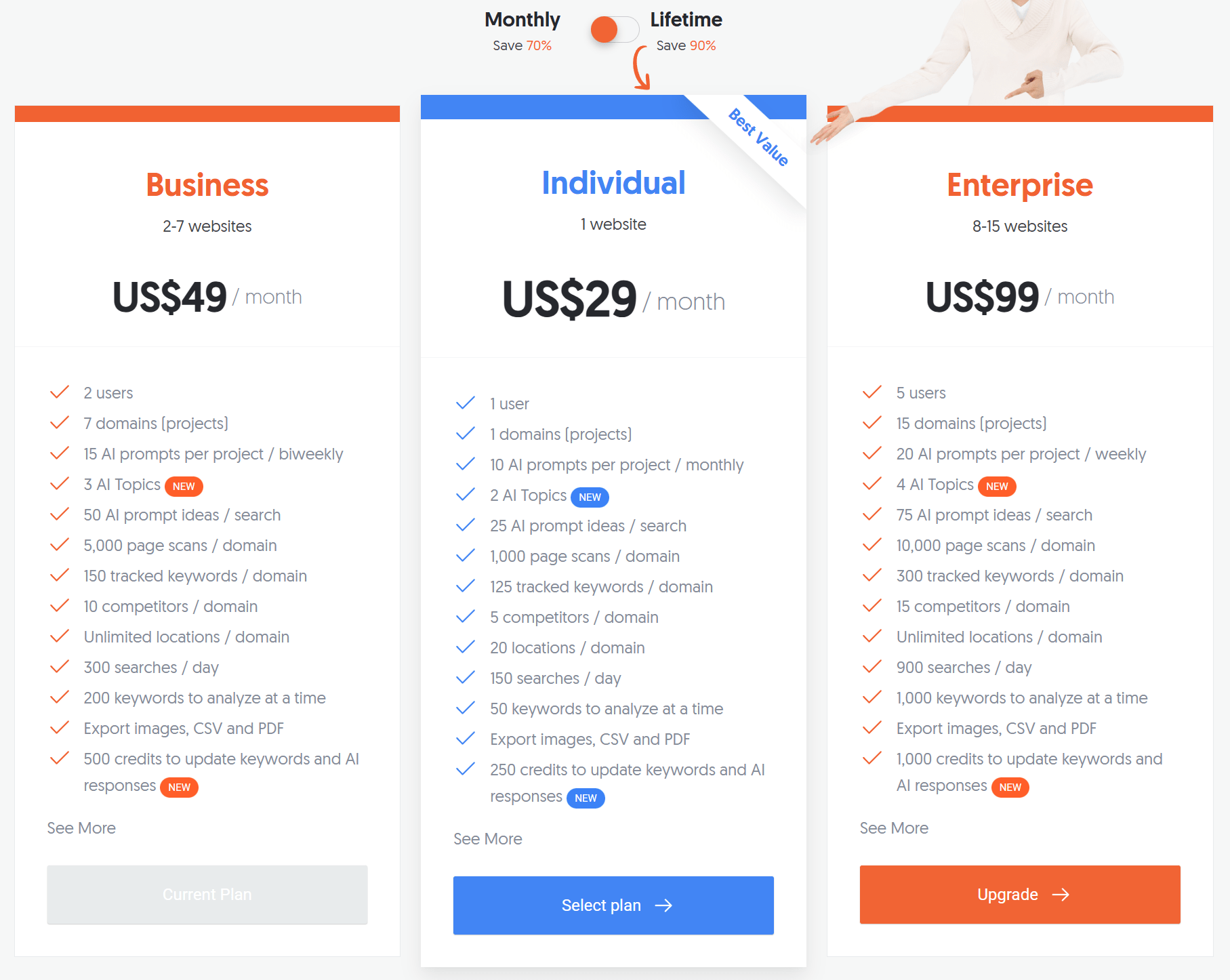
Ubersuggest Monthly Pricing
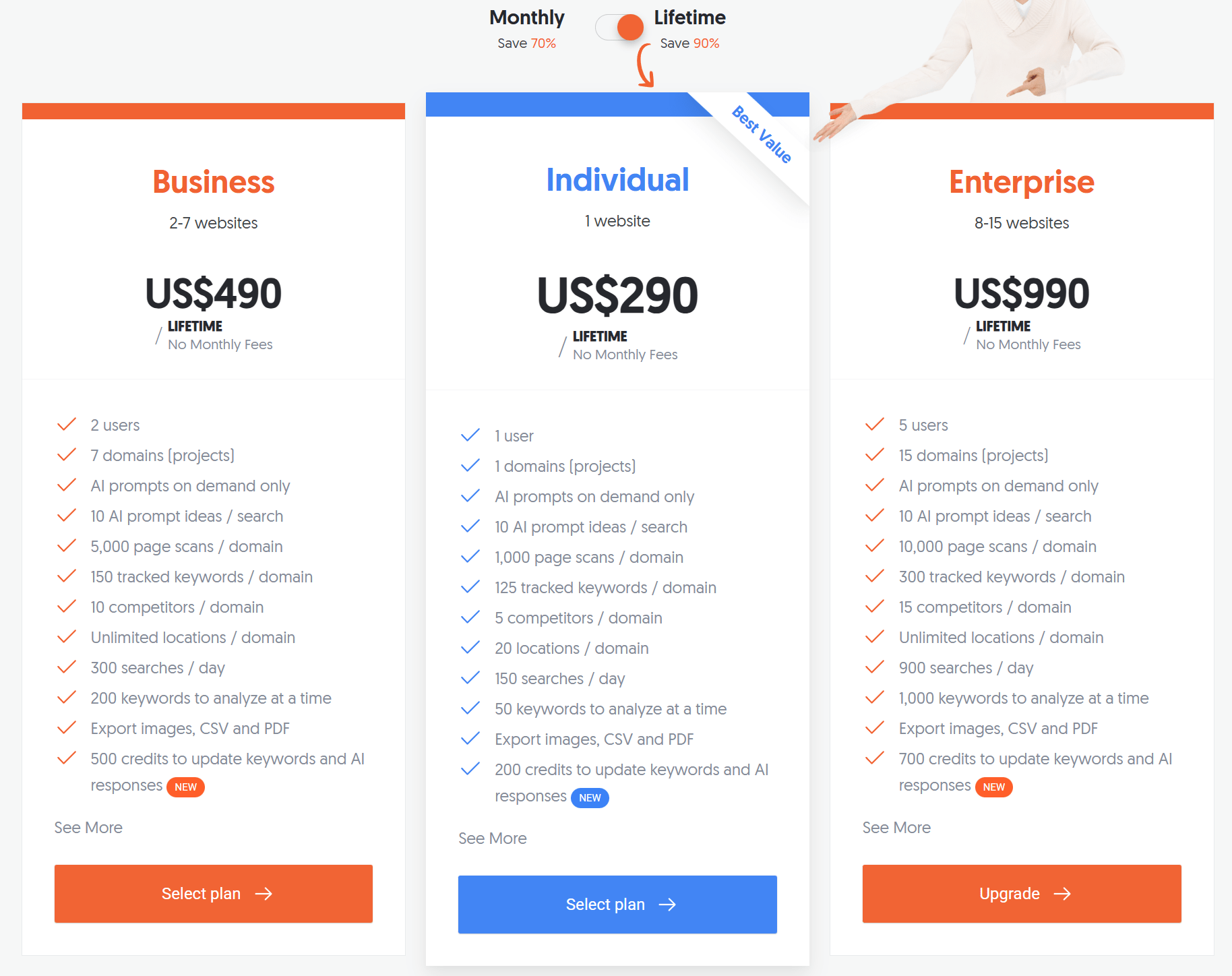
Ubersuggest Lifetime Pricing
Current pricing (to be filled):
- Monthly plan starts at: $29/ month
- Business monthly plan: $49/ month
- Lifetime access (one-time payment) starting at: $290
At the entry level, Ubersuggest provides access to keyword research, visibility tracking, basic competitive insights, and backlink opportunity discovery. Its structure emphasizes directional signals rather than exhaustive datasets, which aligns well with early-stage or resource-constrained SEO programs.
Ubersuggest performs best when the primary objectives are:
- Validating keyword and topic ideas before committing resources
- Monitoring overall organic visibility trends without micromanaging rankings
- Gaining high-level insight into competitor traffic and content performance
The availability of a lifetime license changes the cost equation significantly. For businesses that plan to use SEO as a supporting channel rather than a constantly evolving discipline, lifetime access can reduce long-term software spend and eliminate subscription fatigue.
That said, Ubersuggest still has clear limitations. Data depth, historical comparisons, and advanced SERP diagnostics are intentionally constrained. As SEO efforts scale or competition intensifies, many businesses begin comparing Ubersuggest against more robust platforms.
Mangools (Entry-Level Plan)
Mangools targets small businesses and individual site owners who prioritize clarity, visual feedback, and controlled scope over feature density. Instead of positioning itself as a full enterprise suite, Mangools focuses on making core SEO decisions easier to understand and faster to execute.
Its appeal at the entry level comes from how it presents keyword difficulty, SERP competition, and ranking progress in a way that does not require deep SEO experience.
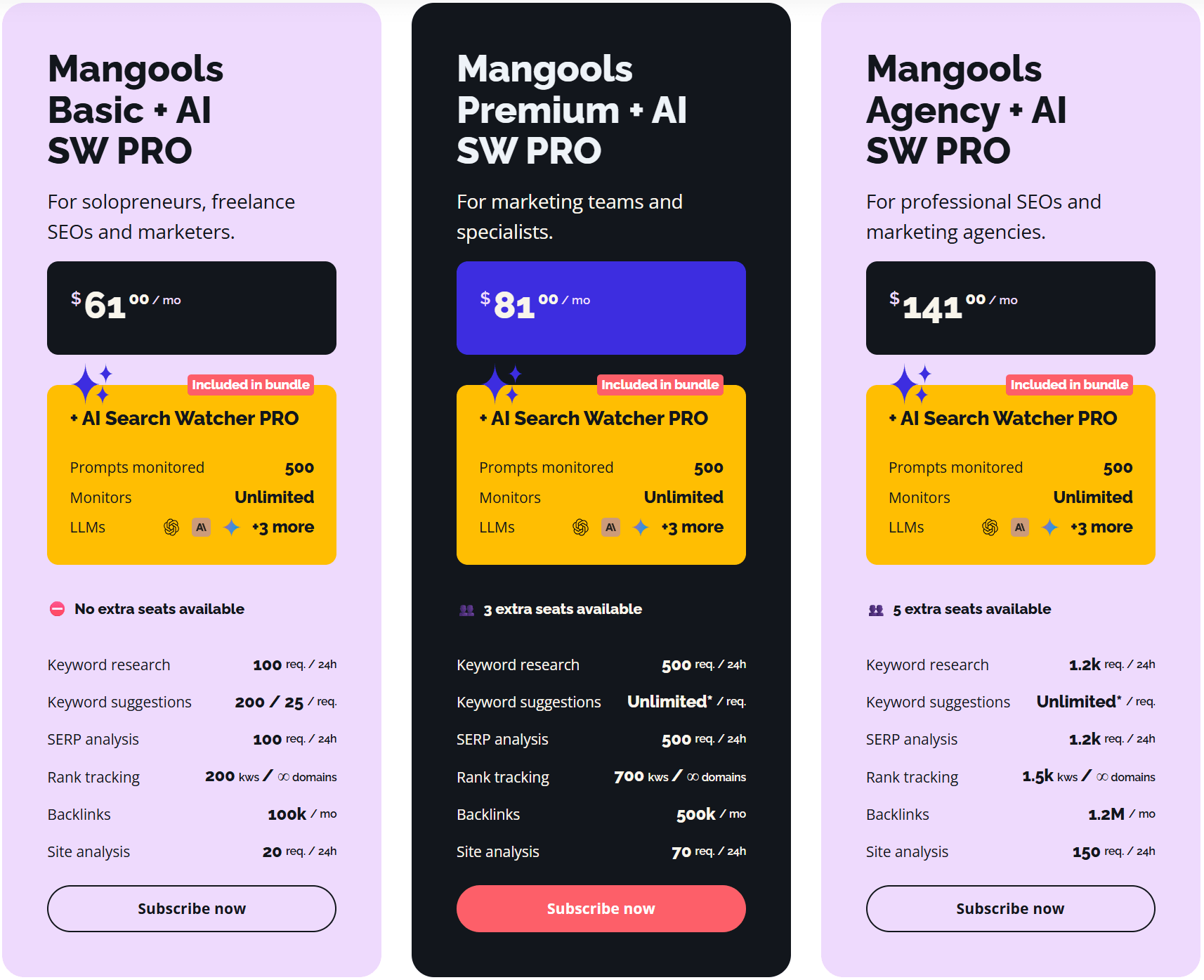
Mangools Monthly Pricing Plan
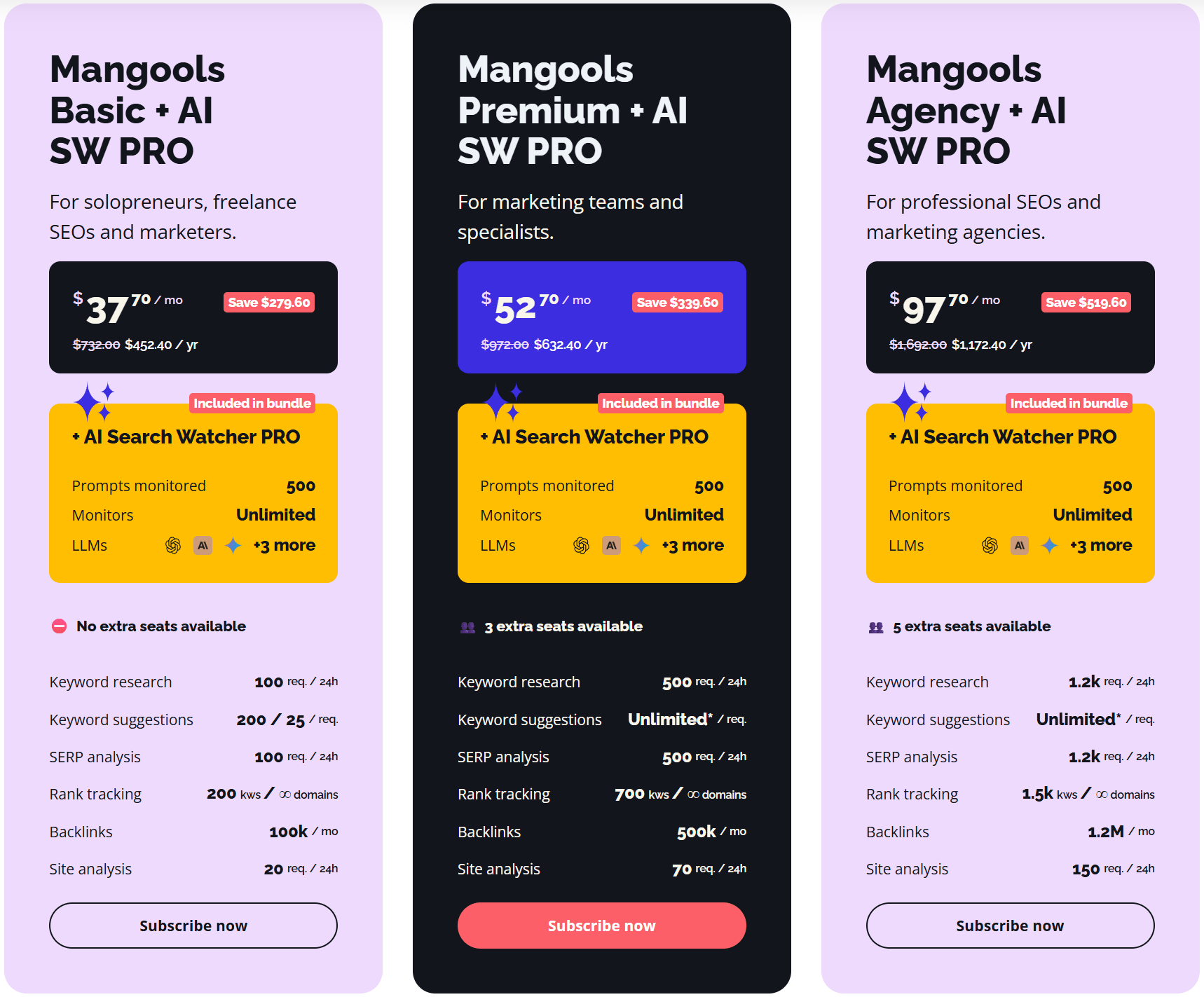
Mangools Yearly Pricing Plan
Current pricing:
- Monthly plan starts at: $61 / month
- Annual plan (monthly equivalent): $37.70 / month
At the entry tier, Mangools provides access to its core tools, including keyword research, SERP analysis, rank tracking, and basic backlink insights. These tools are intentionally separated rather than merged into a single dashboard, which helps users focus on one decision at a time.
Mangools performs best when SEO decisions depend on:
- Visual assessment of keyword competitiveness
- Understanding why certain pages rank in a given SERP
- Tracking rankings without constant configuration or alerts
The keyword research experience emphasizes context over volume. Difficulty scores are paired with live SERP previews, allowing users to judge feasibility based on real competitors rather than abstract metrics alone.
Where Mangools draws a clear line is scale. Technical audits, backlink depth, and multi-project complexity are limited at the entry level. This makes it less suitable for large sites or aggressive expansion strategies, but well-aligned with smaller projects that value interpretability.
Mangools is commonly chosen by bloggers, niche site operators, and small teams that want SEO insights without committing to a heavier all-in-one platform.
For a more detailed review check out our Mangools review.
Serpstat (Entry-Level Plan)
Serpstat positions itself as a broad SEO toolkit at a controlled price point, making it appealing to small businesses that want access to multiple SEO functions without committing to premium-tier platforms.
At the entry level, Serpstat provides keyword research, site auditing, rank tracking, and competitive analysis inside a single environment. The platform assumes some familiarity with SEO concepts, but it does not require enterprise-level workflows.
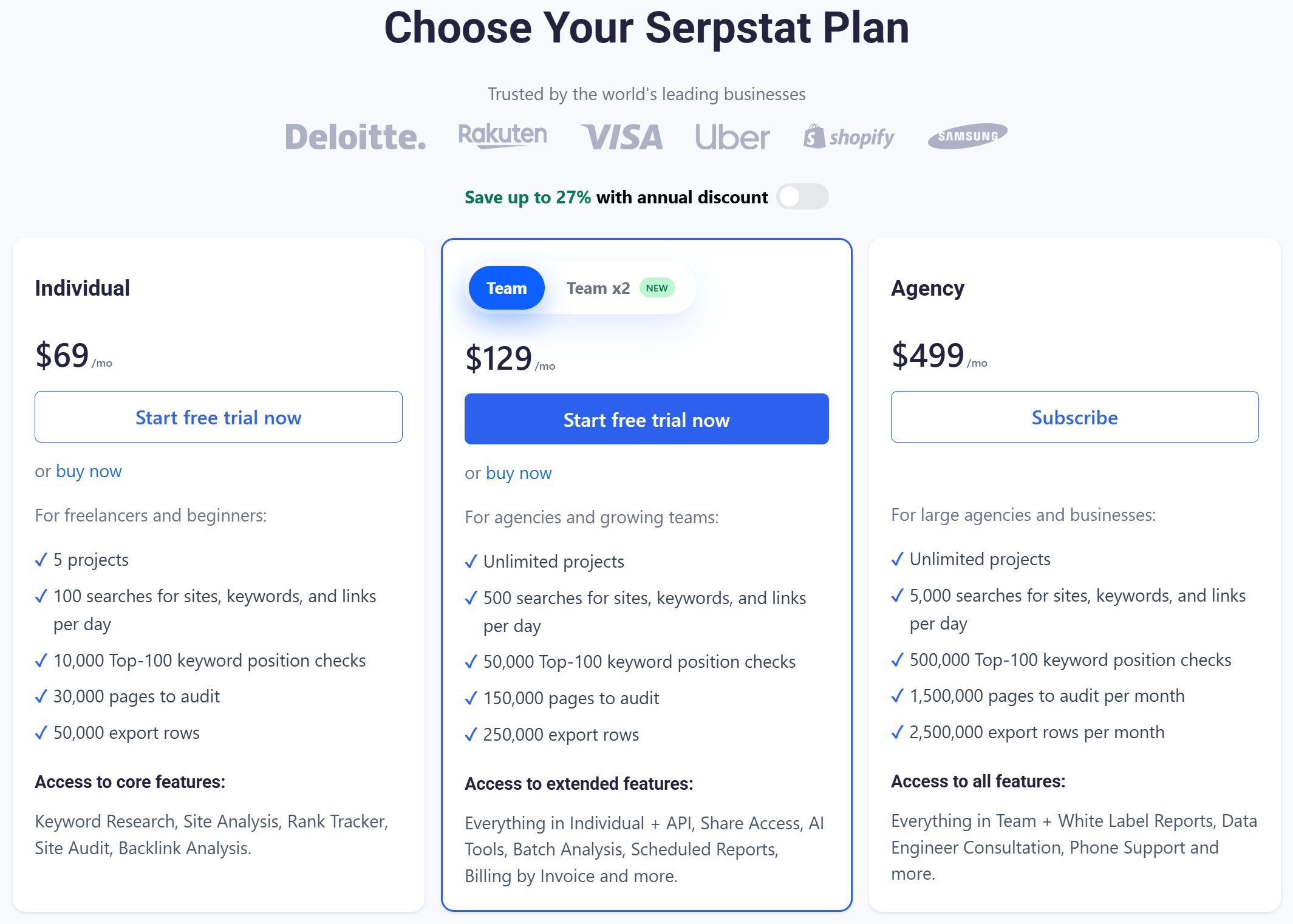
Serpstat Monthly Pricing Plan
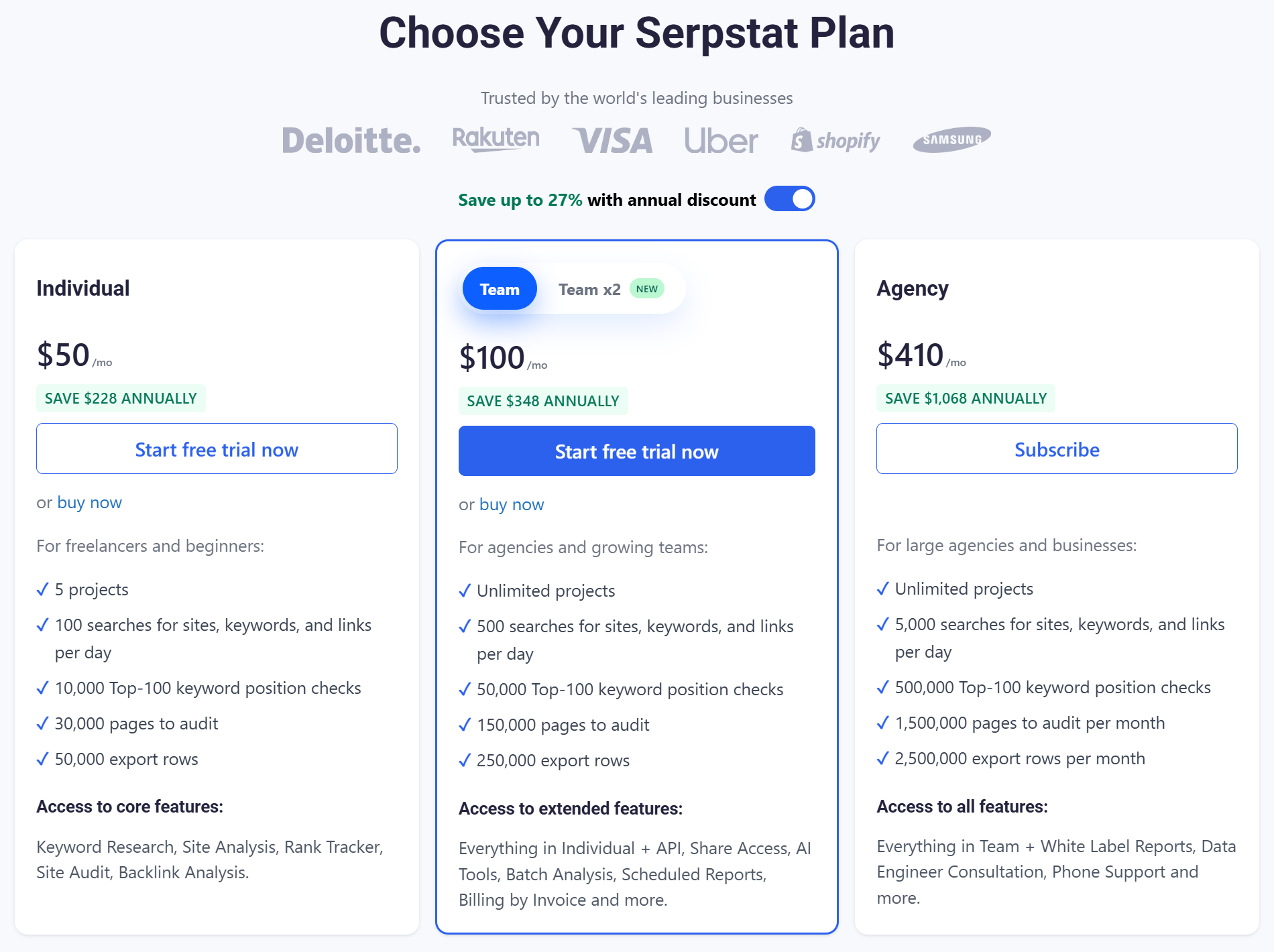
Serpstat Yearly Pricing Plan
Current pricing (to be filled):
- Monthly plan: $69 / month
- Annual plan (monthly equivalent): $50 / month
Serpstat is most effective when SEO work involves comparison and pattern recognition rather than step-by-step guidance. Domain analysis, missing keyword reports, and competitor comparisons are available early, which makes it useful for identifying gaps and opportunities.
Serpstat performs well when businesses need to:
- Analyze competitor domains across multiple keywords
- Run structured site audits without heavy customization
- Track rankings across defined keyword sets
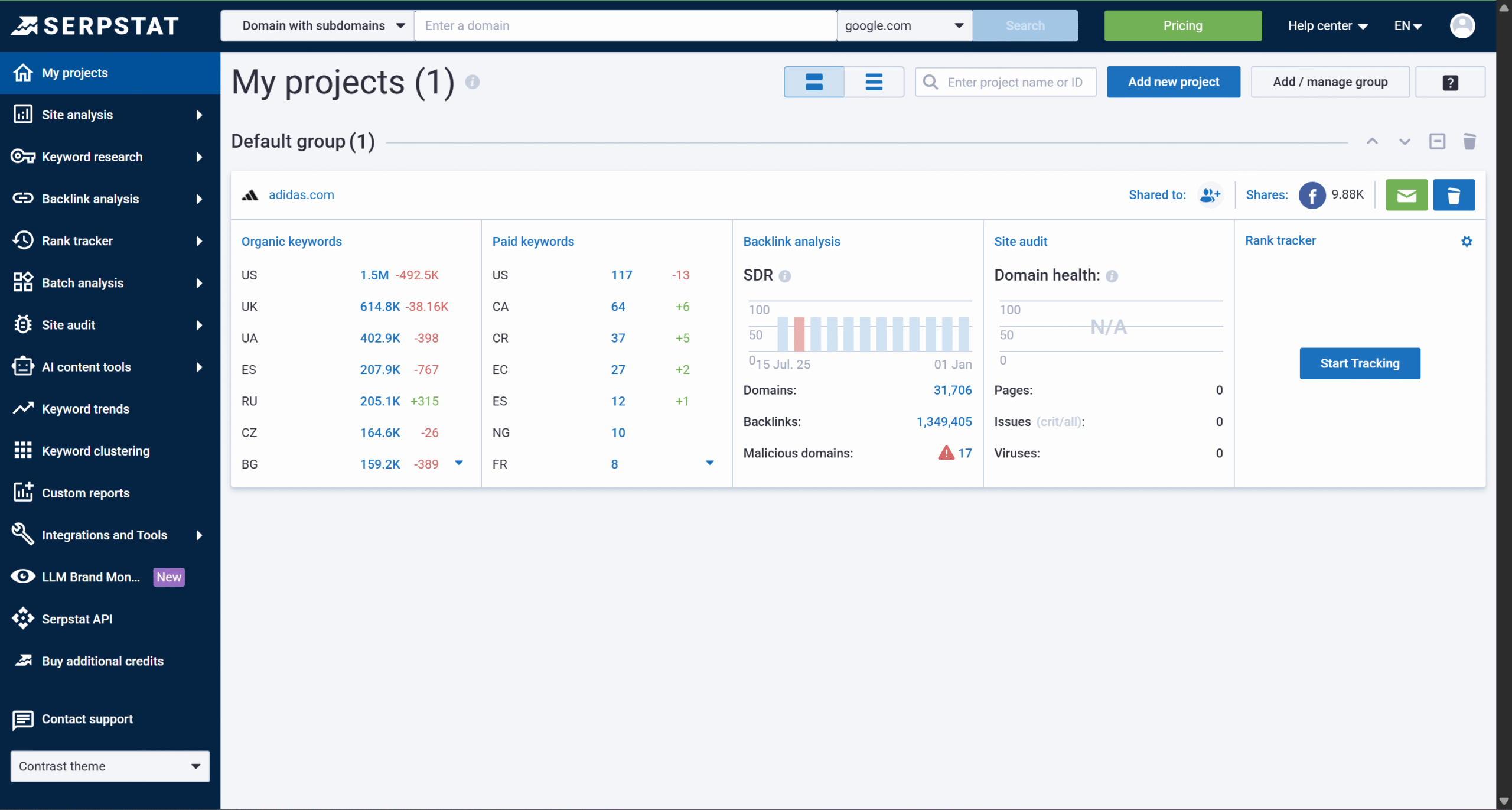
Serpstat Dashboard Overview
The main trade-off at the entry level is usability. Reports are information-dense and often require interpretation, which may slow teams without SEO experience. Backlink analysis is functional but not exhaustive.
Serpstat is often chosen by teams that want a wider analytical surface than beginner tools provide, without stepping into enterprise pricing.
If you are comparing alternatives in this category, see Serpstat as a Semrush alternative.
SpyFu (Entry-Level Plan)
SpyFu focuses primarily on competitor intelligence, rather than full-spectrum SEO execution. Its entry-level plans are built around historical keyword data, competitive overlap, and visibility trends across both organic and paid search.
SpyFu is typically introduced when SEO decisions depend heavily on understanding competitor behavior over time.
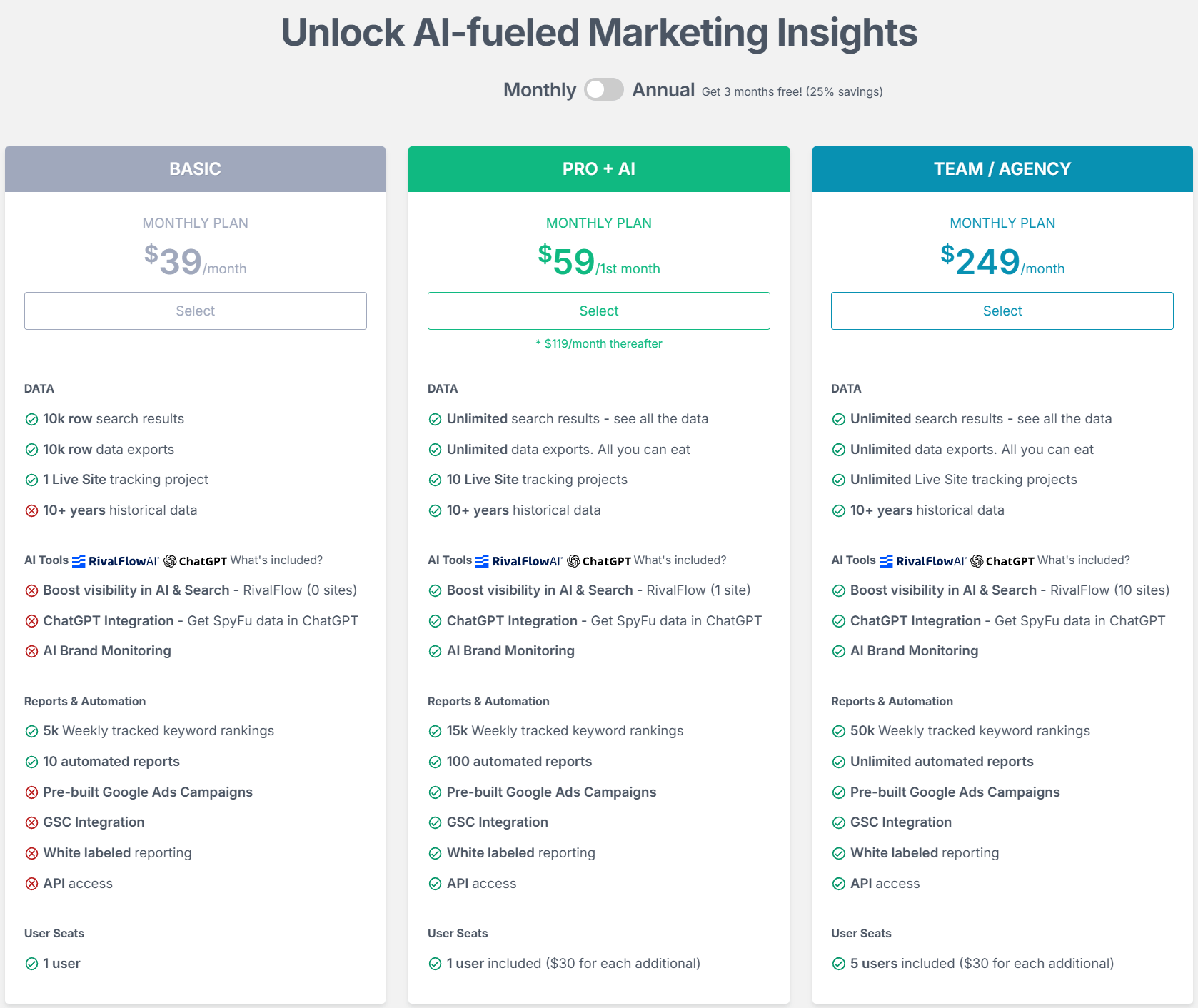
SpyFu Monthly Pricing Plan
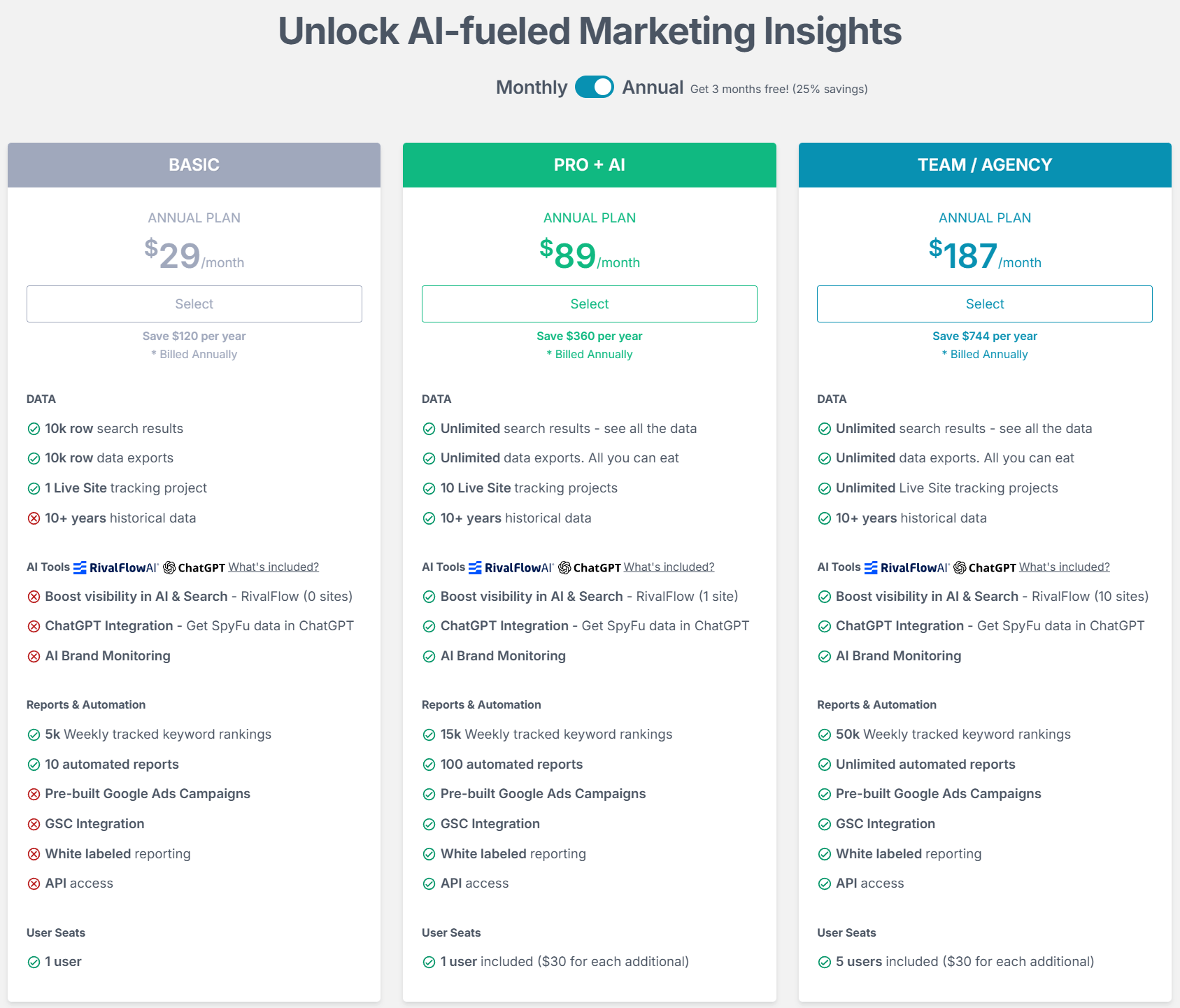
SpyFu Yearly Pricing Plan
Current pricing:
- Monthly plan: $39 / month
- Annual plan (monthly equivalent): $29 / month
At the entry tier, SpyFu provides access to historical keyword rankings, competitor overlap analysis, and visibility trends that extend beyond short time windows. This historical context is its defining strength.
SpyFu is particularly useful when businesses want to:
- Identify keywords competitors have ranked for over time
- Understand long-term SEO and PPC trends in a niche
- Validate keyword opportunities based on competitive persistence
SpyFu Competitor Keyword Analysis Dashboard
SpyFu is not designed to replace an all-in-one SEO platform. Rank tracking, site audits, and on-page optimization tools are limited or absent. Instead, it works best as a strategic research layer alongside another SEO system.
SpyFu is commonly paired with broader platforms by teams that place strong emphasis on competitive positioning.
Check out or full SpyFu review here.
How to Pick the Right Budget SEO Tool
Under $75/month, the best-fit question becomes more important than the best tool overall. Use this guideline:
- Choose SE Ranking when you want a true all-in-one solution with rank tracking, audits, and reporting inside a unified platform.
- Choose Ubersuggest when price + simplicity matters most and you’re validating SEO strategy.
- Choose Mangools when you want visual data that’s easier to interpret.
- Choose Serpstat when you need a broader mix of analytics in one place.
- Choose SpyFu when competitor intelligence and trend history are essential to your strategy.
Each of these tools gives you workable SEO capability without needing a premium budget.
Which SEO Tool Is Right for You in 2026?
At this point, most readers don’t need more explanations. They need confirmation.
The right SEO tool for a small business in 2026 depends on how SEO is actually executed internally: who runs it, how often it’s used, and what outcome it’s expected to produce. Below is a clear, no-nonsense way to make that decision.
Choose SE Ranking if you want one SEO tool that stays usable as you grow
SE Ranking is the strongest option when SEO is treated as an ongoing system rather than an experiment. It fits businesses that need consistent execution without stitching together multiple tools.
Best fit when:
- SEO is handled in-house or by a small team
- You need keyword tracking, audits, competitor research, and reporting in one place
- You want an entry-level plan that doesn’t become useless after a few weeks
This is especially relevant for:
- Small businesses running local SEO campaigns
- Service-based sites with multiple landing pages
- Content-driven lead generation sites
Choose Ubersuggest if SEO needs to stay simple and predictable
Ubersuggest works best when SEO is not the core focus but still needs to deliver insight. It’s commonly chosen by founders and generalists who want visibility trends and opportunity signals without deep analysis.
Best fit when:
- SEO is new or being reintroduced
- Budget predictability matters (including lifetime access)
- You want fast validation of keywords and topics
This tool is often outgrown once keyword lists expand or competition increases.
Choose Mangools if keyword difficulty decisions depend on SERP reality
Mangools is built for users who want to see competition, not interpret abstract metrics. Its visual approach makes it easier to judge whether a keyword is realistically attainable.
Best fit when:
- Keyword selection is conservative and deliberate
- SERP analysis matters more than volume alone
- You prefer clarity over feature depth
It’s particularly effective for bloggers, niche businesses, and smaller sites.
Choose Serpstat if you want broader SEO data without enterprise pricing
Serpstat fits teams that are comfortable analyzing data and want wider coverage than beginner tools provide. It offers keyword research, audits, rank tracking, and competitor insights at entry pricing.
Best fit when:
- SEO decisions are data-driven
- Competitive analysis is part of planning
- You want more breadth without paying for premium suites
Choose SpyFu if competitor history drives your SEO strategy (H3)
SpyFu is not a full SEO platform. It’s a competitive intelligence layer. It’s most useful when keyword decisions are influenced by what competitors have ranked for consistently over time.
Best fit when:
- You analyze competitors before choosing keywords
- Historical SEO and PPC trends matter
- You already use another SEO tool for execution
Quick Decision Shortcut
If you want this boiled down:
- One tool to run SEO long-term: SE Ranking
- Lowest friction entry into SEO: Ubersuggest
- Visual keyword & SERP clarity: Mangools
- Broader analytics on a budget: Serpstat
- Deep competitor insight: SpyFu
If you’re still deciding, start with the tool that matches how SEO is actually handled today, not how you hope it will look in the future. Tool churn is more expensive than choosing slightly imperfect software and executing consistently.
Frequently Asked Questions About SEO Tools for Small Businesses (2026)
These are the questions that typically appear after a short list is already formed and before a purchase is made. They are also the long-tail queries that tend to convert well in 2026.
Do small businesses really need paid SEO tools in 2026?
For most small businesses, yes.
Free tools are useful for isolated tasks, but they rarely support:
- Consistent rank tracking
- Ongoing site audits
- Competitor monitoring over time
Paid SEO tools reduce manual work and help maintain continuity, which matters more than raw data volume for small teams.
Can one SEO tool realistically cover everything a small business needs?
For early to mid-stage SEO programs, a single all-in-one tool is usually sufficient.
Most small businesses focus on:
- Keyword targeting
- Monitoring ranking progress
- Identifying technical issues
- Keeping an eye on competitors
Trying to cover every edge case with separate tools often introduces more friction than value.
How accurate are keyword difficulty and search volume metrics in 2026?
Keyword metrics should be treated as directional, not absolute.
They are most useful when:
- Comparing keywords against each other
- Identifying relative competition
- Avoiding obviously unrealistic targets
Decisions based purely on volume or difficulty scores, without SERP context, are still risky in 2026.
Is rank tracking still relevant with AI-driven SERPs?
Yes, but expectations need to be adjusted.
Rank tracking remains useful for:
- Measuring visibility trends
- Monitoring priority keywords
- Detecting sudden drops or gains
It is less useful as a standalone success metric. Rankings need to be interpreted alongside traffic and conversions.
How often should a small business actually use an SEO tool?
For most small businesses:
Weekly usage is sufficient for monitoring and prioritization
Monthly deep reviews work well for audits and strategy adjustments
Daily use is rarely necessary unless SEO is a core growth channel.
What’s the biggest mistake small businesses make when choosing SEO tools?
The most common mistake is overbuying.
This usually looks like:
- Paying for features that are never used
- Choosing tools designed for agencies or enterprises
- Switching platforms every few months
Consistency with a “good enough” tool almost always outperforms frequent switching.
Should SEO tools be chosen based on price or features?
Neither, on their own.
The better filter is: Does this tool support how SEO is actually done in the business today?
A cheaper tool that fits the workflow often produces better results than a more powerful one that adds friction.
Final Takeaway for Small Businesses (2026)
SEO tools do not create results by themselves. They support decisions, highlight priorities, and reduce wasted effort.
The right choice is the tool that:
- Gets used consistently
- Matches internal resources
- Scales without forcing unnecessary upgrades
When those conditions are met, even modest SEO investments can compound over time.
If a single, flexible starting point is needed, SE Ranking remains one of the safest options for small businesses in 2026.