
Here’s what you’ll find in this guide:
- A practical breakdown of what the $199/month Semrush plan delivers in everyday use
- Where small businesses tend to see real return on investment
- Areas where Semrush introduces friction or unnecessary overhead
- Clear guidance on when Semrush is a strong fit and when other options might be a better choice
In this Semrush review for 2026, the focus is on whether paying $199 per month aligns with how small businesses actually operate. Semrush has long been associated with depth and breadth, but depth alone doesn’t justify cost when budgets are tight and execution time is limited.
For many small businesses, SEO is no longer experimental. It’s expected to support lead generation, visibility in competitive markets, or long-term demand creation through content. When SEO carries that level of responsibility, the tools behind it matter more than they used to. Semrush positions itself as a unified platform designed to support those expectations.
Keyword research, site auditing, content insights, paid search intelligence, and AI-driven visibility tracking are bundled into a single ecosystem. For small teams, this consolidation can simplify decision-making and reduce the need to juggle multiple subscriptions. The trade-off is commitment: both financial and operational.
This review evaluates Semrush through that lens.
Rather than listing every capability, the emphasis is on how the platform performs when used consistently by small teams that expect measurable outcomes. The $199/month price point places Semrush in a category where it competes directly with execution budgets, not just other software.
Semrush Positioning in 2026
By 2026, SEMrush has expanded beyond its original role as a pure SEO toolkit. Its positioning now centers on search visibility, competitive intelligence, and cross-channel insight, with growing emphasis on AI-influenced discovery and brand presence.
This evolution matters for small businesses because it changes how Semrush should be evaluated. The platform is no longer aimed solely at keyword tracking or backlink analysis. It’s designed to act as a central reference point for understanding how a brand performs across search-driven channels.
That broader scope explains the pricing. Semrush is sold as an integrated operating system rather than a single-purpose tool. For businesses that rely heavily on organic visibility, competitive research, and content strategy, that integration can reduce friction and improve decision quality.
For businesses still formalizing their SEO processes, the same breadth can feel overwhelming or underutilized.
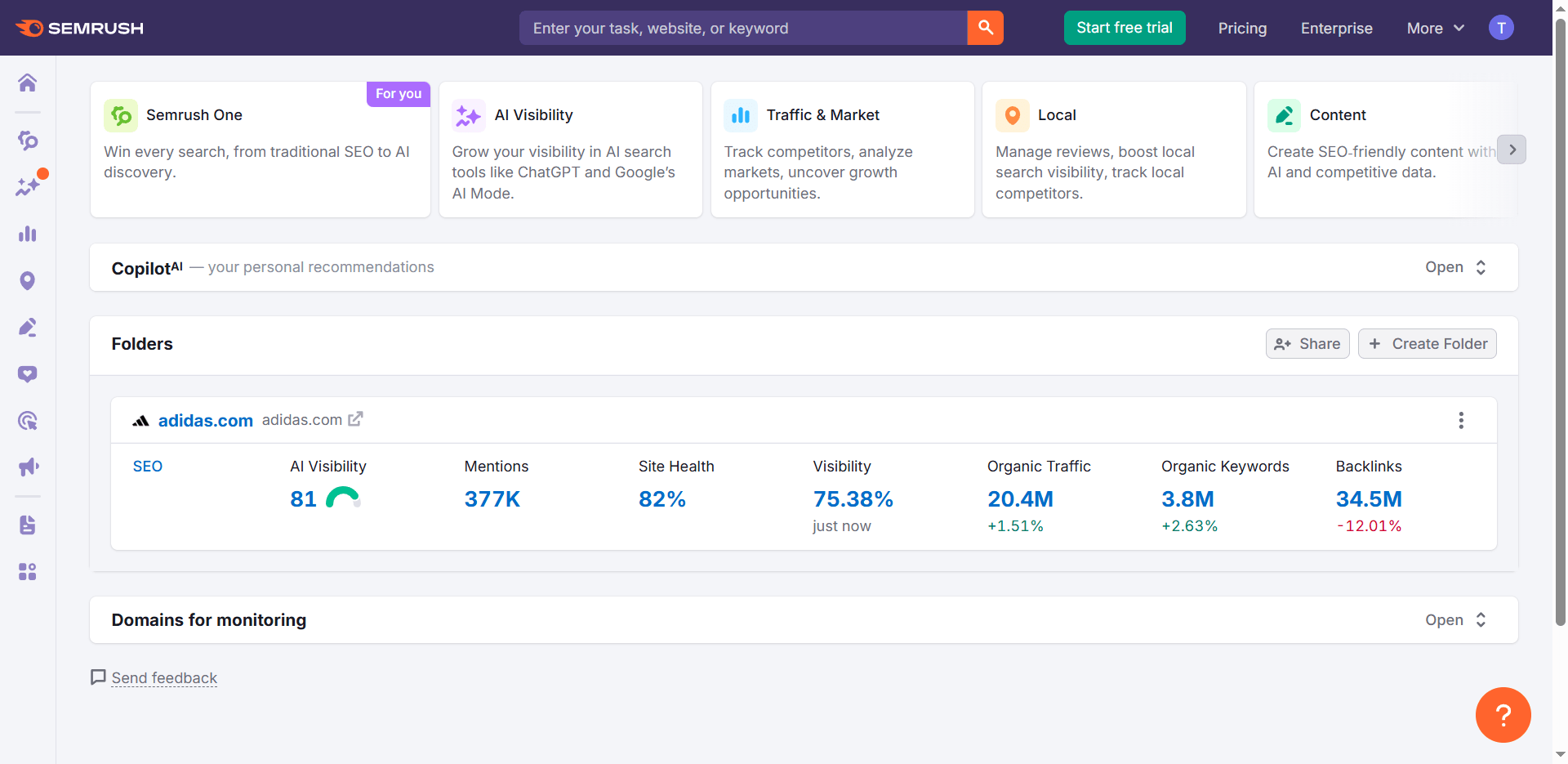
Semrush Dashboard Overview
The $199/Month Context for Small Businesses
Semrush works best for businesses that take SEO seriously and want a platform that supports long-term growth through data, research, and competitive visibility. It is commonly chosen by small teams and marketers who need more than basic keyword suggestions and want clearer direction in a crowded search landscape.
Semrush is usually a strong match if:
- SEO plays a consistent role in your growth strategy
- Your competitors are actively investing in organic rankings
- You rely on research, tracking, and competitive context to plan content
Semrush may feel excessive if:
- SEO efforts are occasional or unstructured
- Content output is limited
- A tool is expected to drive results without execution behind it
Most small businesses weigh Semrush against simpler tools before committing, and that is a smart step, especially since SEO maturity looks very different from one team to another. Getting clear on where you stand helps ensure the platform strengthens your momentum rather than turning into an expense that goes unused.
This is where alternatives often enter the conversation. Tools designed to deliver focused value at a lower price point can feel more approachable, particularly during earlier stages of growth. See Semrush Alternatives 2026.
When Semrush Is the Right Tool for Your SEO Stage
Semrush is built for businesses that treat organic search as a serious growth channel, not an occasional marketing task. This review is most useful if you are actively comparing SEO platforms and want a tool that helps you compete, plan content with intent, and make decisions based on real search data.
Semrush tends to deliver the most value when:
- SEO and content are part of a consistent growth strategy
- Your competitors are investing heavily in organic visibility
- You need deeper research, tracking, and competitive insight to guide priorities
Semrush may feel unnecessary or underused if:
- SEO work happens irregularly without a clear process
- Content production is minimal or not tied to keyword strategy
- The platform is expected to create results without execution behind it
Getting clear on fit upfront helps prevent overspending and ensures the tool supports real momentum instead of becoming shelfware.
What You Actually Get for $199/Month With Semrush (2026)
For small businesses, the $199/month Semrush plan only makes sense if it replaces meaningful work elsewhere. The value isn’t in how many tools are included, but in how effectively those tools support daily SEO, content, and competitive decisions.
At this pricing tier, Semrush delivers four core capabilities that matter most in practice: keyword research, competitive intelligence, site auditing, and visibility tracking. Everything else tends to be secondary.
Keyword Research Built for Commercial Decisions
Keyword research is where most small businesses either waste time or make expensive mistakes. Semrush’s keyword system is designed to reduce both by adding context to volume and difficulty data.
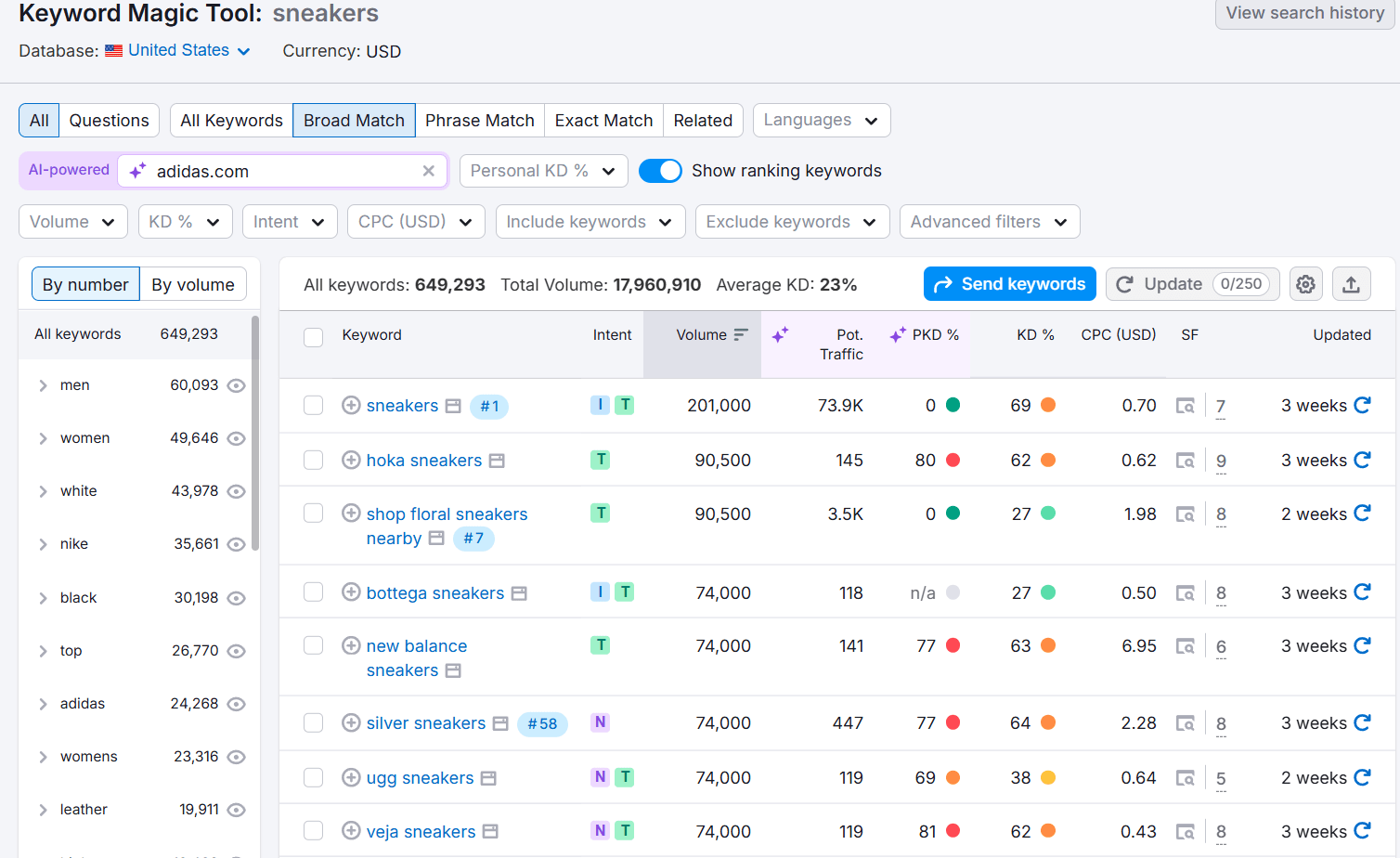
Semrush Keyword Magic Tool
What sets Semrush apart here is how deeply keywords are connected to intent and competition. Instead of treating keywords as isolated targets, Semrush shows how they cluster, which SERP features dominate, and how competitive each query actually is based on real ranking domains.
This becomes especially useful for:
- Small businesses targeting buyer-intent keywords
- Service pages competing against established brands
- Content teams prioritizing topics with commercial upside
At $199/month, this level of keyword context often replaces the need for multiple cheaper keyword tools stitched together.
Competitive Intelligence That Changes Strategy
Competitive research is one of the strongest reasons small businesses upgrade to Semrush. The platform makes it easy to understand where competitors get traffic, which pages matter most, and how visible they are across search.
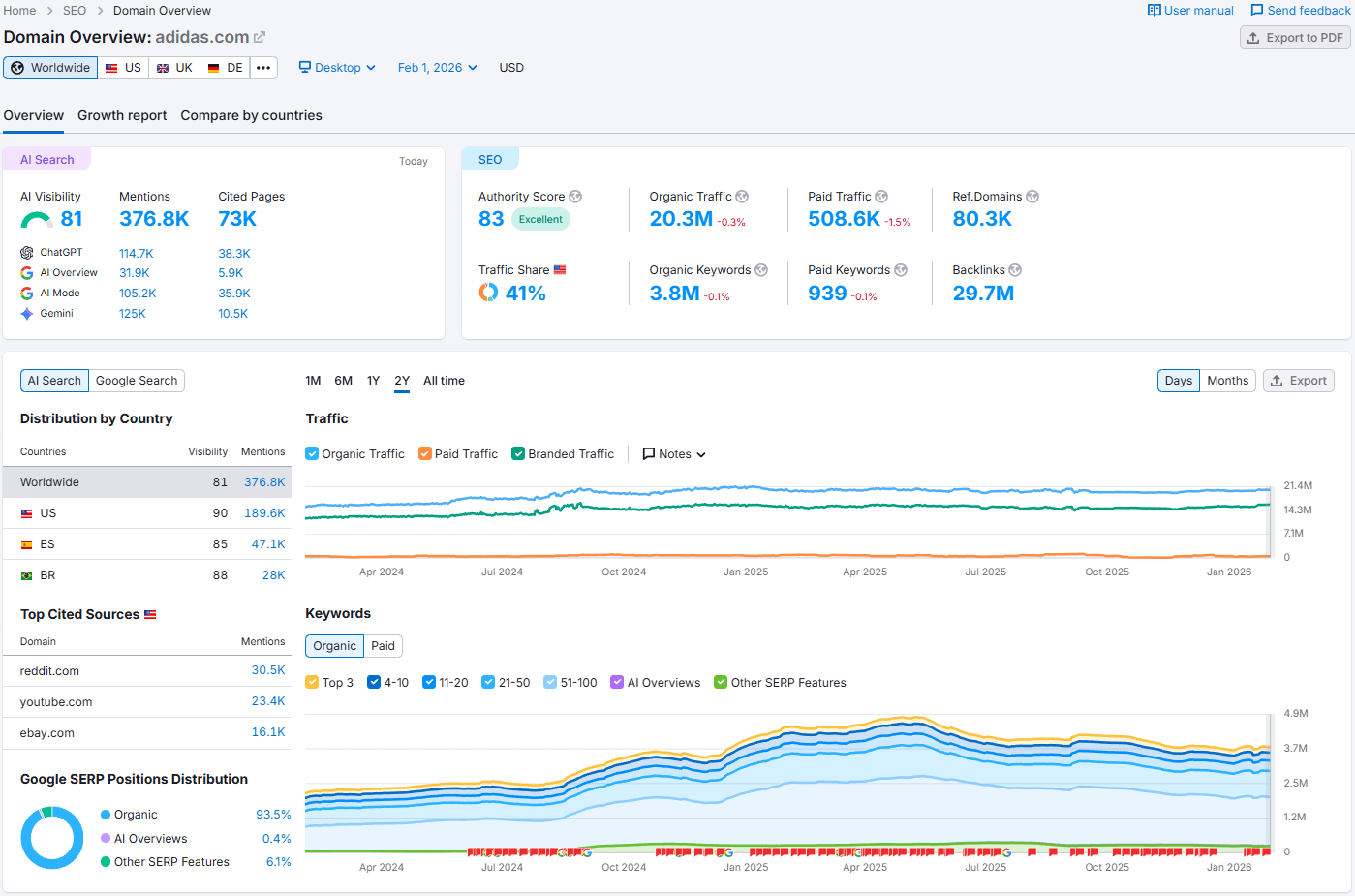
Semrush Domain Overview
Instead of guessing which competitors matter, Semrush surfaces real data around organic keywords, traffic trends, and top-performing pages. This helps small businesses focus on gaps rather than chasing every possible keyword.
This capability is particularly valuable for:
- Businesses entering competitive niches
- Companies rebuilding organic visibility
- Teams planning content based on proven demand
Many businesses considering Semrush reach this stage after outgrowing simpler tools and looking for deeper competitive context. That’s also when comparisons with platforms like Ahrefs or SE Ranking typically begin.
Ahrefs remains the industry standard for backlink analysis.
Site Auditing — Important for SEO Investment
Content and links don’t perform well on technically weak sites. Semrush’s Site Audit plays a quiet but important role in preventing hidden issues from undermining SEO efforts.
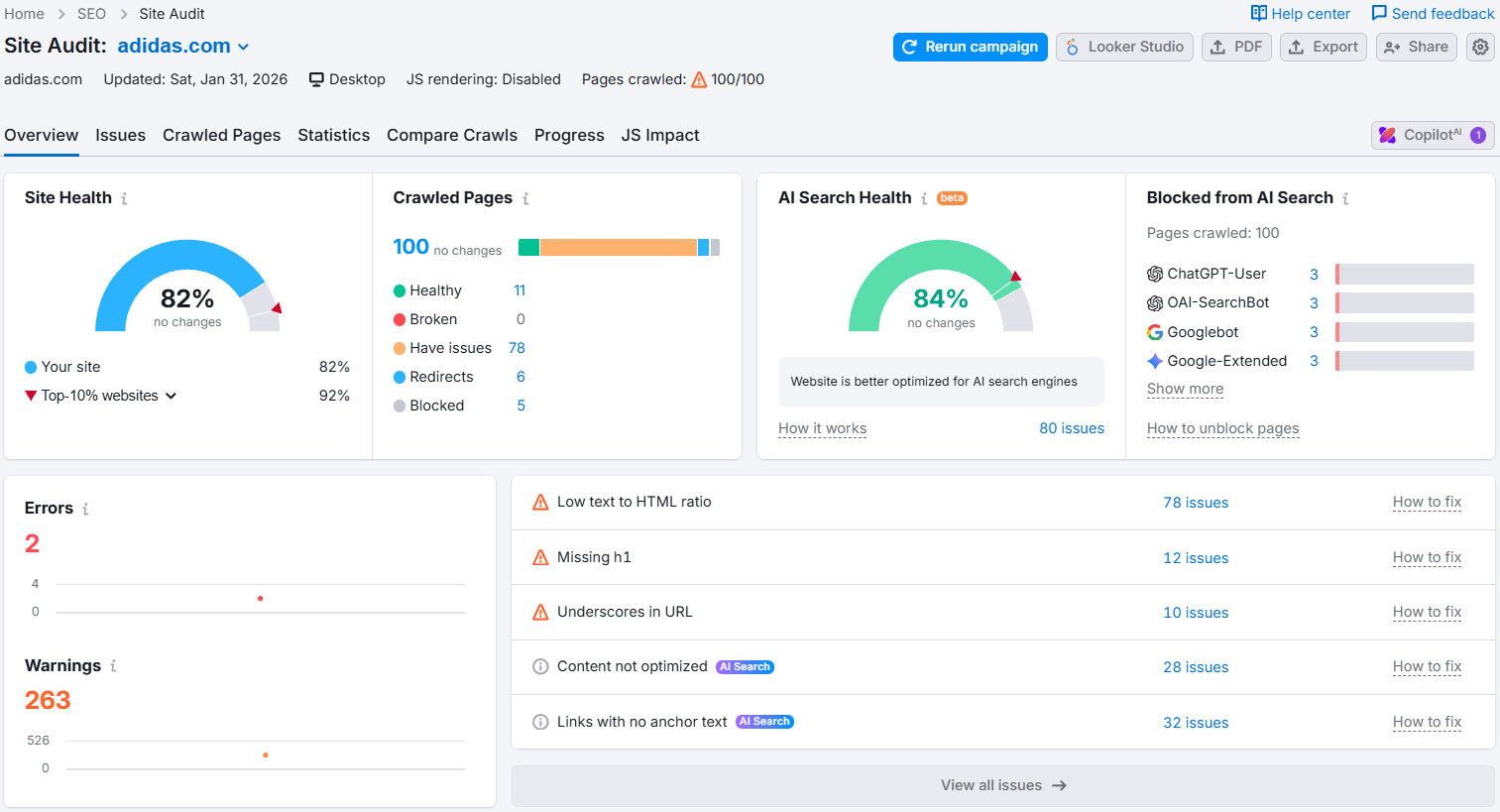
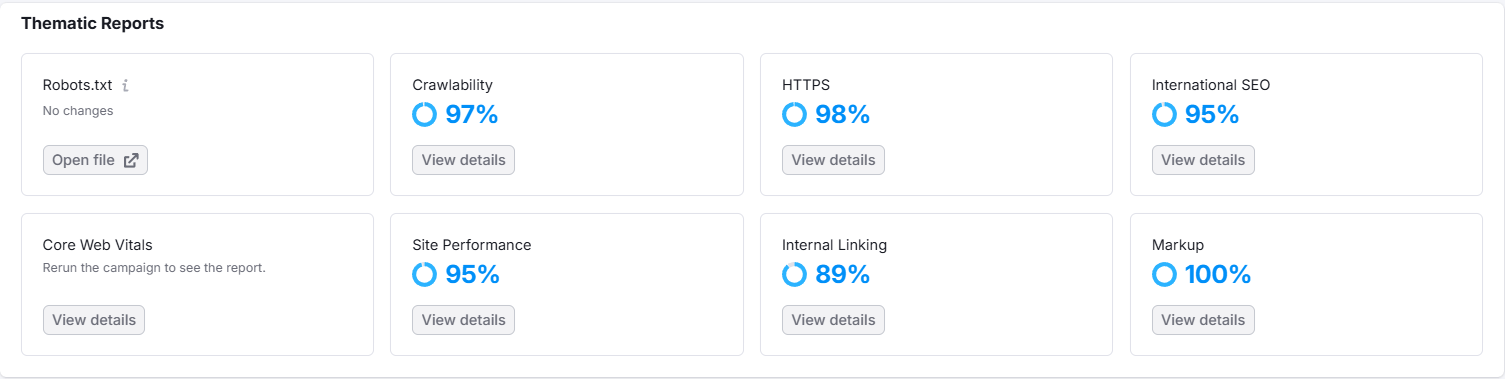
Semrush Site Audit Report
The Semrush Site Audit tool is especially valuable for small businesses because it highlights the issues that actually hold rankings back, then ranks them by severity. Instead of digging through technical reports, teams can immediately spot problems like broken internal links, crawlability errors, duplicate pages, and performance slowdowns.
For many small companies, this audit system reduces the need for additional SEO software or expensive external site reviews. Unless you are managing a large rebuild or complex migration, Semrush often covers everything needed to keep the site technically clean and search-ready, which adds real cost-to-value justification in 2026.
AI Visibility and Brand Presence Tracking
In 2026, search visibility extends beyond traditional rankings. Semrush has integrated AI-driven visibility tracking to help brands understand how often they appear in AI-generated answers and discovery surfaces.
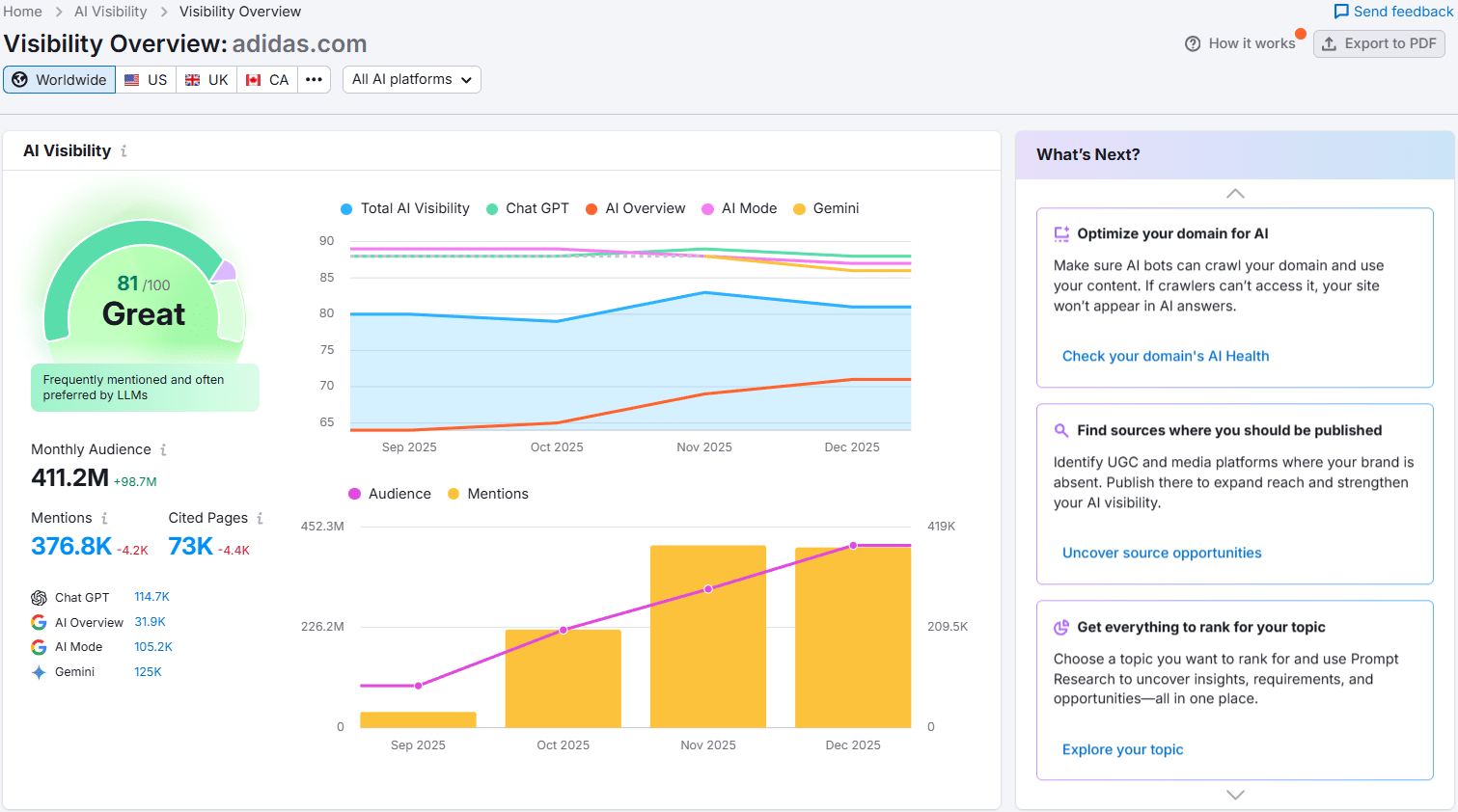
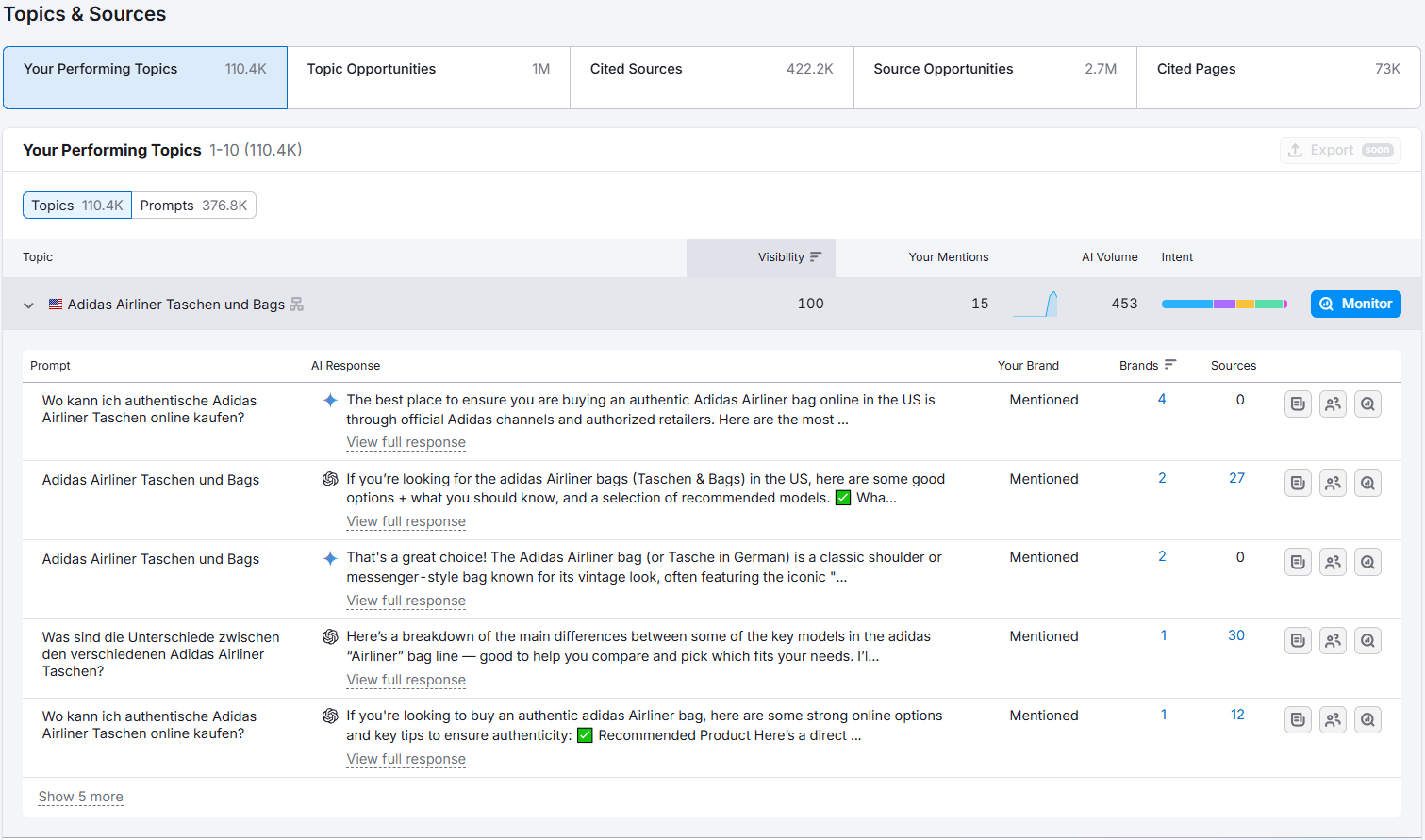
Semrush AI Visibility Dashboard
For small businesses investing in content-driven growth, AI visibility tracking introduces a meaningful advantage. As search behavior shifts toward AI summaries and assisted discovery, knowing how your brand appears in those environments becomes increasingly relevant, especially for informational and top-of-funnel keywords.
Not every business needs this data immediately, but teams competing in crowded content spaces gain an early signal into how Semrush is evolving beyond traditional rankings. It reflects a broader direction in the Semrush platform: combining classic SEO execution with the new reality of AI-led search and multi-channel visibility.
How the $199 Semrush Plan Fits Into a Small Business SEO Stack
For many small businesses, the $199 per month Semrush plan sits in a specific category: it is not an add-on tool, it is a central platform designed to consolidate multiple parts of an SEO workflow.
At this tier, Semrush often replaces several separate systems that teams typically piece together over time, including keyword research software, competitor tracking tools, site audit platforms, and the manual spreadsheets used to monitor rankings and content performance.
The value comes from consolidation. Instead of managing disconnected subscriptions, Semrush provides one environment for planning, execution, and measurement.
That said, the trade-off is commitment. Semrush performs best when it becomes part of an active weekly process. Businesses that log in occasionally often find the platform too dense to justify the cost.
This is why many small teams evaluate Semrush alongside simpler alternatives before committing long term. Check out our SE Ranking Review 2026 here.
Before moving forward, the key question is straightforward: does Semrush replace enough of your current stack to earn its price in 2026?
Where SEMrush Delivers Real ROI for Small Businesses (2026)
For small businesses, ROI from Semrush does not come from using every tool available. It comes from using a few core workflows consistently and making better decisions faster. When Semrush pays for itself, it usually does so in one of three ways: saving time, reducing bad bets, or uncovering opportunities competitors already profit from.
This section focuses on where that return typically shows up.
Content Decisions That Actually Convert
Content is one of the most expensive ongoing SEO investments for small businesses. Articles, landing pages, and guides consume time and money, and the cost of choosing the wrong topics compounds quickly.
Semrush improves ROI by helping teams prioritize content that aligns with existing demand and commercial intent.
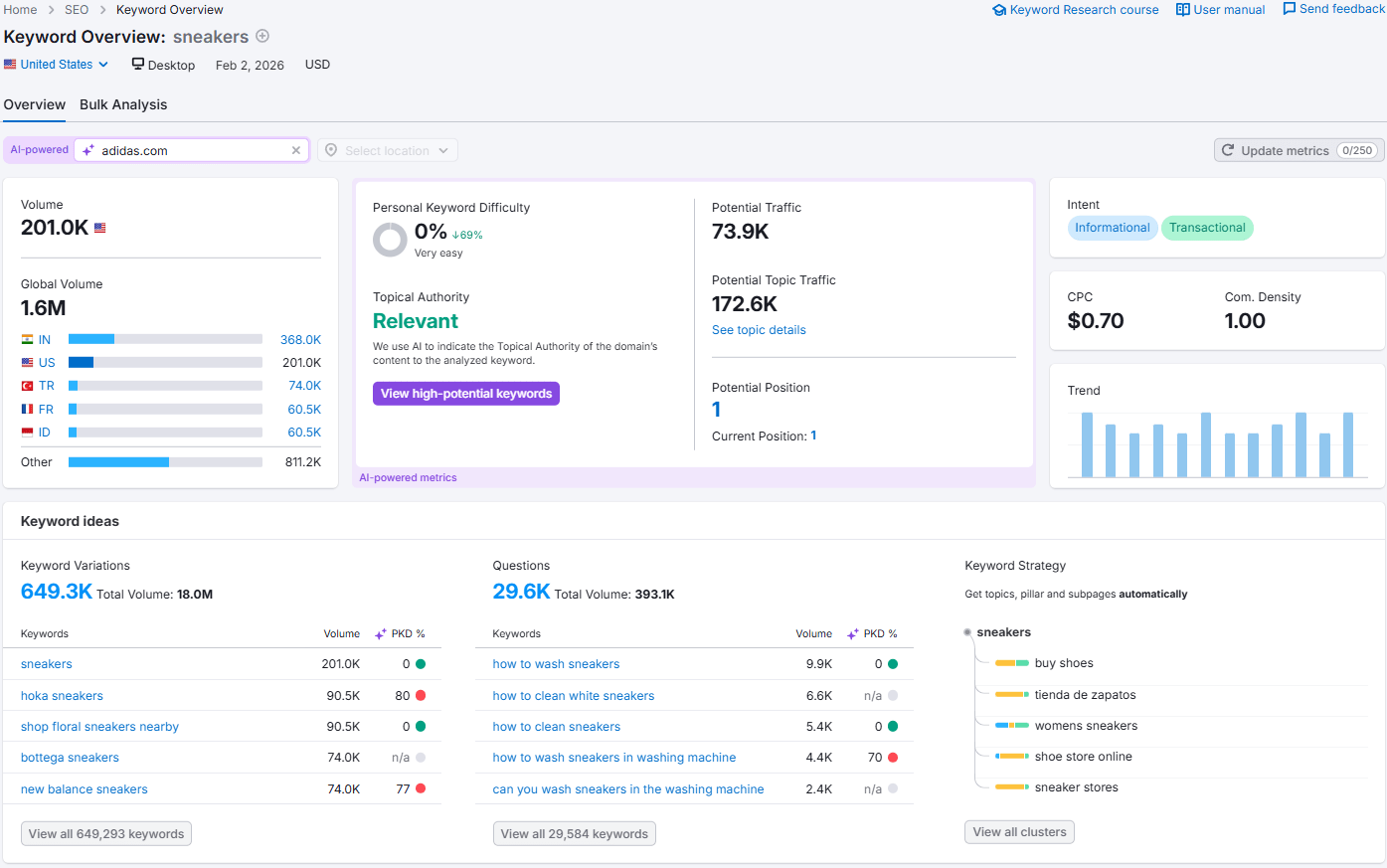
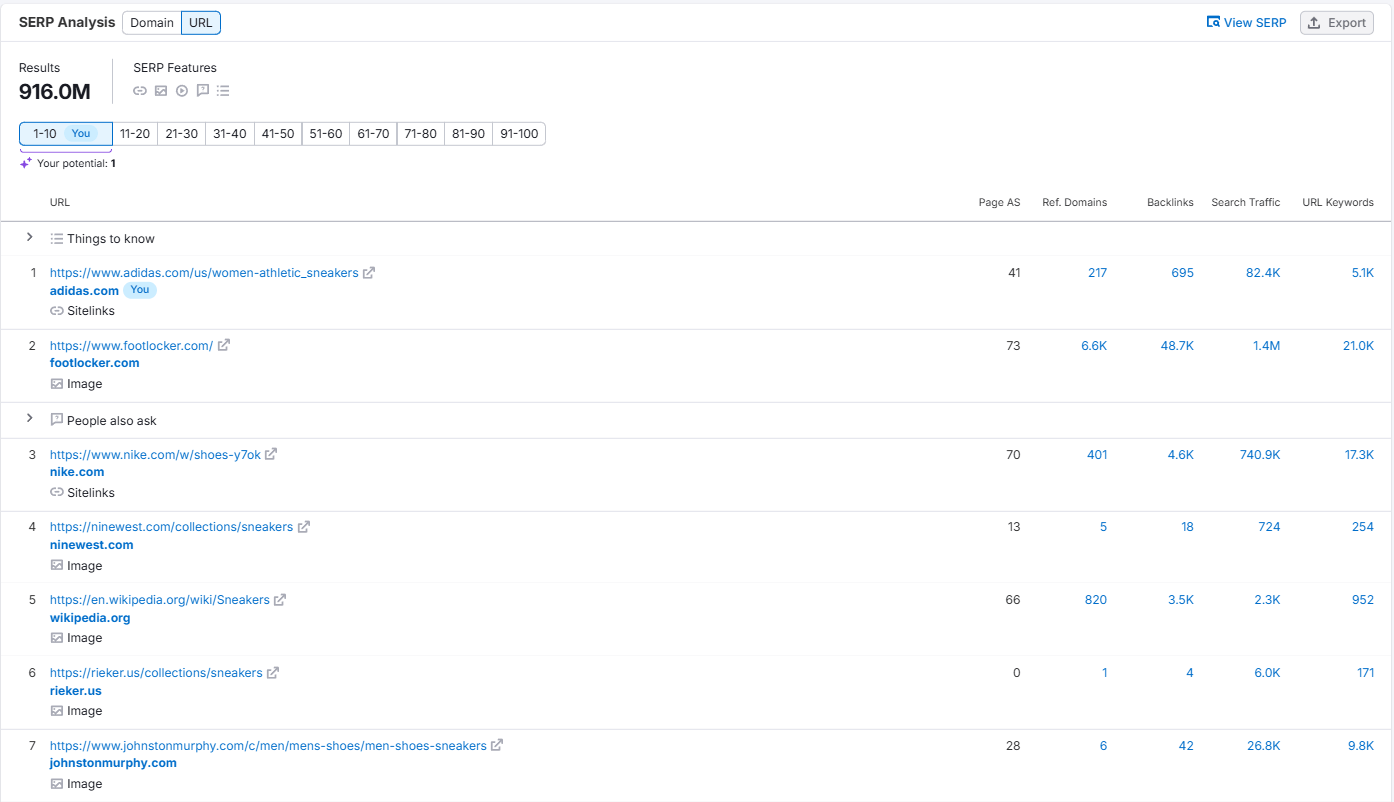
Semrush Keyword Intent and SERP Analysis Interface
Small businesses rarely have the budget to publish content that misses the mark. Semrush helps teams pressure-test ideas before committing to a page.
It allows you to confirm:
- whether a keyword brings in buyers or just casual readers
- how competitive the SERP actually is
- which existing pages are already positioned to win traffic
That clarity reduces wasted effort and keeps content focused on pages with real conversion upside. For businesses publishing even a few articles per month, avoiding one or two low-impact pieces can offset a meaningful portion of the $199 subscription cost.
Faster Competitive Catch-Up in Crowded Markets
Many small businesses operate in markets where competitors already dominate search results. Semrush shortens the learning curve by showing exactly where those competitors win and how they structure their pages.
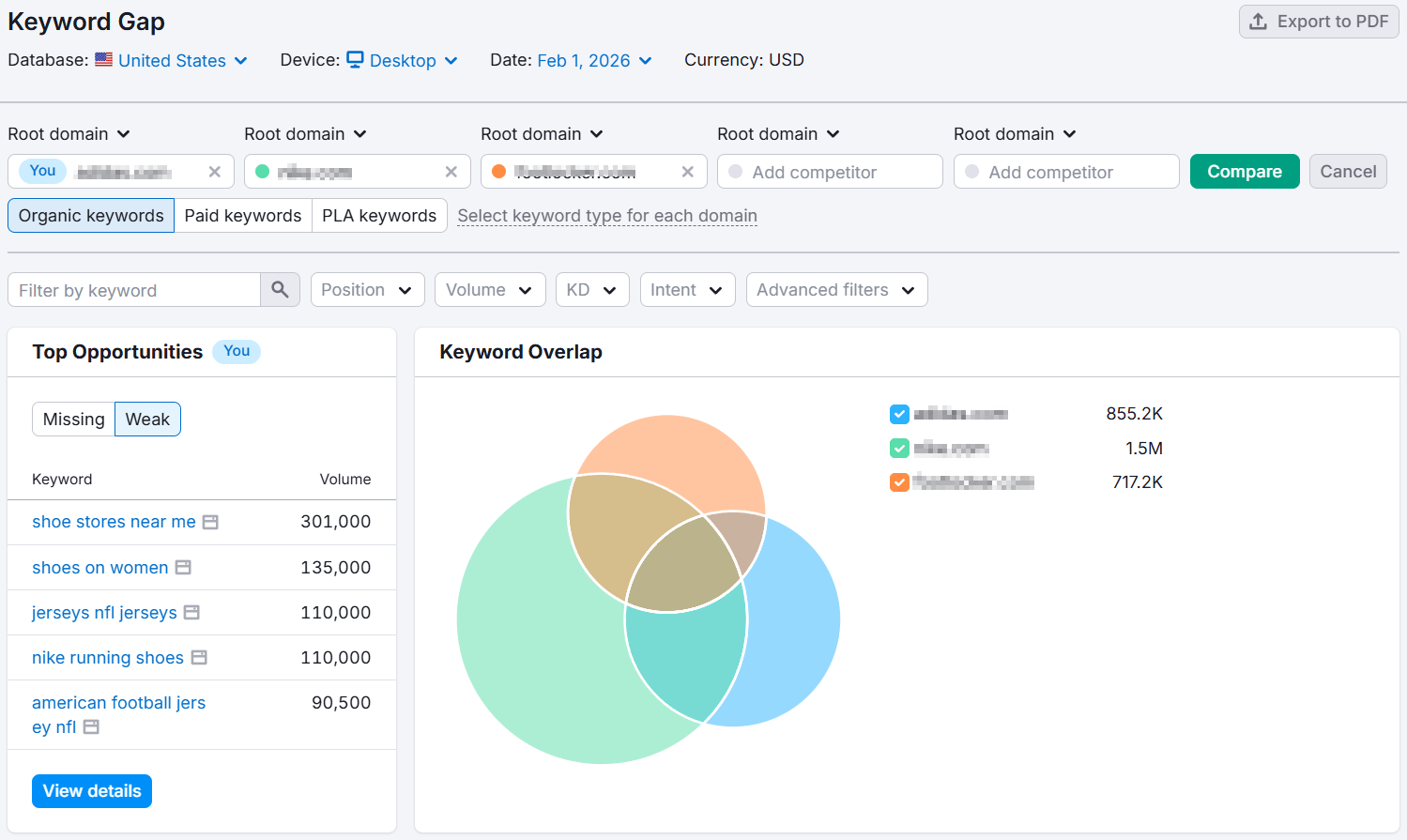
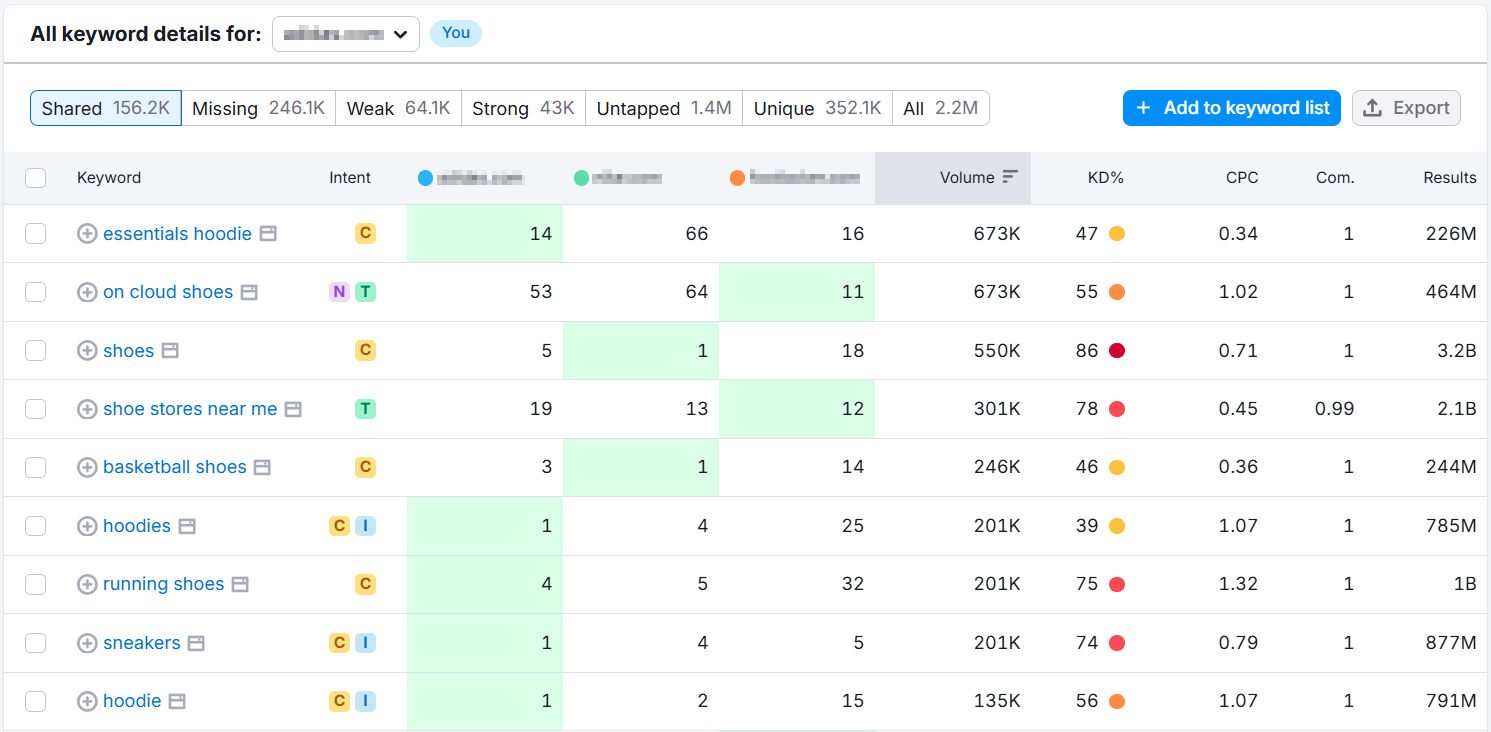
Semrush Competitive Gap Analysis
This insight allows small teams to:
- Focus on gaps competitors have overlooked
- Replicate proven page types instead of experimenting blindly
- Prioritize keywords with existing traffic patterns
In practice, this often leads to earlier wins. Ranking for a smaller set of well-chosen keywords can drive more value than chasing dozens of marginal ones. Businesses that rely on organic leads often see this as the turning point where SEO becomes predictable rather than speculative.
This is also where Semrush starts to feel meaningfully different from lighter tools.
Technical Issues That Stop Quietly Killing Performance
SEO ROI isn’t only about growth. It’s also about protecting what already exists. Small businesses frequently lose traffic due to technical issues that go unnoticed for months.
Semrush’s Site Audit helps surface those problems before they compound.
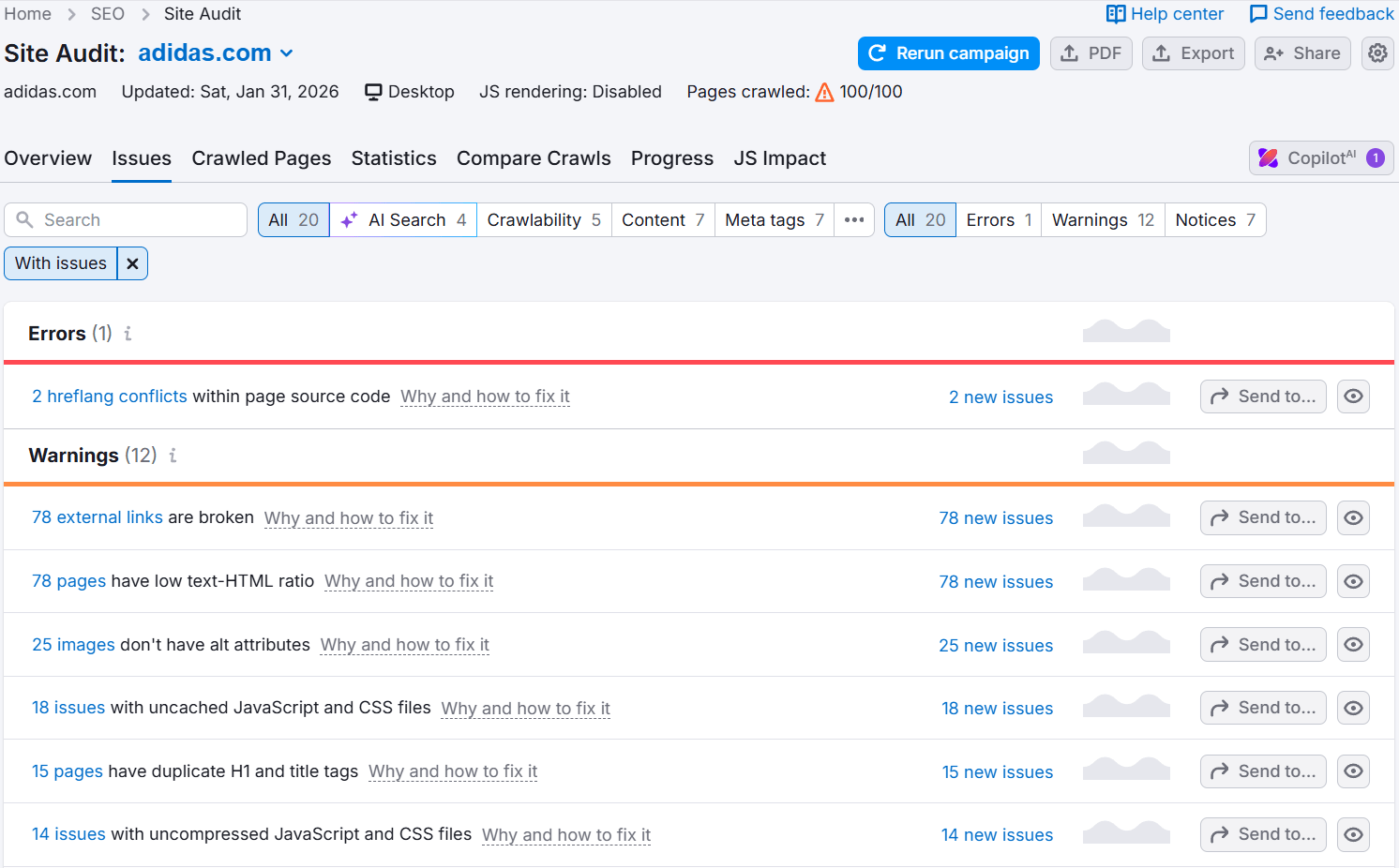
Semrush Site Audit Highlighting Technical Issues
For small businesses already relying on organic traffic, Semrush ROI often shows up in practical, measurable wins.
Common high-return outcomes include:
- catching crawl and indexation issues before traffic declines
- improving site performance and on-page experience
- preventing duplicate content or structural problems that limit rankings
When SEO contributes directly to revenue, even one avoided visibility drop can justify the monthly cost on its own.
Time Saved on Research and Reporting
ROI is not only about rankings. Time matters just as much, especially for lean teams.
Semrush reduces the need to juggle separate tools by keeping core workflows in one place:
- keyword research, audits, and competitor tracking under one dashboard
- reporting without spreadsheet-heavy manual work
- ongoing visibility monitoring without tool-switching
For in-house teams, the biggest return is often simple: more time spent executing, less time spent organizing.
When ROI Becomes Harder to Justify
Semrush is harder to justify when it becomes an occasional reference tool rather than a working system.
ROI drops quickly if:
- SEO happens inconsistently
- content output is limited
- competitive research is rarely used
In those cases, simpler platforms can cover the basics at a lower cost. Semrush delivers its strongest return when SEO is an active, repeatable process.
The ROI Threshold for Small Businesses
In practical terms, Semrush earns its keep when it helps a business do at least one of the following consistently:
- win commercially meaningful keywords
- avoid repeated low-impact content decisions
- protect existing organic traffic from technical decline
- reduce dependence on external audits and consultants
If those results matter to your business, the $199/month price is easy to defend.
Where Semrush Creates Friction for Small Businesses in 2026
Semrush is one of the most powerful SEO platforms on the market, but small businesses often feel the weight of that power in practical ways. The same depth that makes Semrush valuable for competitive research and full-stack SEO also introduces friction for lean teams trying to move quickly.
In a small business setting, the challenges tend to show up in everyday usage: the platform can feel dense, the pricing demands consistent execution, and plan limits become more noticeable as SEO activity grows.
At $199 per month, those trade-offs matter. Knowing where Semrush may slow teams down helps small business owners evaluate whether the subscription will drive real return or create unnecessary complexity in their SEO stack.
Learning Curve and Operational Overhead
Semrush is built for serious SEO work, and small businesses feel that immediately. The platform offers deep functionality, but getting comfortable with it takes time, especially for teams without a dedicated SEO specialist.
During the first few weeks, many small business users spend more effort learning the interface and navigating reports than executing changes. For founder-led teams or lean marketing departments, that operational overhead can become a real barrier unless Semrush is used consistently.
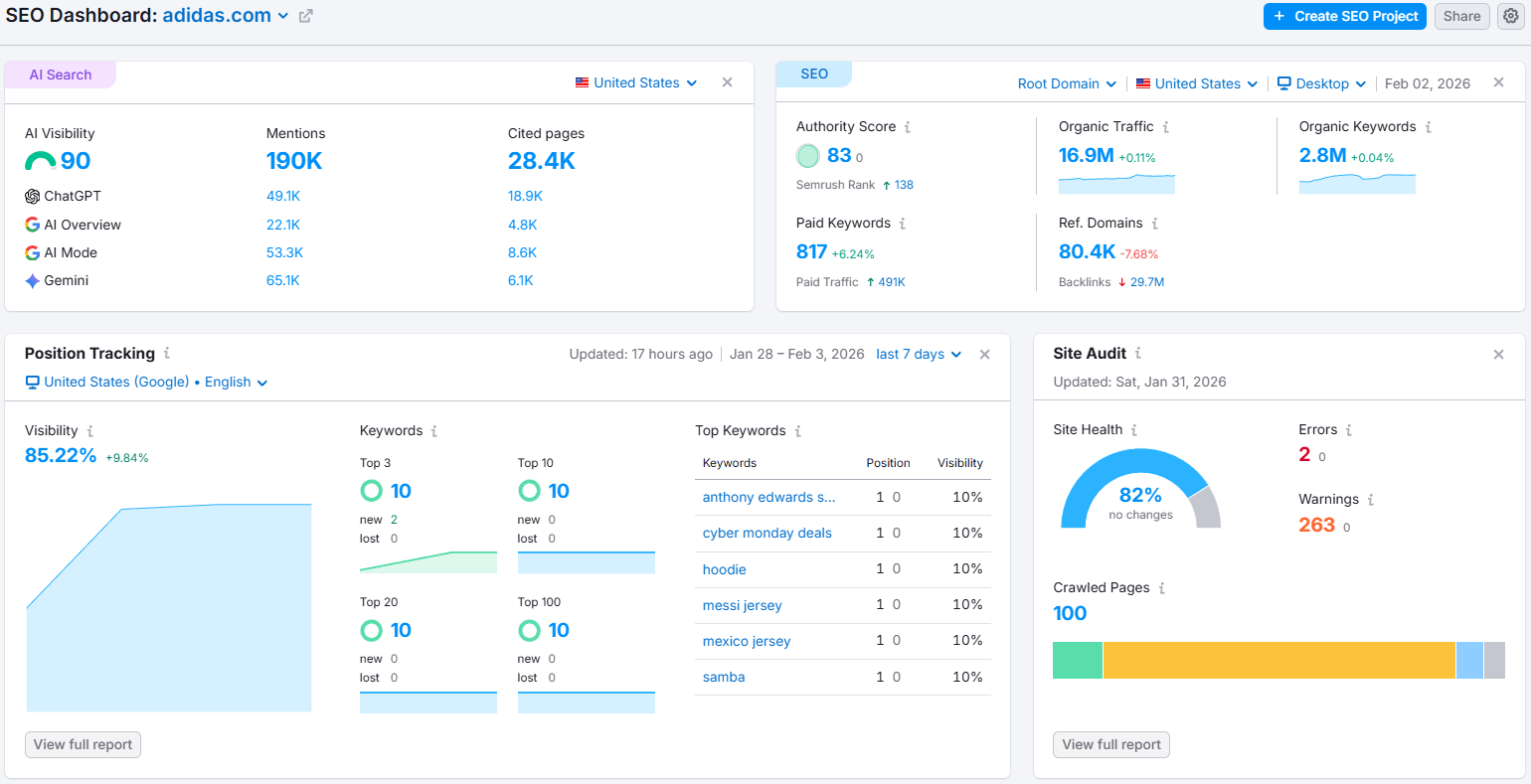
Semrush SEO Toolkit Main Dashboard
The platform assumes users will:
- Work across multiple interconnected modules rather than one simple dashboard
- Interpret layered metrics instead of receiving single-step recommendations
- Build repeatable SEO processes over time, not just run occasional checks
- Spend time configuring projects, tracking sets, and reporting structures
Use the tool weekly to get compounding value from its depth
For small businesses without an in-house SEO lead, Semrush usually takes longer to get fully up to speed with. The learning time is real, and it can delay the work that actually drives results, like publishing content and improving key pages.
The teams that see the strongest return tend to be the ones that commit early, standardize workflows quickly, and treat the platform as part of an active operating routine rather than a tool they open once in a while.
Semrush Pricing (Monthly & Yearly)
The $199/month plan covers a substantial amount of functionality, but small businesses often encounter limits sooner than expected.
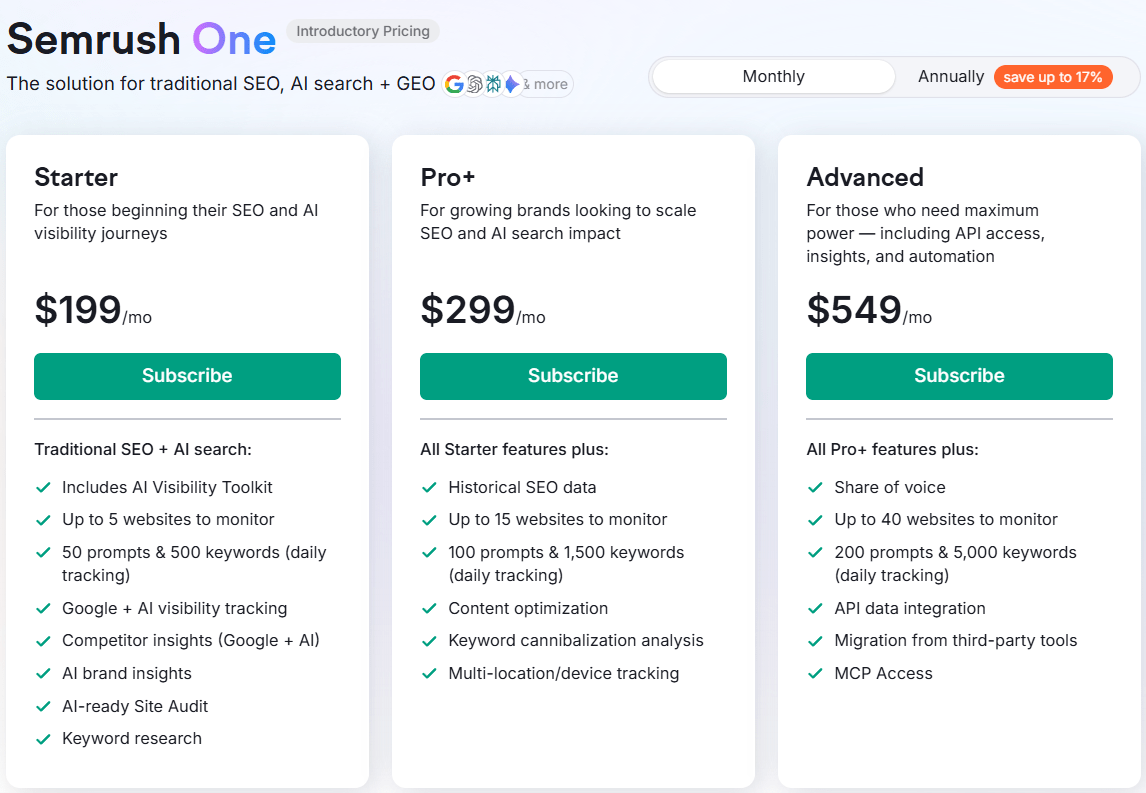
Semrush Monthly Pricing Plans
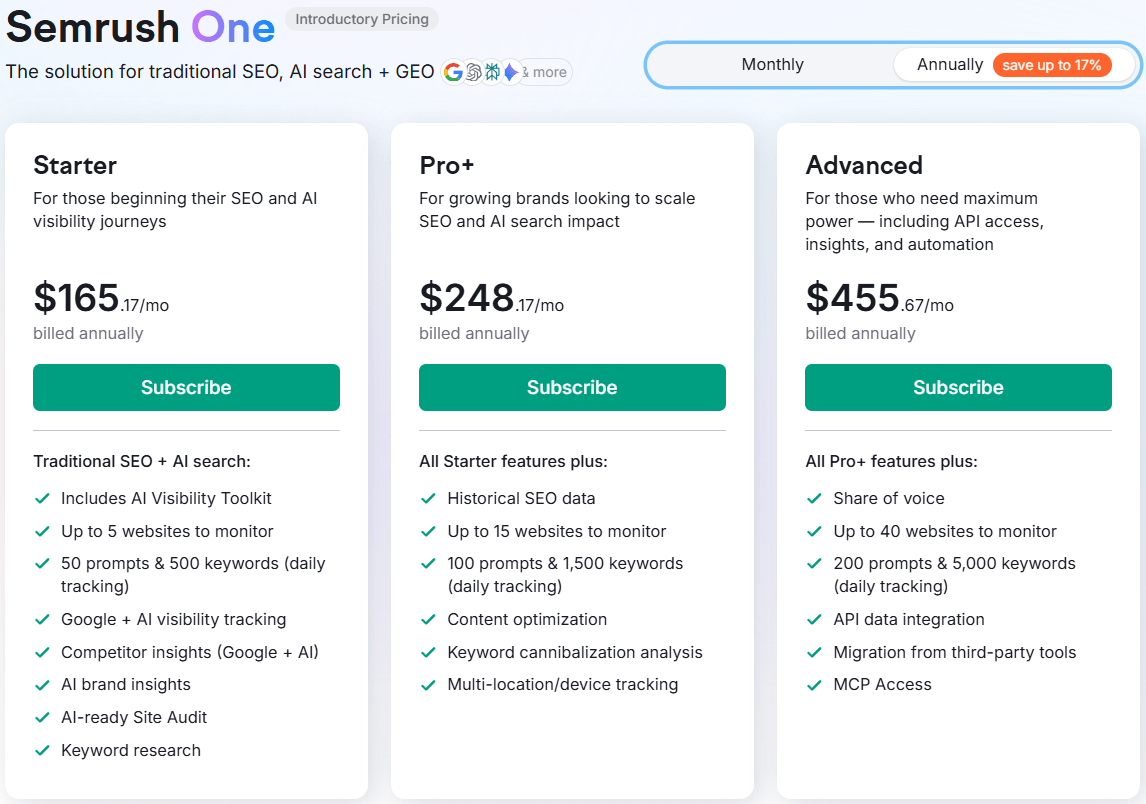
Semrush Yearly Pricing Plans
Plan limits become most noticeable as SEO efforts scale. Once keyword tracking grows across dozens of pages, competitor monitoring becomes more active, or multiple sites and locations are added, the constraints of the $199 Semrush tier surface quickly.
At that stage, upgrading stops being optional and starts becoming a practical requirement. For small businesses operating with tight marketing budgets, that pricing escalation can meaningfully affect whether Semrush still feels worth it in 2026.
Feature Overlap That Goes Unused
Semrush has expanded far beyond SEO. The platform now includes social publishing, competitor monitoring, brand tracking, content tools, and paid media workflows under the same subscription.
For small businesses, this breadth can be a double-edged advantage.
Most teams subscribe for one primary reason: improving rankings, targeting valuable keywords, and competing in organic search. The SEO toolkit alone often justifies consideration at $199 per month.
But many of the surrounding modules are not only underused, they are often gated behind additional add-ons. Social publishing features, for example, can push the monthly cost even higher by another $20 or more.
That creates a common small business tension: the platform is positioned as all-in-one, but many teams still end up paying extra for tools they may never integrate into a consistent workflow.

Semrush Social Tools Interface
For businesses evaluating whether Semrush is worth $199 a month in 2026, this is a key trade-off. The deeper the platform expands into adjacent marketing areas, the more important it becomes to ask which features will actually be used and which simply increase cost and complexity.
This is also why many small teams compare Semrush against more focused alternatives before committing long term, especially when budget efficiency and execution speed matter more than feature breadth.
Not Always the Best Fit for Lightweight SEO
Semrush delivers the most value when SEO is treated as an active operating routine, not an occasional marketing task. Small businesses that run audits only once in a while or publish content inconsistently often end up paying for depth they never fully use.
The platform becomes a mismatch when execution stays lightweight.
Common signs of misalignment include:
- Logging in only a few times per month
- Using one or two reports repeatedly
- Ignoring competitive or technical modules
When usage stays that narrow, Semrush stops functioning as a growth system and starts feeling like an expensive dashboard.
For teams without consistent SEO output, simpler tools often deliver similar practical benefit at a lower monthly cost.
Friction vs. Value: What Matters Most
For small businesses, friction only matters when it slows momentum or increases spend without improving outcomes. Semrush is powerful, but the return depends on whether the platform supports real weekly execution.
Semrush tends to justify its price in 2026 when:
- SEO tasks are scheduled and repeatable
- Competitive research actively shapes content strategy
- Technical health is monitored before traffic drops occur
When those conditions are missing, the platform’s complexity becomes harder to defend. In that situation, more focused SEO software often feels easier to use, easier to maintain, and easier to justify financially.
Final Verdict: Is Semrush Worth It for Small Businesses in 2026?
Semrush is one of the most complete SEO platforms available in 2026, but it only makes sense for small businesses that will actually use its depth.
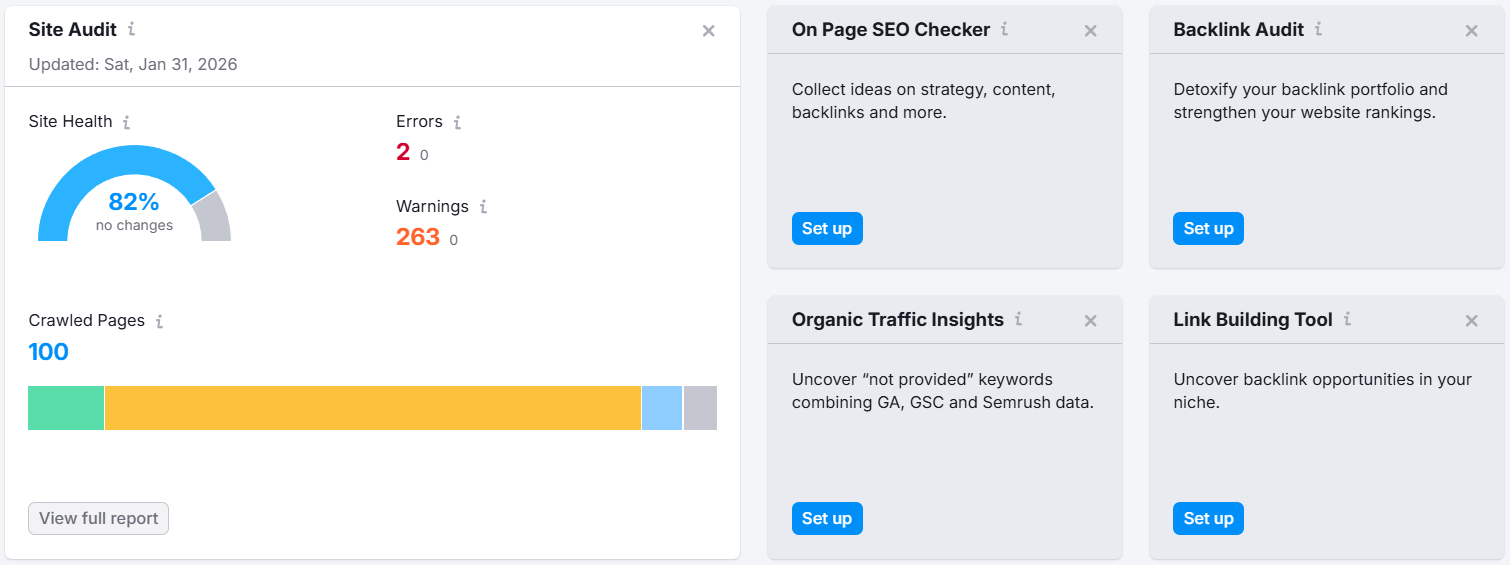
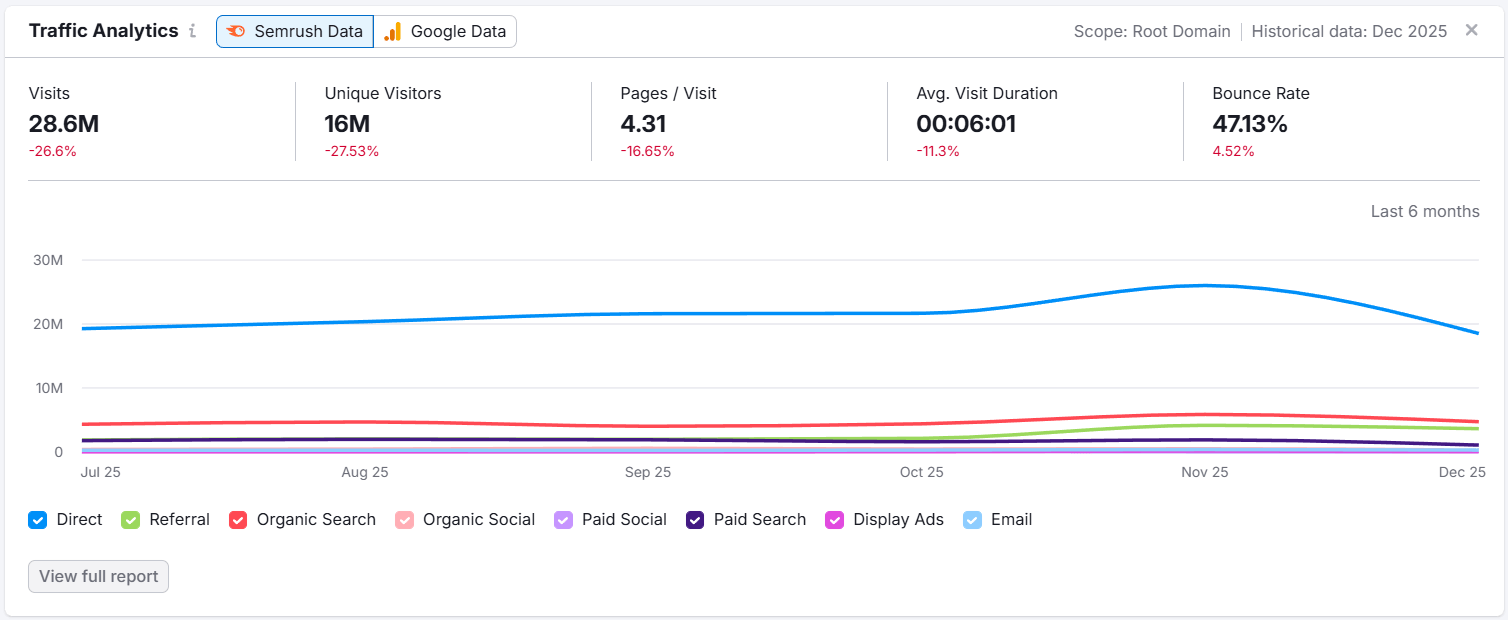
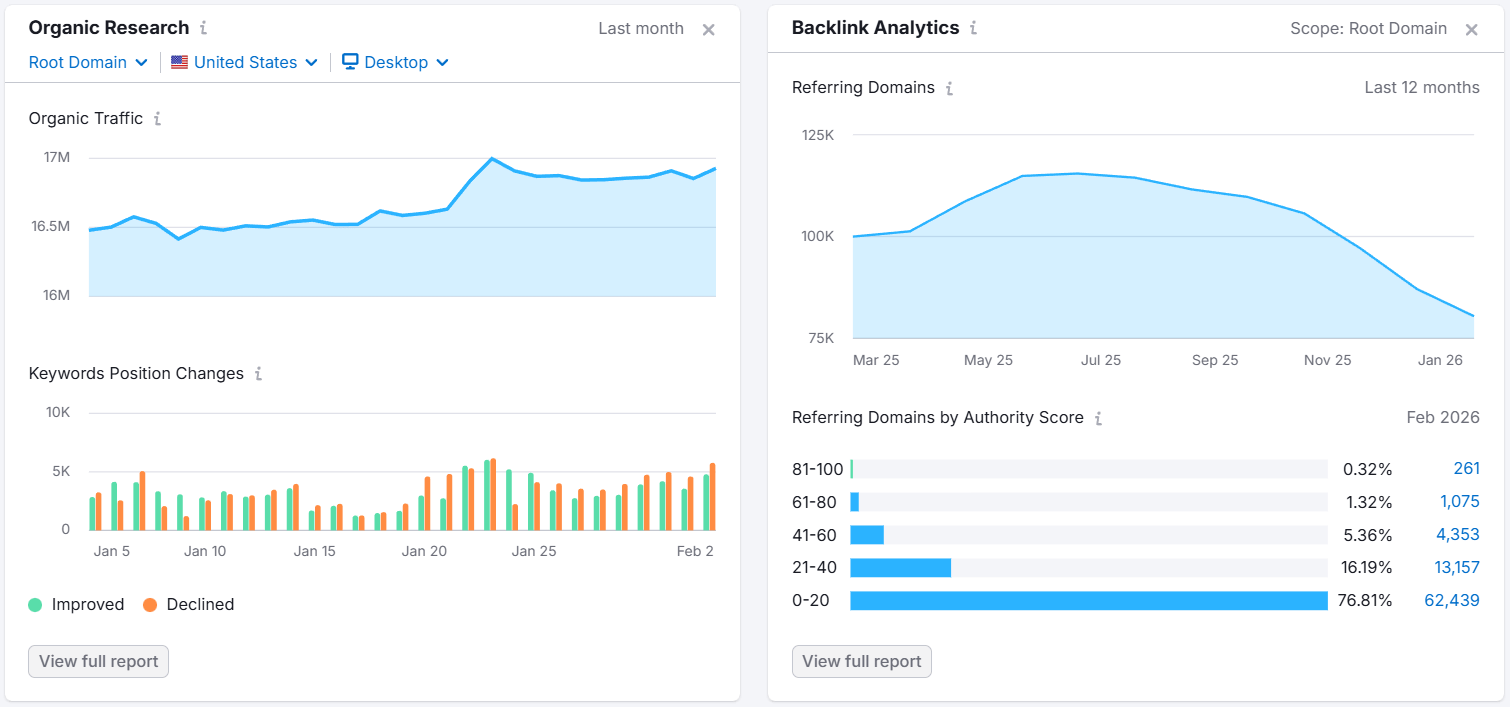
Semrush Reporting Dashboard Summarising SEO Performance
For teams where organic traffic drives leads, sales, or long-term visibility, Semrush can remove a lot of guesswork. Keyword research becomes clearer, competitor strategy becomes easier to track, and technical issues surface before they quietly drag performance down.
That combination is where the value comes from: fewer blind decisions, fewer missed opportunities, and more control over what is happening in search.
Semrush performs best in businesses that already treat SEO as an operating system, not a side project. If content is published consistently, rankings are monitored, and competitors influence strategy, the platform becomes easier to justify quickly.
If SEO is still occasional, unstructured, or handled only when something breaks, Semrush tends to feel heavier than necessary. In those cases, simpler tools often deliver enough value without the same learning curve or commitment.
Many small business owners compare Semrush with platforms like SE Ranking, Serpstat, or Mangools for this exact reason. The goal is not finding the cheapest tool, but finding the one that matches how SEO is realistically executed inside the business.
Pros And Cons of Semrush
Pros
- Industry-leading keyword research and SERP analysis
- Competitive visibility that helps small teams plan smarter
- Site audit tools that catch technical issues early
- Content and optimization workflows built into one platform
- Strong reporting for agencies, in-house marketers, and founder-led teams
Cons
- Steeper learning curve than most small business SEO tools
- Many features go unused in lean workflows
- Add-ons can increase cost beyond the core plan
- Depth can feel like complexity without consistent weekly use
- Overkill for businesses publishing only minimal content
When Semrush Makes Sense Long-Term
Semrush tends to be a strong long-term investment when:
- SEO directly supports lead generation or revenue
- Content strategy is planned and executed consistently
- Competitors are actively investing in organic search
- Technical SEO is monitored before traffic drops occur
In these environments, Semrush functions as a serious growth platform, not just a tool.
When to Reconsider or Delay
Waiting or choosing an alternative is often reasonable when:
- SEO is still exploratory or inconsistent
- Budget is better spent on execution first
- The team wants a simpler, narrower workflow
- Competitive research is rarely used
That does not rule Semrush out permanently. It usually means the timing is not ideal yet.
Frequently Asked Questions
Is Semrush worth it in 2026?
Semrush is worth it in 2026 when SEO is an active part of your marketing workflow. If you publish content consistently, track rankings, and use competitor data to guide decisions, the platform’s research and auditing depth tends to pay off through better targeting and fewer costly mistakes.
Should you pay for Semrush or use a cheaper tool?
Paying for Semrush makes sense when you need competitive context, reliable keyword research, and ongoing technical monitoring in one place. If SEO is still occasional, a simpler tool can cover the basics until your workflow becomes more consistent.
Which Semrush plan makes the most sense to start with?
Start with the plan that matches how much you will track and manage. Most teams begin with the entry tier and only move up once they are tracking more keywords, monitoring multiple competitors, or managing several locations or sites.
What kinds of sites get the most value from Semrush?
Semrush tends to deliver the strongest value for sites competing in crowded search results, publishing content regularly, or relying on organic traffic to drive leads. It is especially useful when rankings depend on understanding competitor pages, link profiles, and SERP difficulty.
What are the best Semrush alternatives in 2026?
Common alternatives include SE Ranking, Mangools, Serpstat, and Ahrefs, depending on what you prioritize. Semrush alternatives tend to make sense when you want a simpler interface, a narrower feature set, or a more focused workflow.
Does Semrush replace other SEO tools?
In many setups, yes. Semrush can cover keyword research, competitor analysis, technical audits, and reporting in one platform. The main exception is when you need highly specialized tooling for a single function, or when your workflow is intentionally lightweight.
How long does it take to get value from Semrush?
Teams usually see value fastest when Semrush is used weekly. If you set up tracking, run audits, and integrate keyword research into content planning, the platform becomes actionable quickly. If it is only opened occasionally, it tends to feel slower to justify.