

Here’s what you’ll find in this guide:
- What actually matters when evaluating SEO software
- How to narrow down options quickly
- Which tools fit different business needs (all-in-one, competitor research, beginner-friendly, link-focused)
- A clear decision path based on how SEO is handled inside small teams
Choosing an SEO tool in 2026 comes down to one practical reality: software only helps when it supports how SEO is actually executed inside a small business.
Different teams need different things. Some require competitive research, others need a simple workflow they can stick to consistently.
Semrush, SE Ranking, Ubersuggest, and Ahrefs all solve real problems, but they solve different ones. The key is choosing the tool that matches what matters most for your business right now.
This guide is built to make that decision easier.
What a Good SEO Tool Does for Small Businesses in 2026
In 2026, SEO tools are no longer just keyword databases. The best platforms help small businesses answer questions that directly affect growth:
- Which keywords are realistic targets with your current authority
- Which pages deserve optimization this month
- What competitors are doing that explains their rankings
- What technical issues are quietly holding performance back
- Whether content efforts are compounding or stalling
A good tool creates clarity. It helps teams focus effort where results are most likely.
The Criteria That Actually Matter When Choosing SEO Software
Weekly usability
Small businesses don’t fail with SEO because the tools lack features. They fail because the tool never becomes part of a weekly routine.
A platform can be extremely powerful, but if it takes an hour just to remember where reports live or what metrics matter, it won’t get used consistently. That’s especially true for founders and small teams juggling multiple channels.
Weekly usability means the tool helps answer questions quickly, such as:
- Are rankings improving for the pages that bring leads?
- Did anything break technically after the last site update?
- Which keyword opportunities are realistic next targets?
Tools that support fast weekly execution tend to outperform “deeper” platforms that require heavy interpretation. For most small businesses, the best SEO tool is the one that fits naturally into Monday planning or monthly check-ins without friction.
Limits that fit your growth
SEO tools rarely become frustrating on day one. They become frustrating three months later, once SEO starts working.
That’s when businesses realize their plan includes limits on:
- tracked keywords
- campaigns or projects
- crawl capacity for audits
- competitor monitoring
- reporting exports
These constraints matter more than most people expect, because growth in SEO is structural. Once you add more service pages, publish more content, or expand into additional locations, your keyword set scales quickly.
As your site grows, your SEO needs scale quickly. A tool that feels affordable now can become restrictive at the exact moment you gain traction.
The right tool should still support your workflow six to twelve months from now, not just during the first week of setup.
Decision clarity
Most small businesses don’t struggle with SEO because they lack data. They struggle because they don’t know what to do next.
A useful SEO platform should act like a decision engine, not a reporting warehouse. You should be able to open the tool and immediately see where progress is being blocked:
- which pages are underperforming compared to their potential
- which keyword opportunities are actually within reach
- where competitors are taking traffic you could win
- what actions will create movement in the next 30 days
When a tool forces you to interpret endless charts, SEO becomes passive. When it highlights priorities, SEO becomes execution-driven.
Clarity is what turns SEO from “analysis” into measurable growth.
Workflow alignment
SEO software only works when it matches how your business operates.
Some companies have dedicated marketing teams running audits, publishing content weekly, and tracking competitors daily. Others are lean operations where SEO happens between sales calls and product work.
That difference matters more than feature checklists.
The right tool supports the way SEO will realistically get done inside your business:
- structured systems for consistent optimization
- competitive research when rankings depend on strategy
- lightweight platforms for early traction and speed
- authority tools once backlinks start defining who wins
Buying a platform designed for a different operating rhythm creates immediate friction. The best SEO tool feels like reinforcement, not another process to maintain.
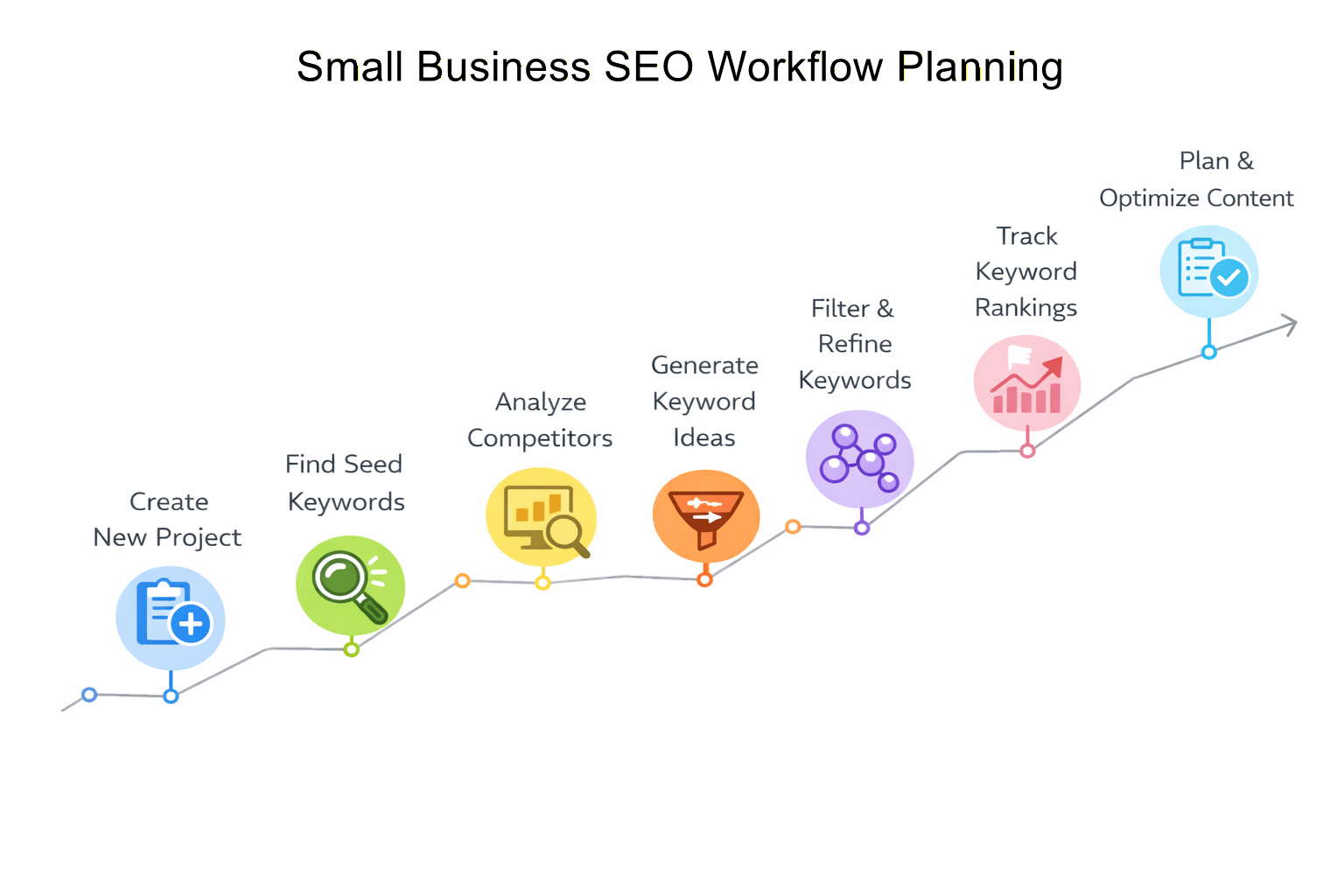
Where SEO Tool Spending Goes Wrong
Most wasted SEO software spend comes from choosing a tool that does not match the business stage.
Common examples include:
- Paying for advanced competitor suites while SEO work happens inconsistently
- Choosing beginner tools when competitive depth is required
- Investing in backlink platforms before authority-building is part of the plan
- Using multiple disconnected tools and losing time to manual tracking
The strongest results come from matching the platform to the workflow that will actually be executed over the next 6–12 months.
The Tools Most Small Businesses May Consider
Finding the right SEO software can feel overwhelming at first, especially with so many platforms claiming to do everything. The good news is that most small businesses do not need dozens of tools. A few trusted SEO solutions stand out because they are reliable, beginner friendly, and packed with the features that actually help improve search visibility.
SE Ranking for teams that want a structured all-in-one workflow
→ SE Ranking is one of the most balanced SEO tools for small businessesSemrush for businesses in competitive industries that need deeper research
→ Semrush ReviewUbersuggest for beginners prioritizing usability and quick clarity
→ Ubersuggest is often the first SEO tool beginners tryAhrefs for businesses with a bigger focus on authority and backlink competition
→ Ahrefs remains the industry standard for backlink analysis
Every tool is built to solve a different challenge at the exact moment you need it. Whether you’re just getting started or ready to scale fast, the right choice can unlock the next level of growth for your business.
Step One: Define What SEO Success Looks Like in Your Business
Choosing an SEO tool becomes dramatically easier once you define what “success” actually means for your business.
Most small businesses skip this step. They open a comparison post, look at feature lists, and end up buying whatever feels popular or comprehensive. That approach leads to wasted subscriptions because the tool never aligns with the outcome the business truly needs.
Before evaluating any platform, get specific:
- Are you trying to generate local leads next month?
- Are you building a content engine that needs traffic growth over 12 months?
- Are competitors already outranking you for revenue-driving keywords?
- Are you trying to recover lost visibility after a site redesign?
Each of those scenarios requires a different tool emphasis.
SEO software should be chosen based on the job it needs to perform inside your operation, not based on how impressive the dashboard looks.
The Most Useful Question to Ask Before Paying for Any SEO Tool
A simple filter prevents most bad purchases: What decision will this tool help us make every week?
If you can’t answer that clearly, the platform will become background noise.
For small businesses, the weekly decision usually falls into one of these:
- Content targeting — What pages or topics should be created next to attract buyers, not just visitors?
- Visibility monitoring — Are important keywords moving in the right direction, or stalling quietly?
- Technical prioritization — What issues are actively holding pages back from ranking?
- Competitive positioning — Which competitors are gaining search real estate, and what are they doing differently?
- Authority growth — Are backlinks and trust signals the limiting factor in your niche?
A good SEO tool strengthens one or two of these decisions immediately.
When SE Ranking Makes Sense as a Small Business Operating System
Most small businesses do not want five separate tools. They want one place to manage SEO without fragmentation.
SE Ranking works well when your priority is building a repeatable routine:
- keyword research for service pages and content planning
- rank tracking that stays organized without constant setup
- audits that show what matters instead of flooding you with noise
- competitor monitoring that fits a small team’s bandwidth
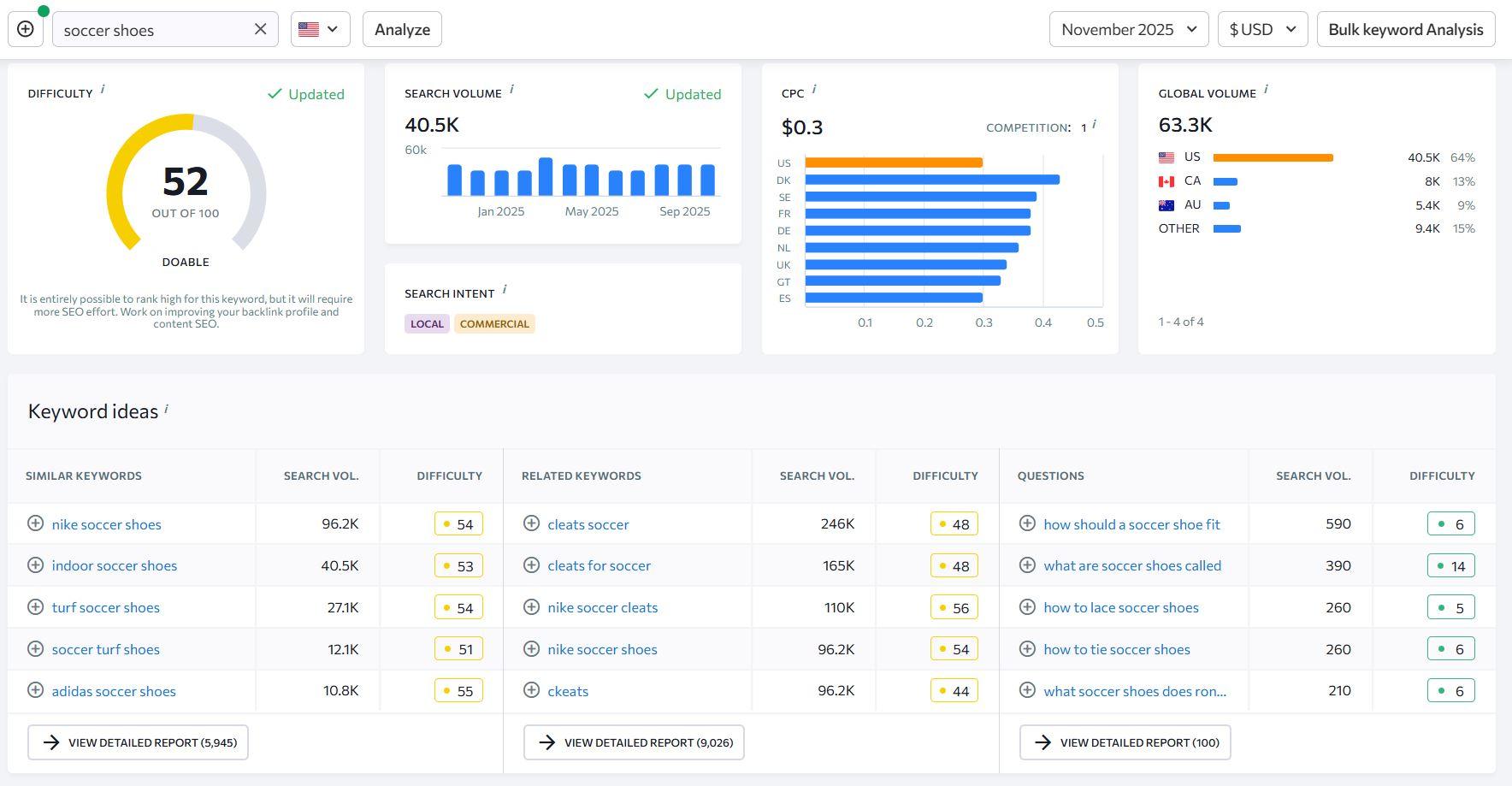
SE Ranking Keyword Research Dashboard
How to Compare SEO Tools Side by Side (What Actually Matters in 2026)
Once you’ve narrowed your shortlist to serious platforms like SE Ranking, SEMrush, Ubersuggest, or Ahrefs, the decision becomes less about branding and more about fit.
Most small businesses don’t choose the wrong SEO tool because the software is bad. They choose wrong because the platform doesn’t match their operating reality six weeks after purchase.
This section breaks down the evaluation criteria that actually separates tools that get used weekly from tools that quietly collect dust.
Semrush: The Best Option for Deep Competitive SEO Insights
Some businesses operate in markets where SEO mistakes cost real money.
In competitive niches, publishing content without knowing what already dominates the SERPs becomes expensive quickly. Competitive intelligence tools matter because they prevent wasted effort.
Semrush becomes valuable when you need answers like:
- Which competitor pages drive the majority of their traffic?
- What keyword categories are they winning consistently?
- Where are gaps that a smaller business can realistically take?
- Which content investments have actual commercial upside?
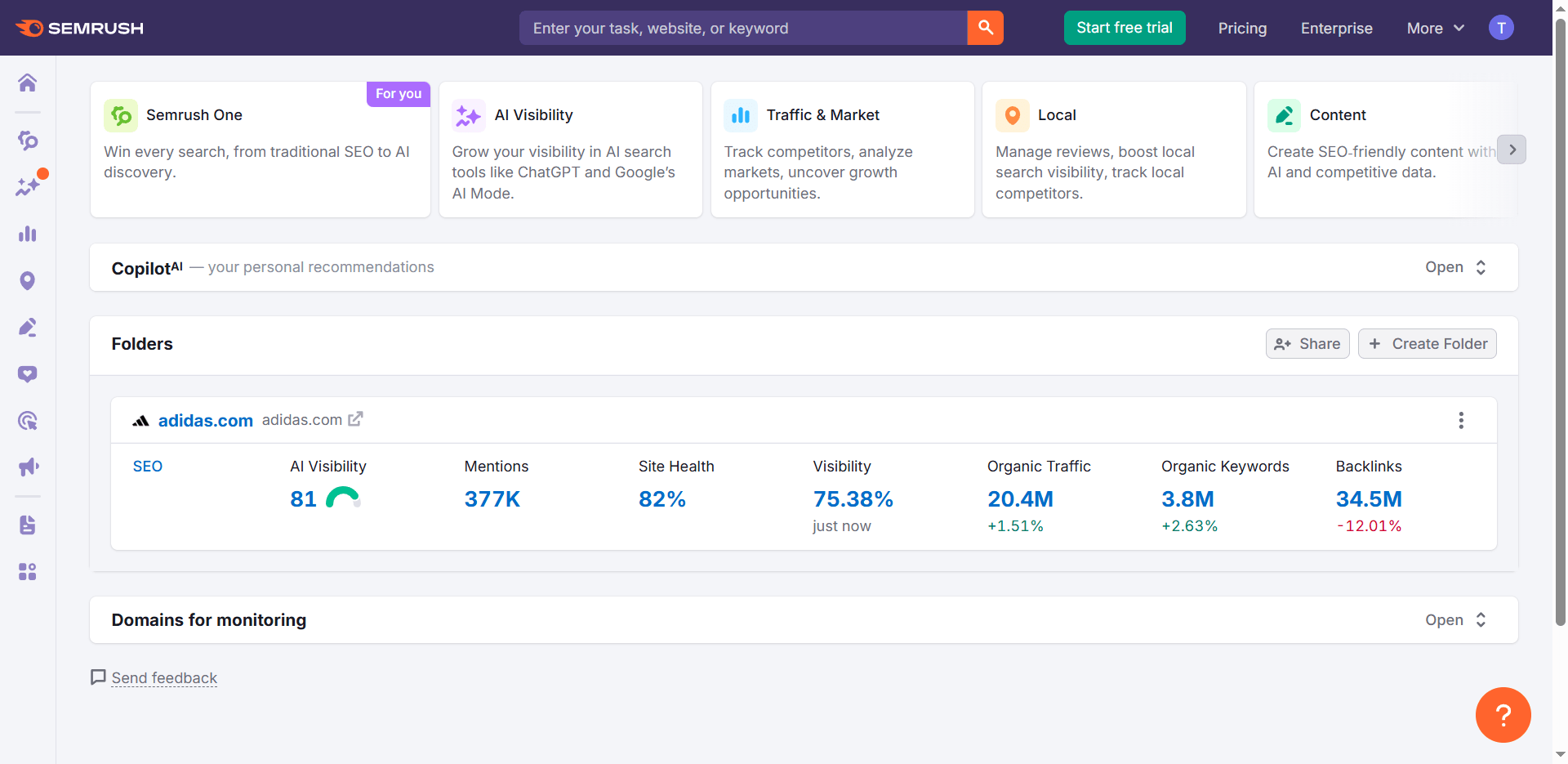
Semrush Dashboard Overview
In other words, Semrush pays back when research directly prevents bad bets. Check out our Semrush review.
For businesses in crowded industries, competitive context is often the missing layer.
Ubersuggest: A Smart Starting Point for Founder-Led Growth
Many small businesses start SEO without a specialist.
The tool needs to feel approachable enough that it actually gets used. That matters more than depth early on, because consistency is what creates traction.
Ubersuggest works best when the business needs:
- fast keyword validation
- simple progress tracking
- quick visibility insights without overwhelming dashboards
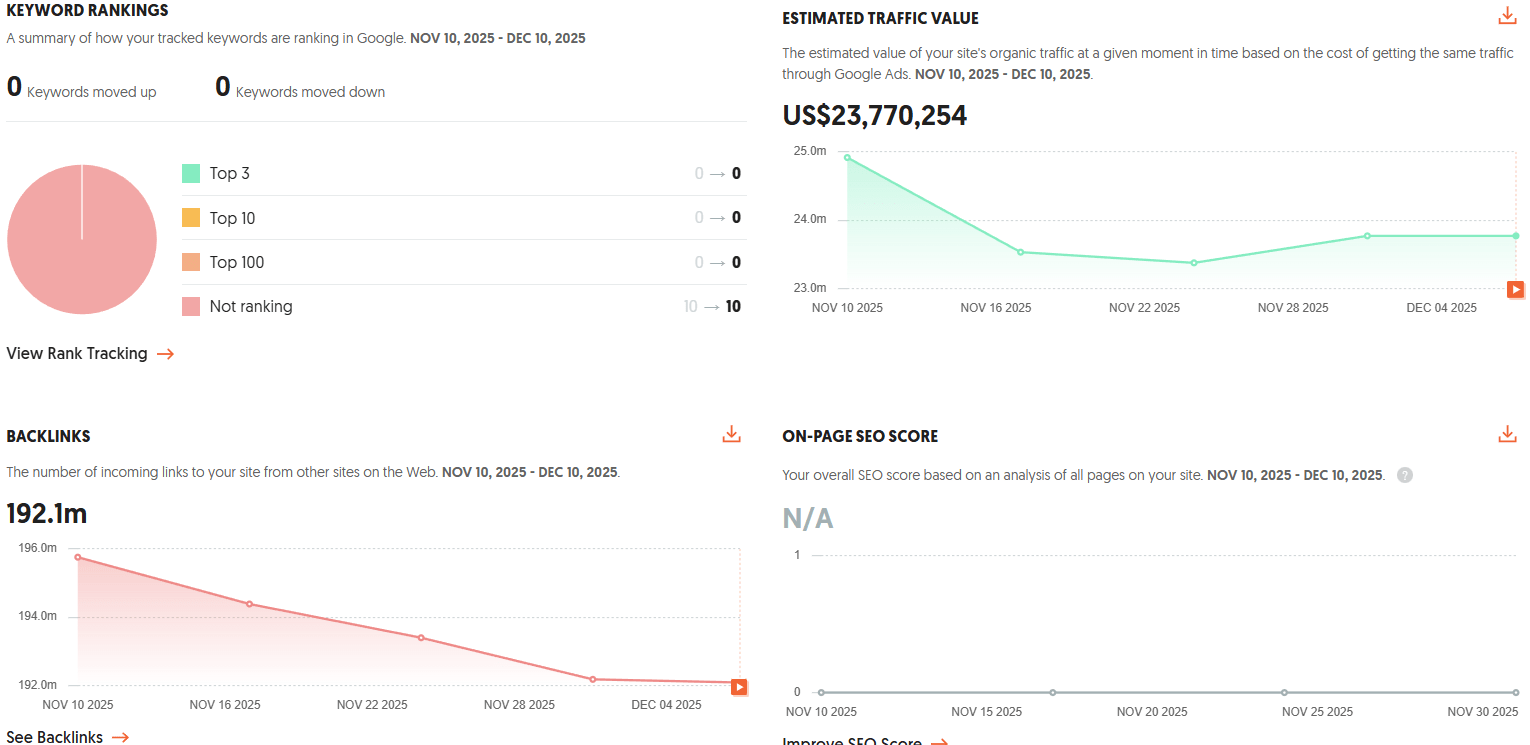
Ubersuggest Dashboard Overview
It is often the tool that helps SEO become habitual before advanced workflows are necessary. Ubersuggest is often the first SEO tool beginners try.
The goal in this stage is momentum, not perfection.
Ahrefs: The Go-To Tool for Authority Building in Tough Niches
At a certain stage, many growing businesses reach an SEO plateau. The content is consistent, technical issues are under control, and rankings rise, but then progress slows because competitors have built stronger backlink profiles and deeper authority signals.
This is exactly where Ahrefs stands out. It is not just another SEO platform, it is a specialized tool for understanding link ecosystems, uncovering why competitors outrank you, and identifying the authority gaps holding your site back.
Ahrefs is most useful when you need to understand:
- which sites link to competitors but not to you
- what backlinks actually move rankings in your niche
- whether authority is the reason you’re stuck below page one
Ahrefs remains the industry standard for backlink analysis. Check out our review on Ahrefs here.
If link-building becomes part of the strategy, backlink intelligence becomes unavoidable.
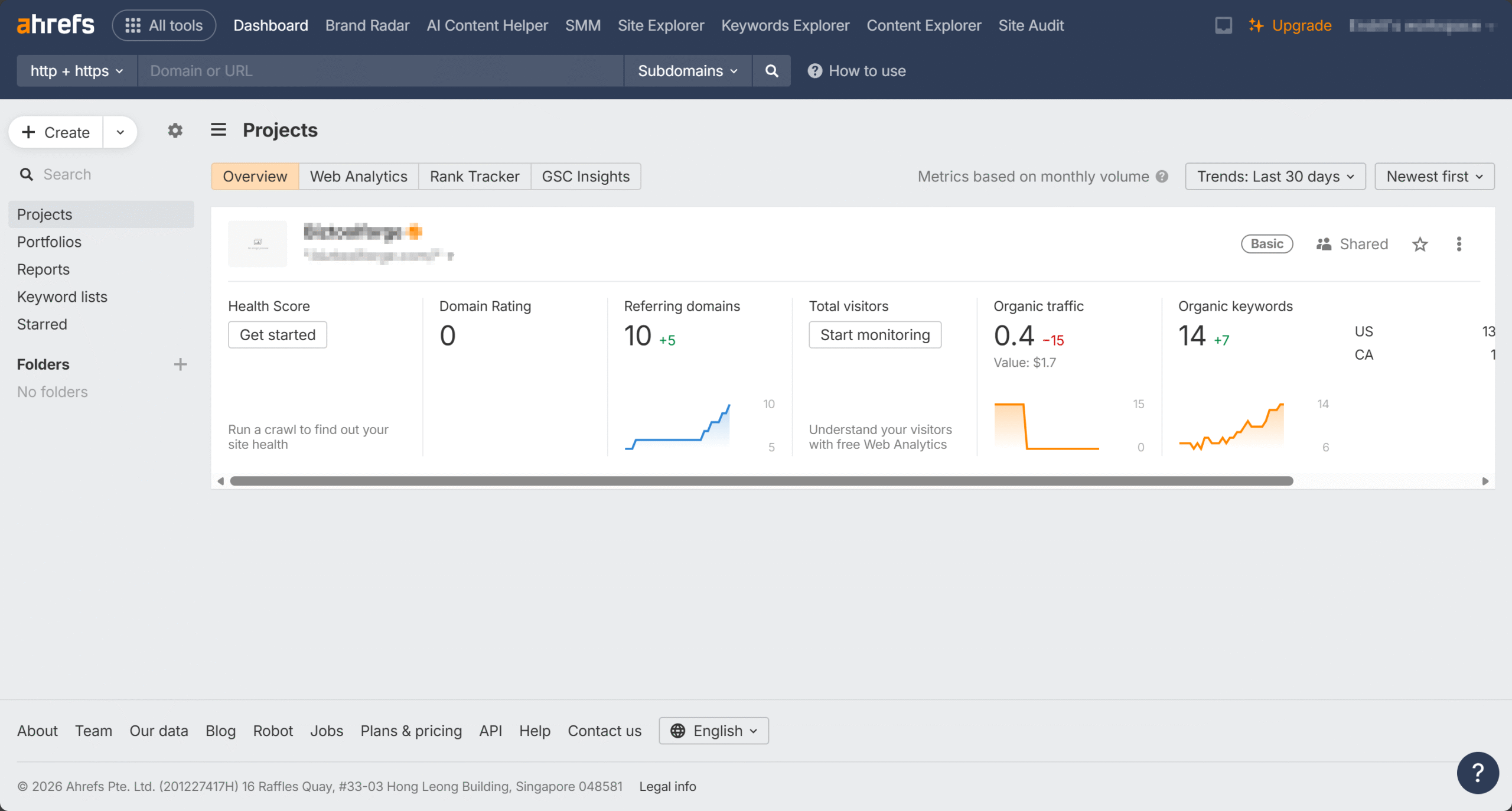
Ahrefs Dashboard Interface
The Real Takeaway Before Moving Forward
The best SEO software is the one that fits the work you can realistically commit to. A platform only becomes valuable when it helps you make better decisions, measure real progress, and keep your efforts centered on actions that improve search visibility over time.
SEO tools only matter when they support the work you’re actually going to do.
The right platform helps you stay focused on what drives progress:
- choosing realistic keywords
- tracking the pages that bring leads or sales
- spotting technical issues before rankings drop
- understanding what competitors are winning with
- building authority when it becomes the limiting factor
Once the tool supports those weekly actions, the decision becomes much clearer.
Start With the Constraint That Determines Results
Every small business reaches a point where one SEO challenge outweighs the rest. Progress depends less on doing everything at once and more on identifying the single bottleneck limiting growth right now:
- Lack of consistent keyword targeting
- Weak visibility tracking
- Technical issues holding pages back
- Competitors dominating high-intent searches
- Authority ceiling caused by backlinks
A tool should be evaluated on how well it supports solving that constraint in the next quarter.
- SE Ranking tends to perform best when the constraint is workflow consistency.
- Semrush becomes more valuable when competitive depth influences strategy.
- Ubersuggest fits teams that need simplicity and traction fast.
- Ahrefs matters most when authority and link-building become unavoidable.
The point is to remove the bottleneck that is currently slowing growth.
Keyword Research: Look for Feasibility, Not Volume
Keyword research is where most SEO effort is either multiplied or wasted.
A good tool helps you understand whether ranking is realistic, not just whether search volume exists.
When comparing platforms, check whether keyword workflows support:
- commercial intent detection (buyers vs browsers)
- SERP competitiveness that reflects reality
- long-tail discovery for smaller sites
- grouping keywords into content themes
Semrush is often chosen when keyword decisions require deep competitor context.
Ubersuggest tends to work when fast validation is enough.
SE Ranking offers a more structured all-in-one path for small teams building repeatable research habits.
Rank Tracking: A Tool Should Keep You Honest
Rank tracking sounds simple until it becomes messy.
Small businesses often track too many terms, lose focus, and stop checking reports altogether.
The right tool makes tracking usable by helping you focus on:
- revenue-driving keywords
- pages that should improve month over month
- early warning signs when visibility drops
- local vs national intent differences
SE Ranking is often strong here because tracking stays organized inside the broader workflow. For many small businesses, rank tracking is the backbone that keeps SEO measurable.
Site Audits: Prioritization Matters More Than Detection
Most SEO tools can find technical issues. Fewer tools help you understand which ones matter.
A useful audit system should highlight:
- errors that affect indexing and rankings
- recurring site hygiene issues
- fixes with the highest payoff
- changes after redesigns or migrations
Small teams don’t need 200 warnings. They need a prioritized list they can act on.
This is where platforms that surface severity clearly tend to deliver the most operational value.
Competitive Research: Depth Only Pays Off When You Use It
Competitive intelligence is one of the biggest separators between tools.
Semrush earns its reputation because it helps businesses understand what competitors are ranking for, what pages drive traffic, and where gaps exist that smaller sites can realistically target.
That depth matters most in industries where content investment is expensive and guesswork becomes a cost center.
When Semrush Justifies Its Cost Through Competitive Depth
Some businesses operate in markets where SEO decisions carry real financial weight.
Content production is expensive. Competitors dominate page one. Visibility shifts quickly.
In that environment, competitive intelligence matters because it prevents wasted investment. Semrush tends to be chosen when the business requires deeper context around:
- competitor ranking strategy
- SERP composition and intent patterns
- commercially valuable content gaps
- market-level visibility monitoring
It performs best when SEO is treated as a strategic growth channel rather than a side task.
For less competitive niches, lighter competitor context is often enough.
Backlinks: Ahrefs Becomes Relevant at a Specific Stage
Backlinks become relevant once SEO moves beyond keywords and content volume.
Many small businesses reach a stage where publishing continues, technical fixes are in place, rankings improve slightly, and then progress slows. In competitive SERPs, that slowdown often comes down to authority. Competitors rank because their sites have earned stronger link signals over time.
This is where Ahrefs becomes genuinely useful.
Ahrefs helps small businesses see backlink reality clearly, including:
- which websites actively strengthen competitors through referrals
- what types of links are driving authority in your niche
- where competitors consistently earn mentions, citations, and placements
- which pages attract links naturally and which ones need deliberate outreach
Lorem ipsum dolor sit amet, consectetur adipiscing elit. Ut elit tellus, luctus nec ullamcorper mattis, pulvinar dapibus leo.
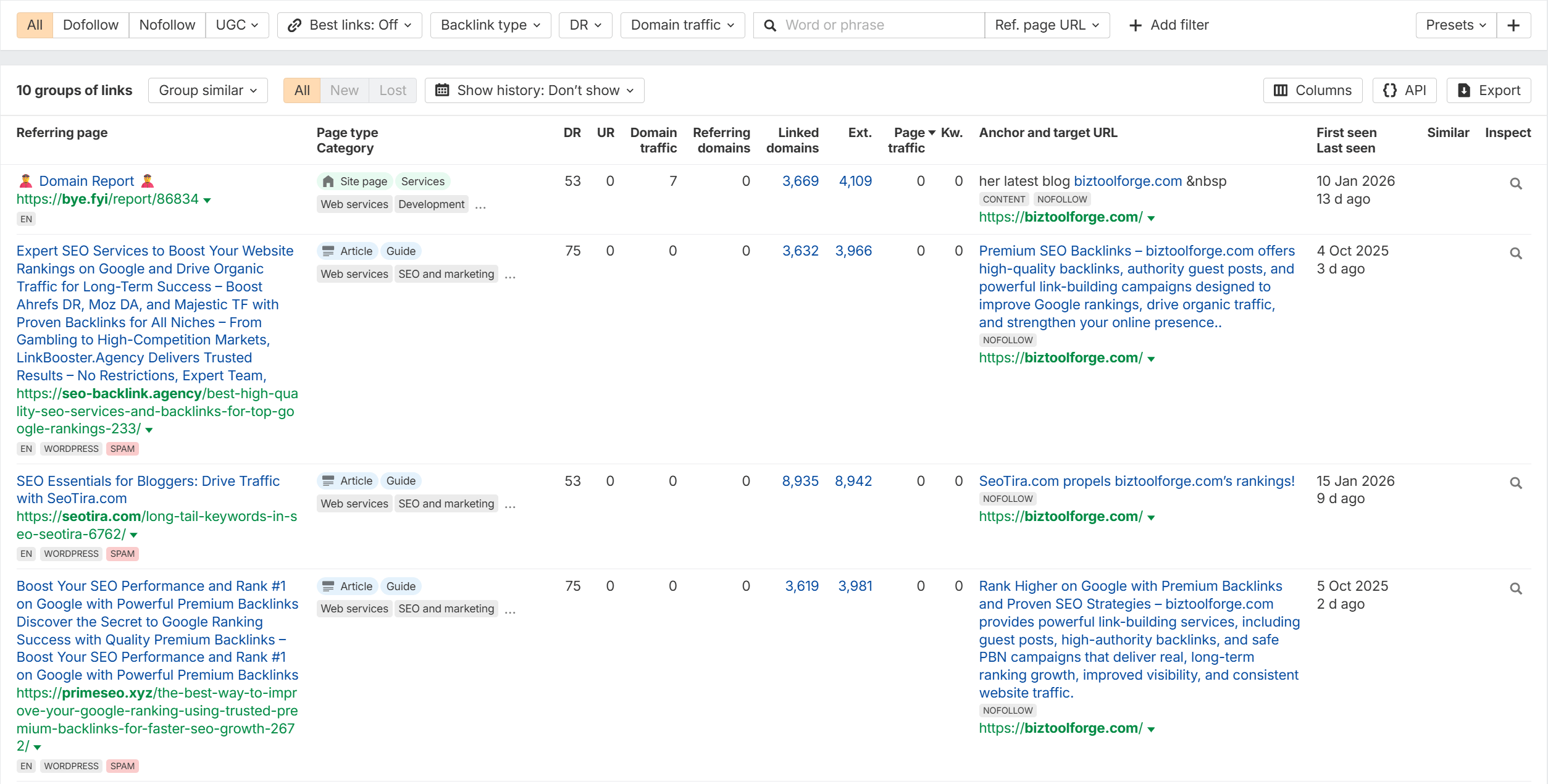
Ahrefs Dashboard Interface
At this stage, the most valuable insights come from understanding the gap between “content exists” and “content ranks.” That’s why Ahrefs remains widely considered the benchmark for backlink research when authority becomes part of the growth strategy.
Backlink intelligence pays off most when link-building becomes a real operational effort, not a passive hope.
How Small Businesses Make the Final SEO Tool Decision in 2026
Once you understand your workflow and know what matters when comparing SEO tools, the final decision becomes much less complicated.
Small businesses rarely fail because they chose a “bad” platform. They struggle mostly because the tool never becomes part of execution.
The right choice is the platform that supports what your business is realistically prepared to do each week:
- publish or optimize content
- monitor rankings that affect leads or sales
- fix technical issues before they compound
- understand competitor pressure
- build authority when the niche demands it
This block brings those pieces together into a clean decision path that helps readers commit without hesitation.
When SE Ranking Is the Smart Default for Most Small Businesses
For the majority of small businesses, SEO requires a system more than a specialized suite.
The business needs one place to manage:
- keyword targeting
- rank tracking
- audits and technical hygiene
- competitor monitoring
- reporting without operational mess
That’s where SE Ranking consistently fits best. It supports the full workflow without forcing enterprise-level complexity, and it remains usable as SEO matures.
This option makes the most sense for:
- local service businesses running SEO weekly
- small marketing teams managing multiple pages
- founders who want structure without overwhelm
When Semrush Justifies Its Cost Through Competitive Depth
Some businesses operate in markets where SEO decisions carry real financial weight.
Content production is expensive. Competitors dominate page one. Visibility shifts quickly.
In that environment, competitive intelligence matters because it prevents wasted investment. Semrush tends to be chosen when the business requires deeper context around:
- competitor ranking strategy
- SERP composition and intent patterns
- commercially valuable content gaps
- market-level visibility monitoring
It performs best when SEO is treated as a strategic growth channel rather than a side task.
When Ubersuggest Is the Right Starting Point for Beginners
SEO adoption often fails because the tool is too heavy for the team using it.
For founder-led SEO or generalist-managed marketing, the right platform is the one that stays approachable enough to use consistently.
Ubersuggest tends to work well when the priority is early clarity:
- validating keyword targets quickly
- tracking basic progress without complexity
- keeping SEO simple enough to execute weekly
It is often the starting tool that helps businesses build momentum before deeper platforms become necessary.
When Ahrefs Becomes Essential for Authority and Backlinks
In competitive niches, rankings eventually depend less on publishing volume and more on authority.
At that stage, backlink intelligence becomes operational:
- competitors have stronger referring domain profiles
- link acquisition becomes intentional
- authority gaps determine what can realistically rank
Ahrefs becomes valuable when link-building is part of the plan, not a future idea.
Businesses investing in outreach, partnerships, and authority growth typically use Ahrefs as the reference point for backlink strategy.
SEO Tool Pricing Comparison for Small Businesses (2026)
| SEO Tool | Best For | Entry Plan Price | Strengths in 2026 | Ideal Starting Point |
|---|---|---|---|---|
| SE Ranking | All-in-one SEO workflow for small teams | $65 / month | Balanced platform: tracking + audits + keywords | Businesses running SEO weekly |
| SEMrush | Competitive markets + deep research | $199 / month | Premium competitor intelligence + visibility tools | Teams investing heavily in content strategy |
| Ubersuggest | Beginner-friendly execution | $49 / month or Lifetime $490 | Simple keyword research + early traction | Founder-led SEO or early-stage sites |
| Ahrefs | Backlinks + authority building | $129 / month | Industry benchmark for backlink intelligence | Businesses hitting an authority ceiling |
- Want the most complete small-business system? → SE Ranking
- Need competitive depth in a tough niche? → Semrush
- Want the simplest beginner starting point? → Ubersuggest
- Focused on backlinks and authority growth? → Ahrefs