
Here’s what you’ll find in this guide:
- A clear breakdown of what Serpstat does well - and where it falls short in 2026
- Up-to-date pricing, feature limits, and real-world use cases
- Step-by-step walkthroughs of Serpstat’s core SEO features (with exact click paths)
- Honest comparisons to more expensive SEO platforms
- A final verdict to help you decide if Serpstat fits your SEO workflow
SEO tools in 2026 are no longer evaluated by feature volume, but rather by how efficiently they turn data into rankings, traffic, and revenue.
For many SEO-driven businesses, enterprise platforms like Semrush have become powerful but economically inefficient. The cost is justified only when every module is actively used — which is rarely the case outside large agencies.
Serpstat enters this gap as a lean, SEO-first platform focused on the fundamentals that actually move organic performance: keyword intelligence, competitor analysis, technical SEO, and rank tracking.
This review answers one question only:
Can Serpstat realistically replace more expensive SEO tools in 2026 without sacrificing results?
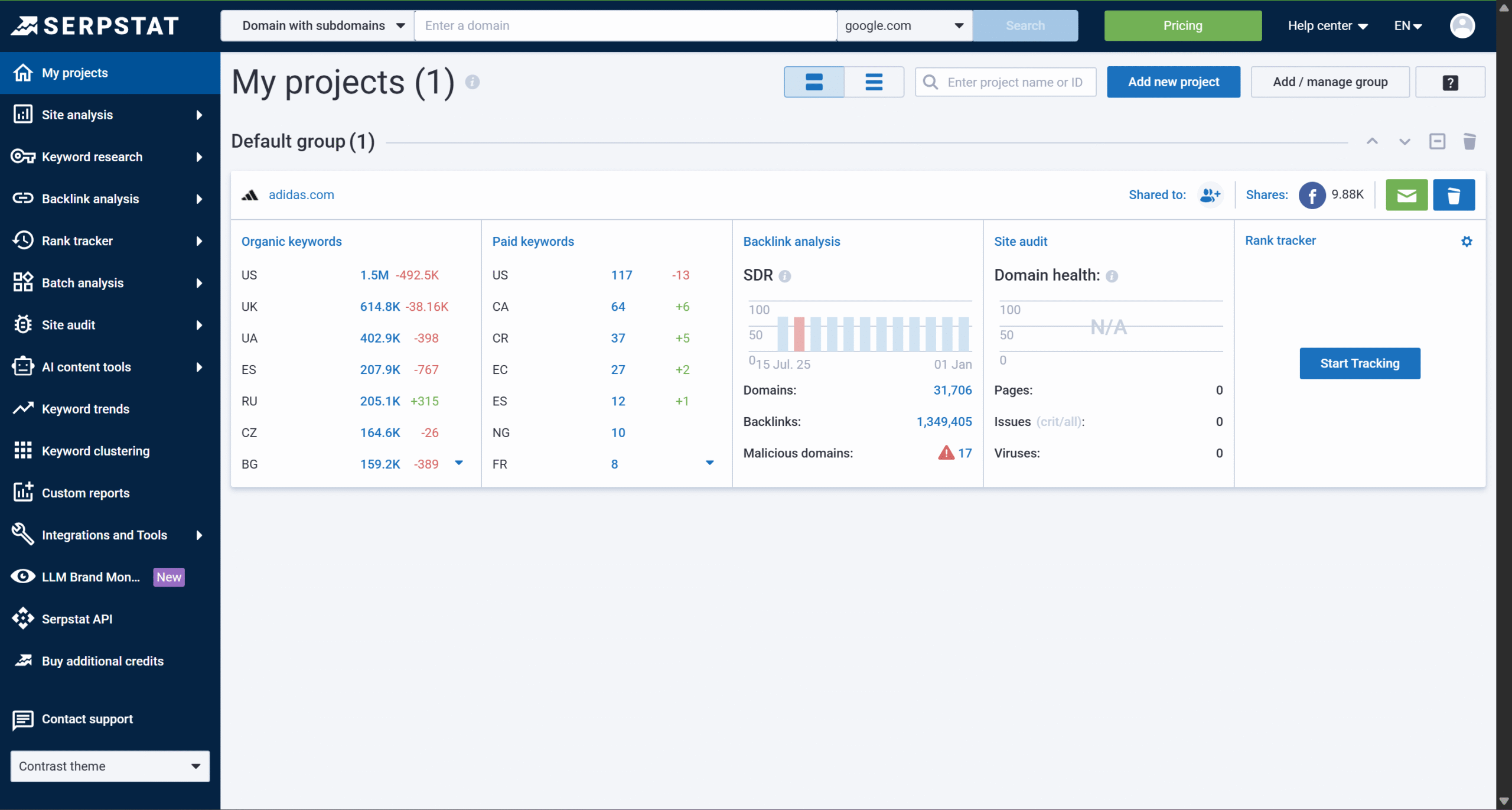
Serpstat Dashboard Overview
Executive Summary: Where Serpstat Fits in 2026
Serpstat performs best when SEO is treated as a profit channel, not a reporting exercise.
It excels in workflows where teams need to identify achievable keywords, understand competitor positioning, maintain technical health, and monitor rankings across multiple properties — all without paying for excess functionality.
Rather than competing feature-for-feature with enterprise tools, Serpstat prioritizes speed, clarity, and cost efficiency. That focus is intentional, and for many users, it is exactly what makes the platform attractive.
If SEO ROI matters more than bloated toolsets, Serpstat deserves serious consideration.
Who Serpstat Is Built For — and Who Might not fit
Serpstat is designed for users who need reliable SEO data they can act on quickly.
It fits particularly well for affiliate marketers, niche site builders, freelance SEOs, in-house teams at startups, and small to mid-sized agencies managing organic growth for multiple clients. In these environments, Serpstat’s data depth is sufficient, its interface is fast to learn, and its pricing scales predictably.
It is not designed for organizations that depend heavily on granular PPC intelligence, enterprise-scale backlink analysis, or advanced AI-driven content automation. Those gaps are not accidental — they reflect a product strategy focused on core SEO execution.
How Serpstat Was Evaluated in Practice
Serpstat was evaluated through direct, hands-on use across common SEO workflows rather than relying on product messaging or surface-level feature descriptions.
The platform was used for keyword research, competitive analysis, technical site audits on WordPress-based websites, and rank tracking across multiple regions. These workflows reflect how SEO tools are typically used in ongoing optimization efforts, not isolated test cases.
Where comparison was necessary, Serpstat’s data and outputs were reviewed alongside other established SEO platforms to understand differences in accuracy, usability, and decision-making clarity. The emphasis was not on which tool produced more data, but on which data could be acted on with confidence and minimal friction.
What Serpstat Covers
Serpstat is best described as a lean all-in-one SEO platform.
It combines keyword research, competitor analysis, site auditing, rank tracking, and backlink analysis into a single interface designed for organic growth workflows. While additional features such as PPC data and API access exist on higher-tier plans, the platform’s primary strength remains firmly rooted in SEO execution, not marketing sprawl.
This deliberate scope allows Serpstat to remain accessible, efficient, and cost-effective — particularly for users who want results, not dashboards.
Keyword Research in Serpstat: How the Platform Handles Real SEO Decisions
Keyword research is the foundation of how Serpstat approaches SEO. Rather than focusing on sheer database size, the platform is designed to help users quickly determine whether a keyword is realistic, relevant, and worth targeting.
Serpstat’s keyword research workflow prioritizes context and feasibility. Instead of pushing users directly into long keyword lists, it encourages understanding search intent, competition, and SERP composition before any content decision is made. This approach aligns well with modern SEO practices, where ranking potential matters more than raw volume.
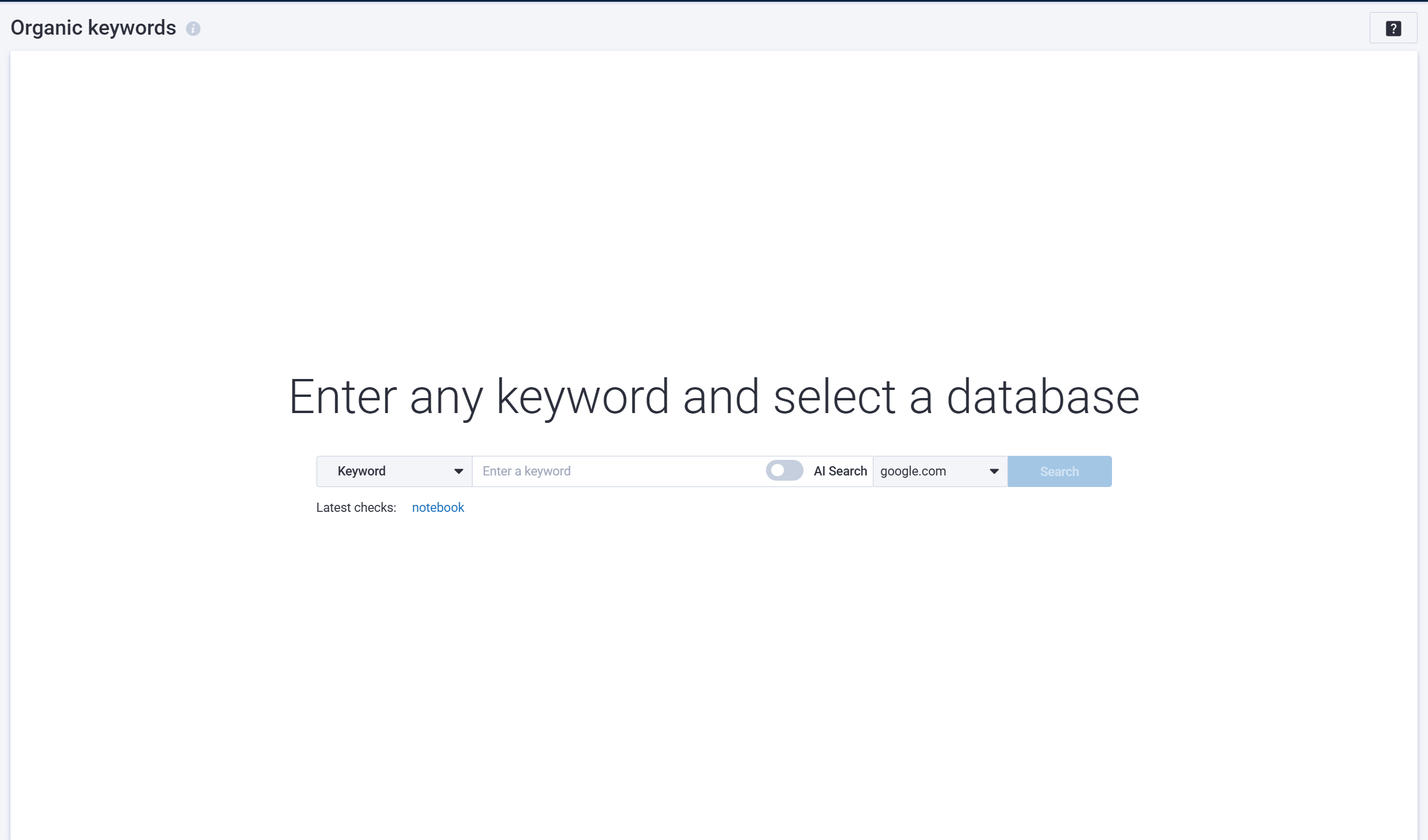
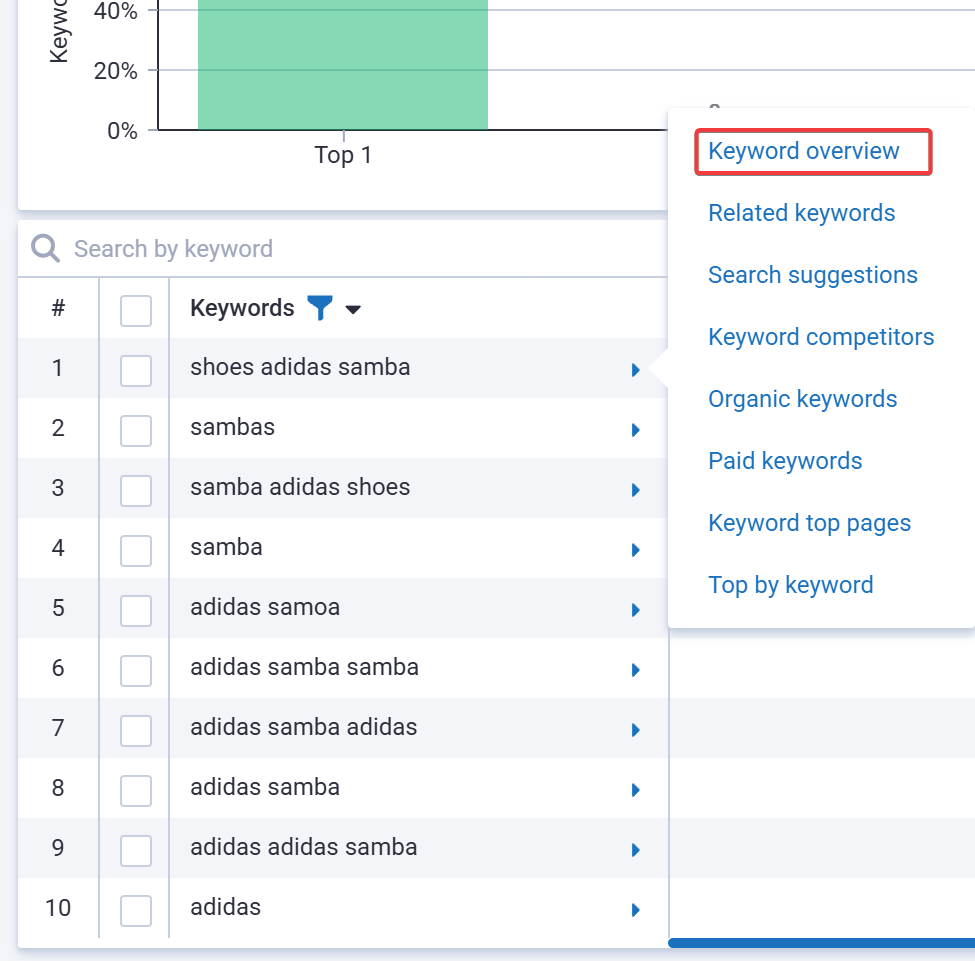
Serpstat Keyword Selection Overview
Keyword Overview: Evaluating a Keyword Before Committing Resources
The Keyword Overview report acts as a decision checkpoint. It allows users to assess whether a keyword fits their site’s current authority and strategic goals before investing time in content or optimization.
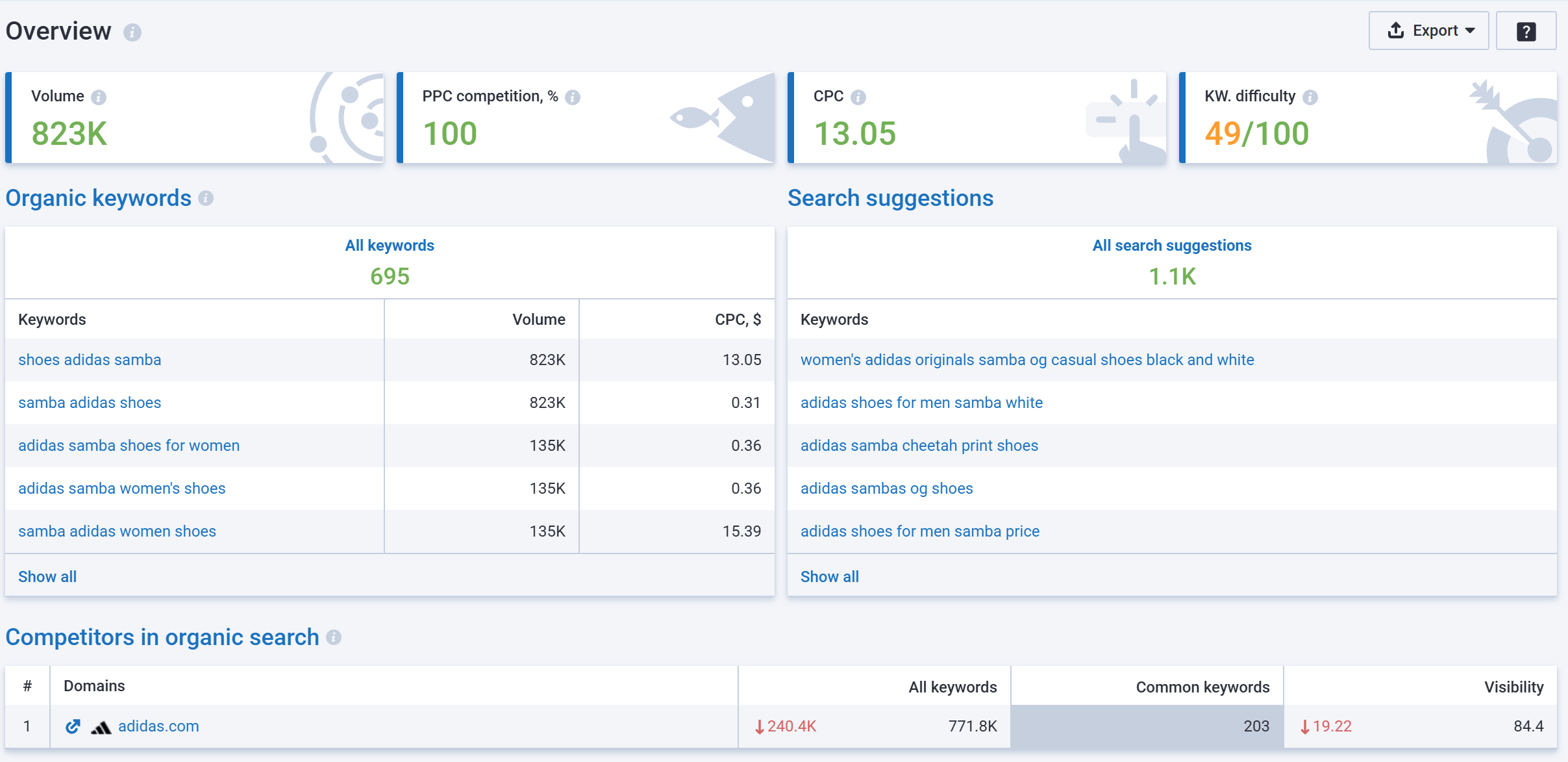
For each keyword, Serpstat displays search volume, keyword difficulty, cost-per-click data, competition indicators, and SERP features. Crucially, it also highlights the domains currently ranking in the top positions, which provides immediate insight into how competitive the landscape actually is.
This upfront visibility helps prevent misaligned targeting and keeps SEO strategies grounded in achievable outcomes.
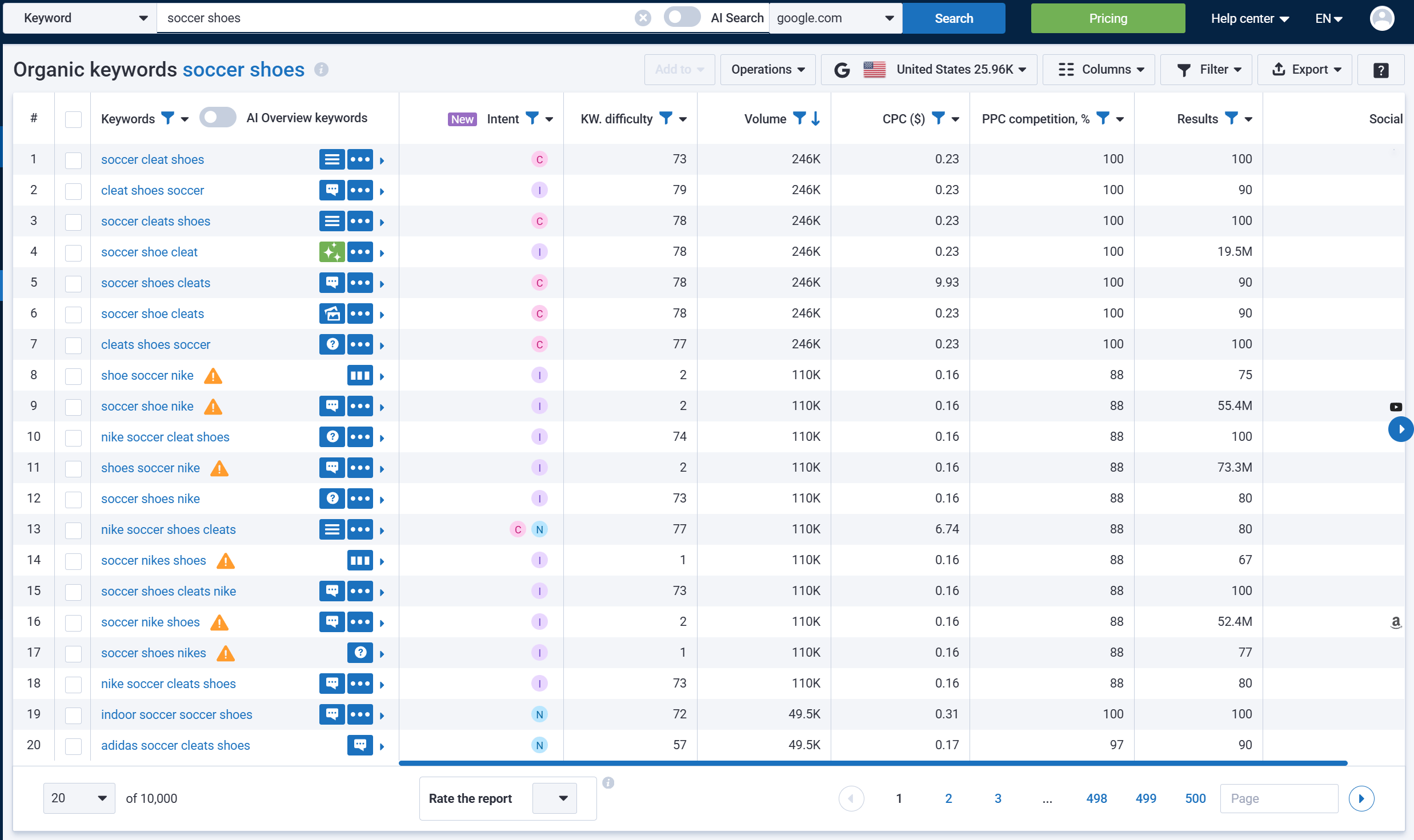
Serpstat Keyword Selection with an Inserted Keyword
Understanding Serpstat’s Keyword Difficulty Metric
Serpstat’s Keyword Difficulty score is intentionally conservative. In practice, this means keywords are flagged as competitive earlier than in some other tools, which can feel restrictive at first but proves valuable when planning realistic SEO roadmaps.
This conservative scoring model reduces the likelihood of overestimating ranking potential, particularly for newer or mid-authority domains. As a result, keyword selection tends to align more closely with outcomes observed after content is published and indexed.
For teams managing multiple projects, this reliability helps standardize keyword evaluation across different sites and markets.
Expanding Keywords and Identifying Opportunities at Scale
Once a seed keyword passes initial evaluation, Serpstat makes it easy to explore related opportunities without losing focus.
The “Related Keywords” and “Search Suggestions” reports surface variations, long-tail queries, and semantically connected terms. These reports can be filtered by volume, difficulty, intent modifiers, and competition level, allowing users to refine lists into actionable keyword sets.
This workflow supports topic-based SEO planning, where multiple related keywords are addressed within structured content rather than treated as isolated targets.
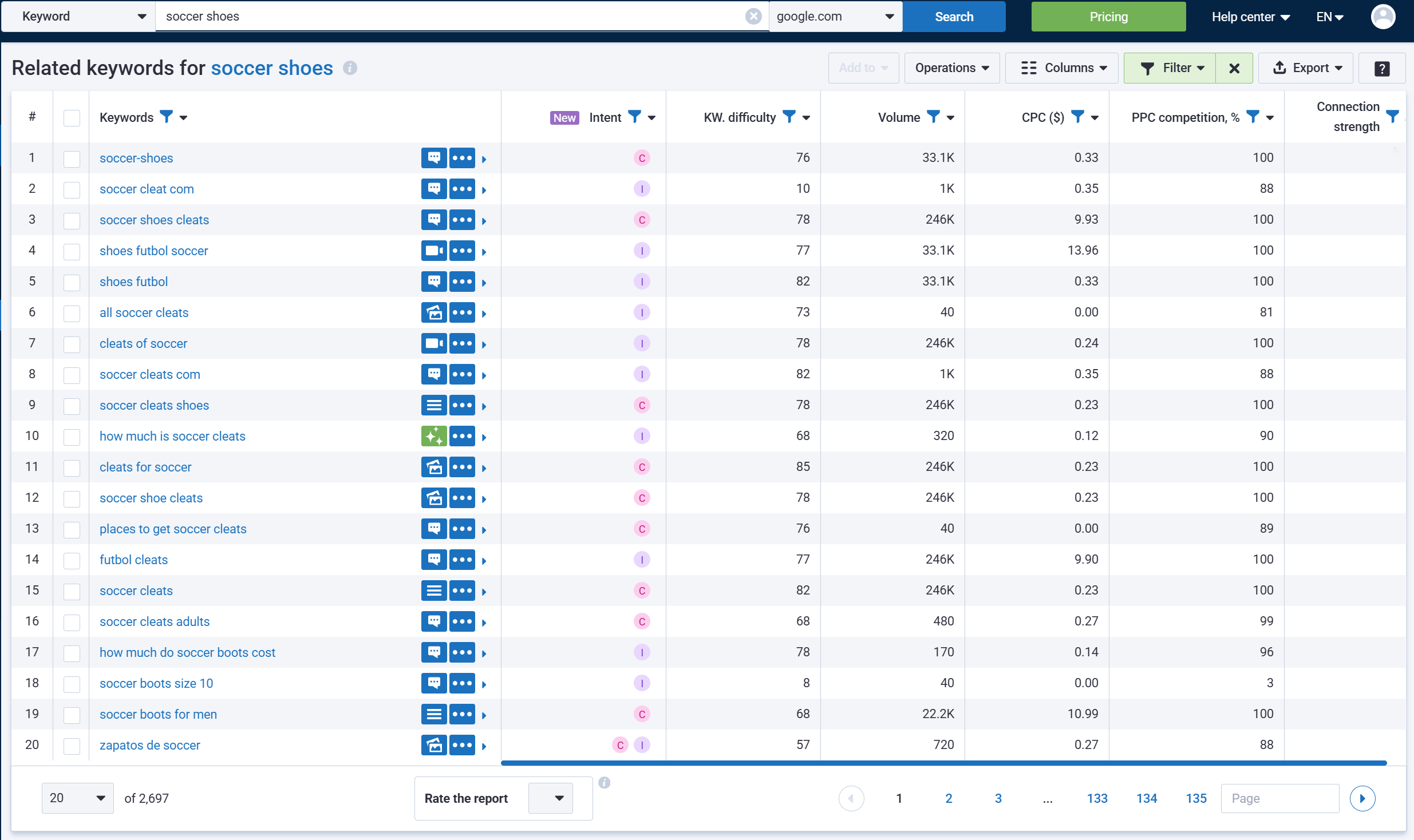
Serpstat Filtered Keyword List and Options Sorting
Keyword Clustering: Structuring Content Around Search Intent
Serpstat’s keyword clustering tool groups keywords based on SERP similarity rather than simple lexical relationships. This means keywords are clustered according to how search engines interpret intent, not just shared terms.
This functionality is particularly useful for structuring content hubs, planning pillar pages, and preventing keyword cannibalization. By organizing keywords into intent-based clusters, content strategies become clearer and internal linking more deliberate.
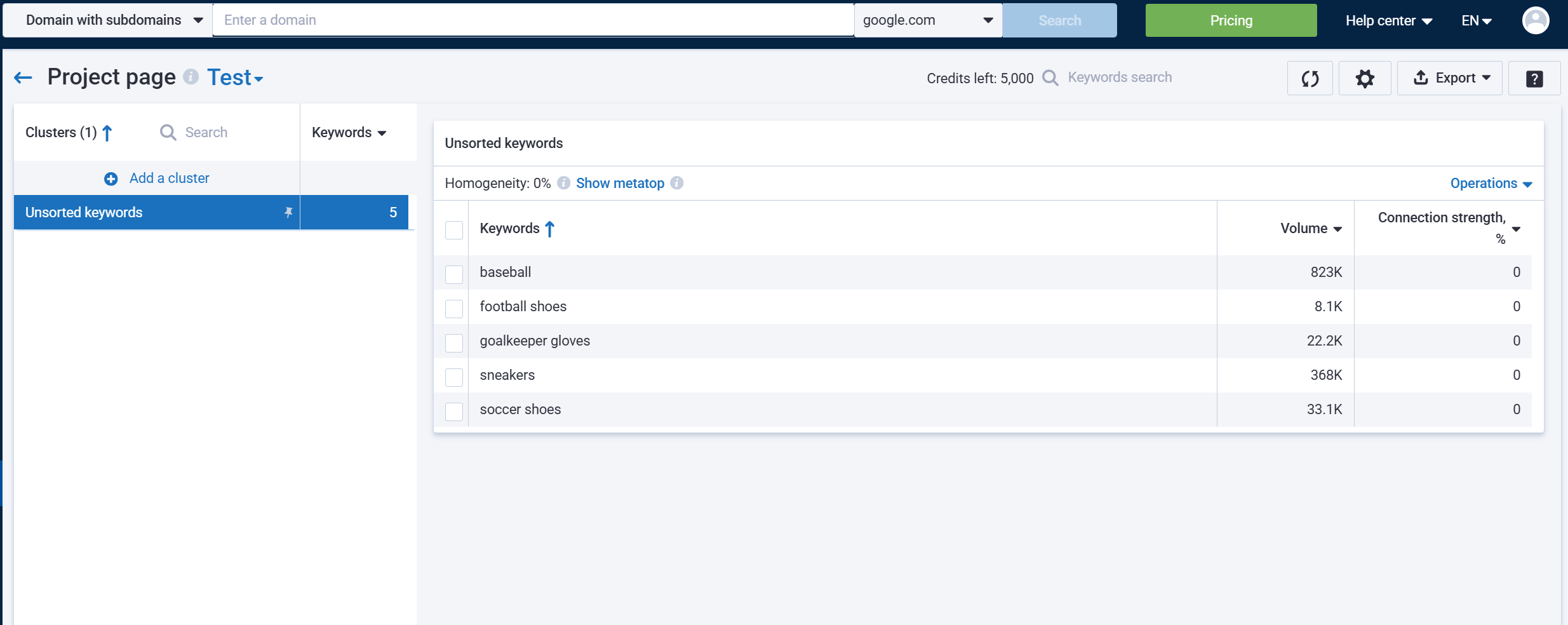
Serpstat Keyword Clustering Overview
Competitor Analysis in Serpstat: How to Turn Competitive Data Into Action
Competitor analysis in Serpstat is built to support practical SEO decisions, not just surface-level monitoring. Instead of isolating metrics, the platform connects visibility, keyword overlap, and ranking trends into a workflow that helps teams understand where they stand and where they can realistically compete.
This approach aligns closely with structured methodologies covered in a broader SEO competitor analysis framework, where context and feasibility matter more than raw numbers.
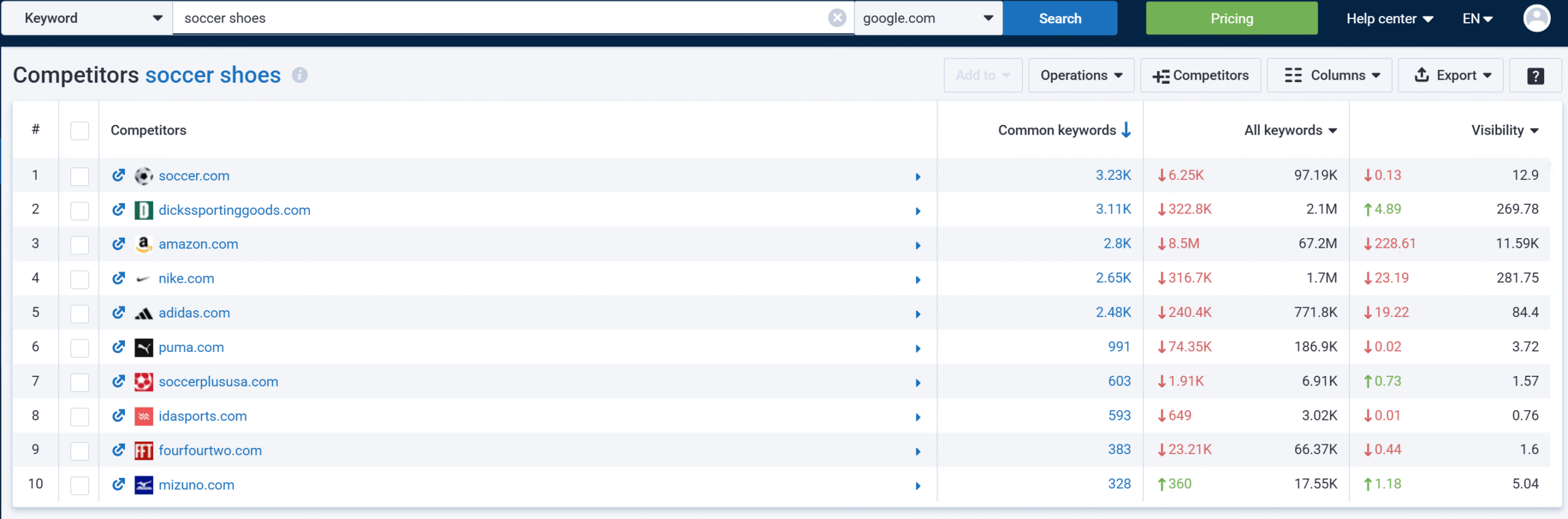
Serpstat Keyword Competitors Research Overview
Domain Overview: Establishing Competitive Context
The Domain Overview report is typically the first stop when analyzing a competitor or benchmarking a site’s current performance. It provides a consolidated view of organic visibility, estimated traffic, keyword distribution, and historical trends.
Key insights surfaced in this report include:
- Overall organic visibility relative to competitors
- Growth or decline patterns over time
- Pages and keywords contributing most to search presence
Used correctly, this report acts as a reality check. It helps put performance into context by showing whether a domain is competing within its actual search landscape, where relative strength and momentum matter far more than raw traffic numbers.
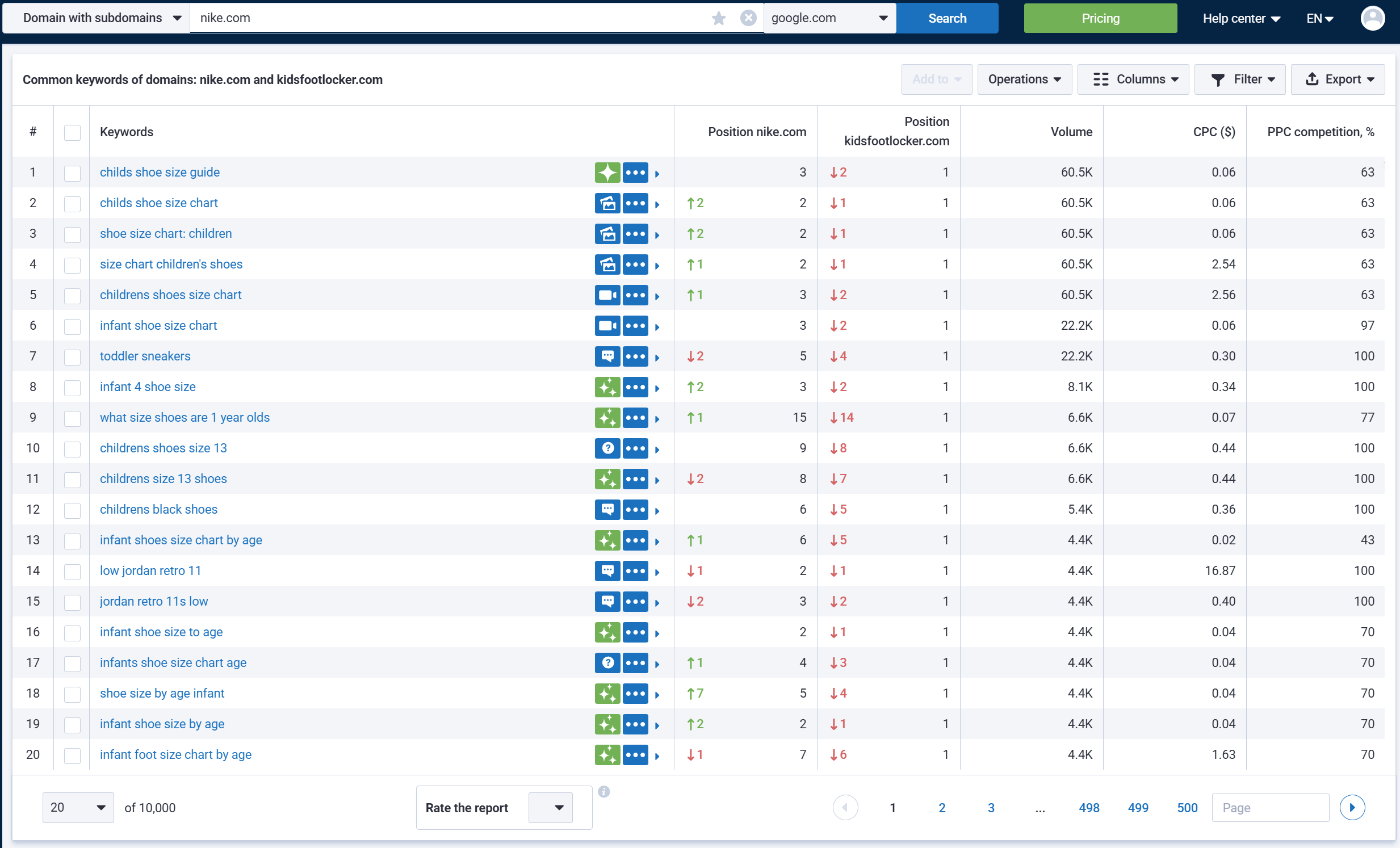
Serpstat Domain Competitors Research Dashboard
Organic Competitors: Identifying Who Competes in the SERPs
Serpstat identifies organic competitors based on keyword overlap, not brand positioning. This distinction is critical, as many of the most relevant SEO competitors are not direct business rivals.
The Organic Competitors report helps teams:
- Discover domains ranking for the same keyword sets
- Identify competitors that dominate specific topic clusters
- Understand overlap intensity and visibility differences
This approach defines competition based on actual SERP overlap, not brand positioning or market assumptions. By focusing on which domains consistently appear for the same queries, it provides a more accurate picture of the competitive landscape and avoids misleading comparisons that don’t reflect real search behavior.
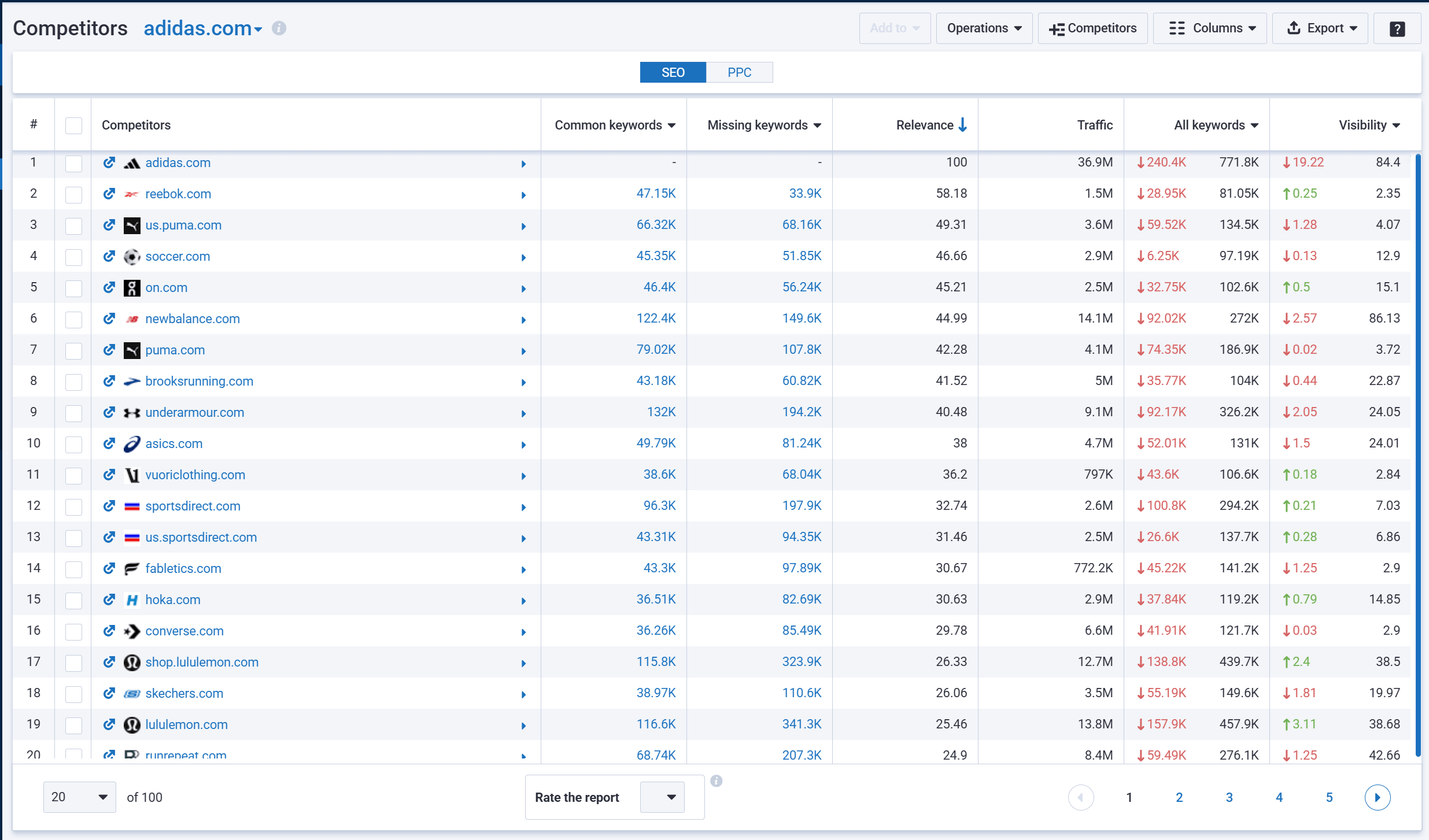
Serpstat Competitors Ranked by Keyword
Keyword Gap Analysis: Finding Opportunities Competitors Already Validate
Keyword gap analysis is one of the most actionable reports within Serpstat’s competitor suite. It highlights keywords that competitors rank for but the analyzed site does not, effectively surfacing missed opportunities.
This report allows teams to:
- Compare multiple competitor domains simultaneously
- Filter gaps by difficulty, volume, and intent indicators
- Prioritize keywords that align with current authority
This workflow prioritizes keywords that are both relevant and realistically attainable, instead of chasing high-volume terms that look good on paper but rarely convert or rank..
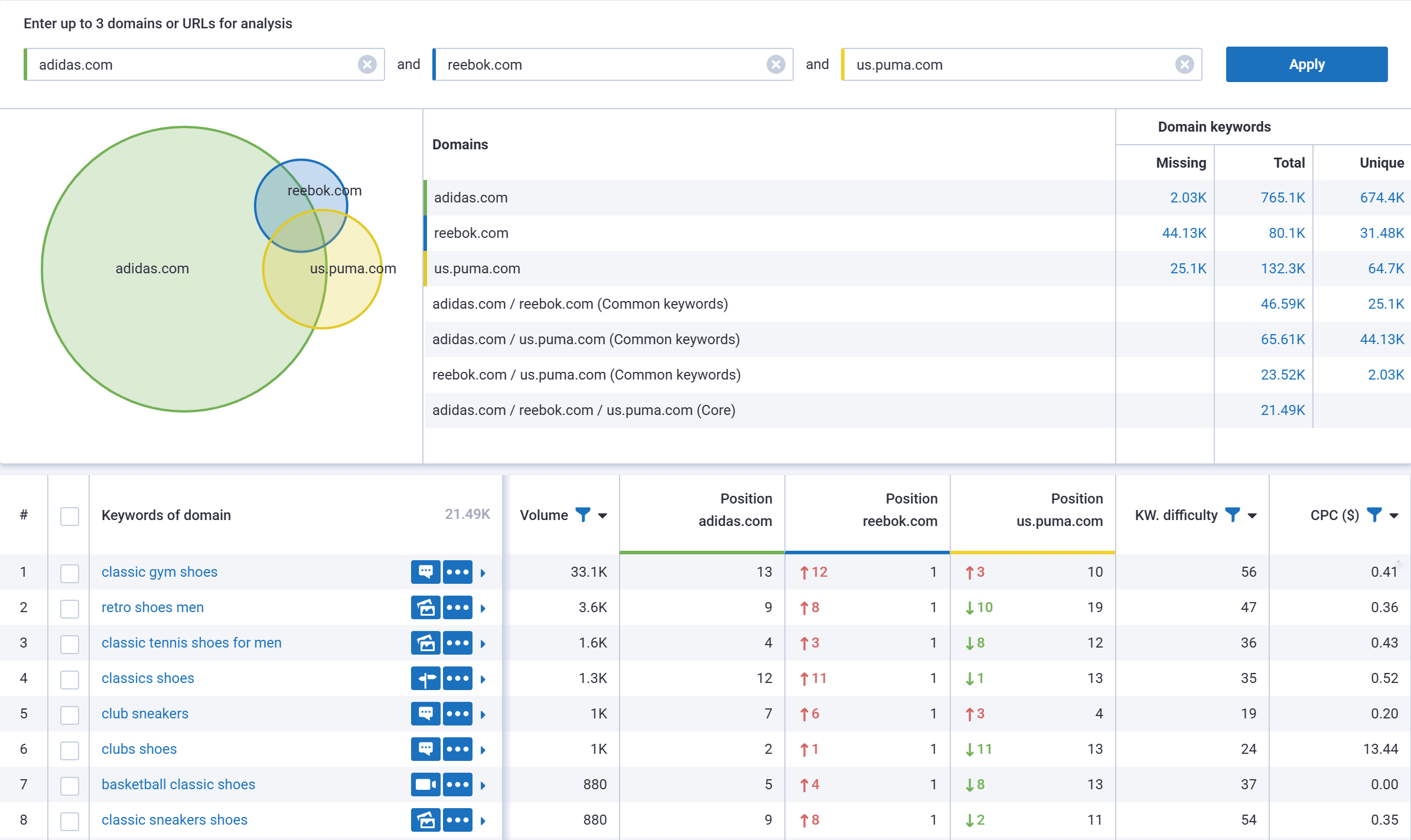
Serpstat Keyword Gap Overview
Top Pages: Understanding What Content Drives Visibility
Serpstat’s Top Pages report shifts competitor analysis from domains to individual URLs, revealing which pages generate the most organic visibility and which keywords contribute to that performance.
This report helps answer questions such as:
- What content formats dominate the SERPs in this niche?
- Which pages attract the highest share of organic traffic?
- How keywords are distributed across high-performing pages
These insights align naturally with structured approaches to analyzing top-ranking pages [internal link], where understanding content performance informs strategy more effectively than assumptions.
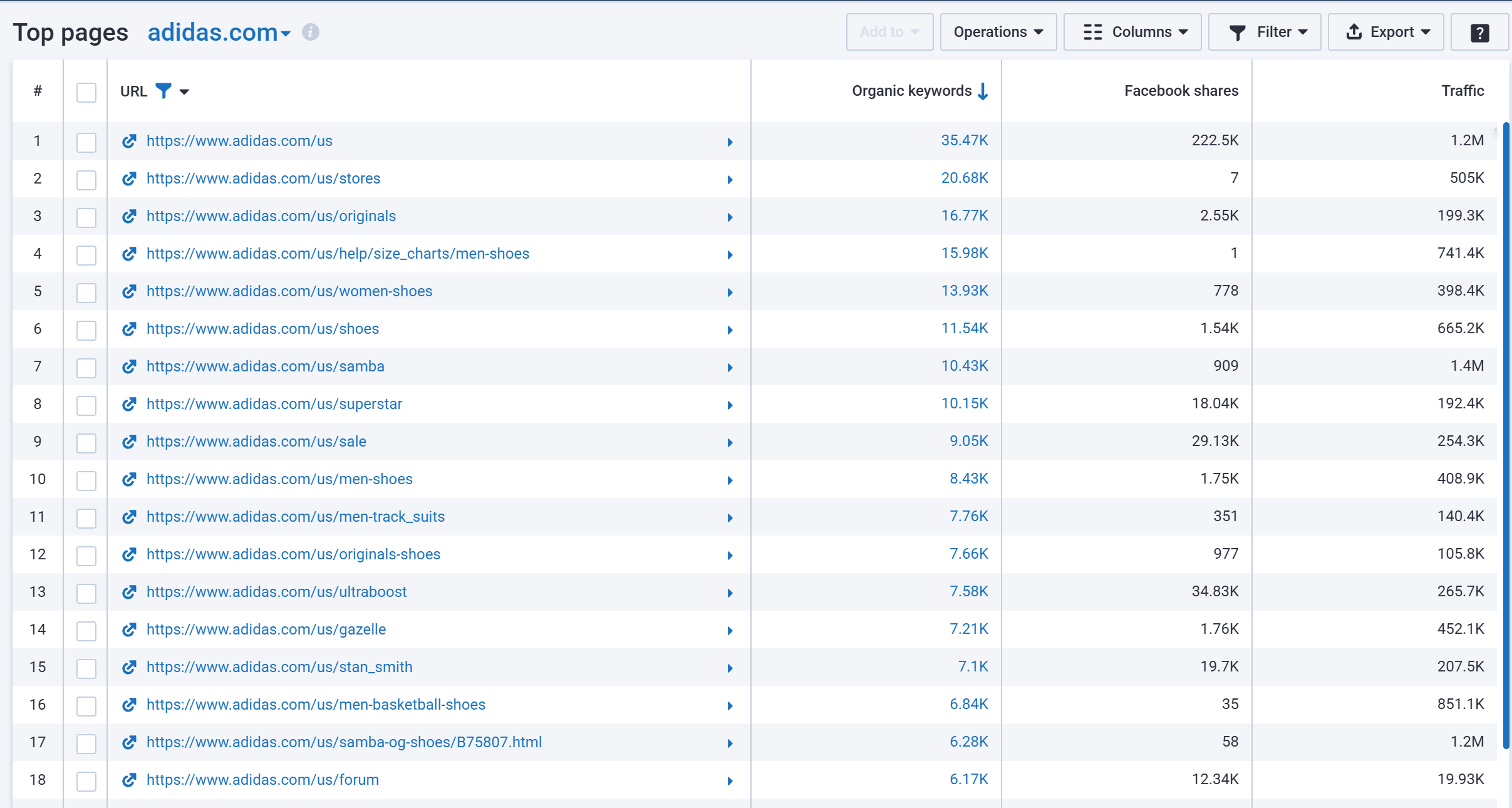
Serpstat displaying Top Pages Ranked by Traffic
Visibility Trends: Measuring Competitive Momentum Over Time
Beyond static rankings, Serpstat provides visibility trend data that reveals competitive momentum.
These trends help teams:
- Identify whether competitors are actively investing in SEO
- Spot sudden gains or losses in visibility
- Time content launches and optimizations more strategically
Understanding visibility momentum complements keyword and page-level analysis and reflects concepts discussed in broader SEO trend analysis guides.
Strategic Takeaway: Competitive Analysis That Feeds SEO Planning
Serpstat’s competitor analysis features are designed to support structured SEO planning, not reactive monitoring.
By combining domain-level insights, organic competitor identification, keyword gap analysis, page-level performance data, and visibility trends, the platform enables teams to:
- Focus on realistic opportunities
- Avoid overcommitting to unwinnable keywords
- Build strategies grounded in actual SERP behavior
If competitive data needs to translate into clear SEO priorities, Serpstat provides a practical and accessible framework.
Site Audit in Serpstat
Technical SEO is where many SEO platforms either overwhelm users with excessive diagnostics or oversimplify issues to the point of being unhelpful. Serpstat’s Site Audit module sits deliberately in the middle.
The goal of the audit is not to surface every possible technical imperfection, but to identify issues that meaningfully affect crawlability, indexation, and rankings, then prioritize them in a way that supports realistic execution.
This philosophy aligns closely with modern technical SEO principles discussed in our comprehensive technical SEO audit guide, where prioritization matters as much as detection.
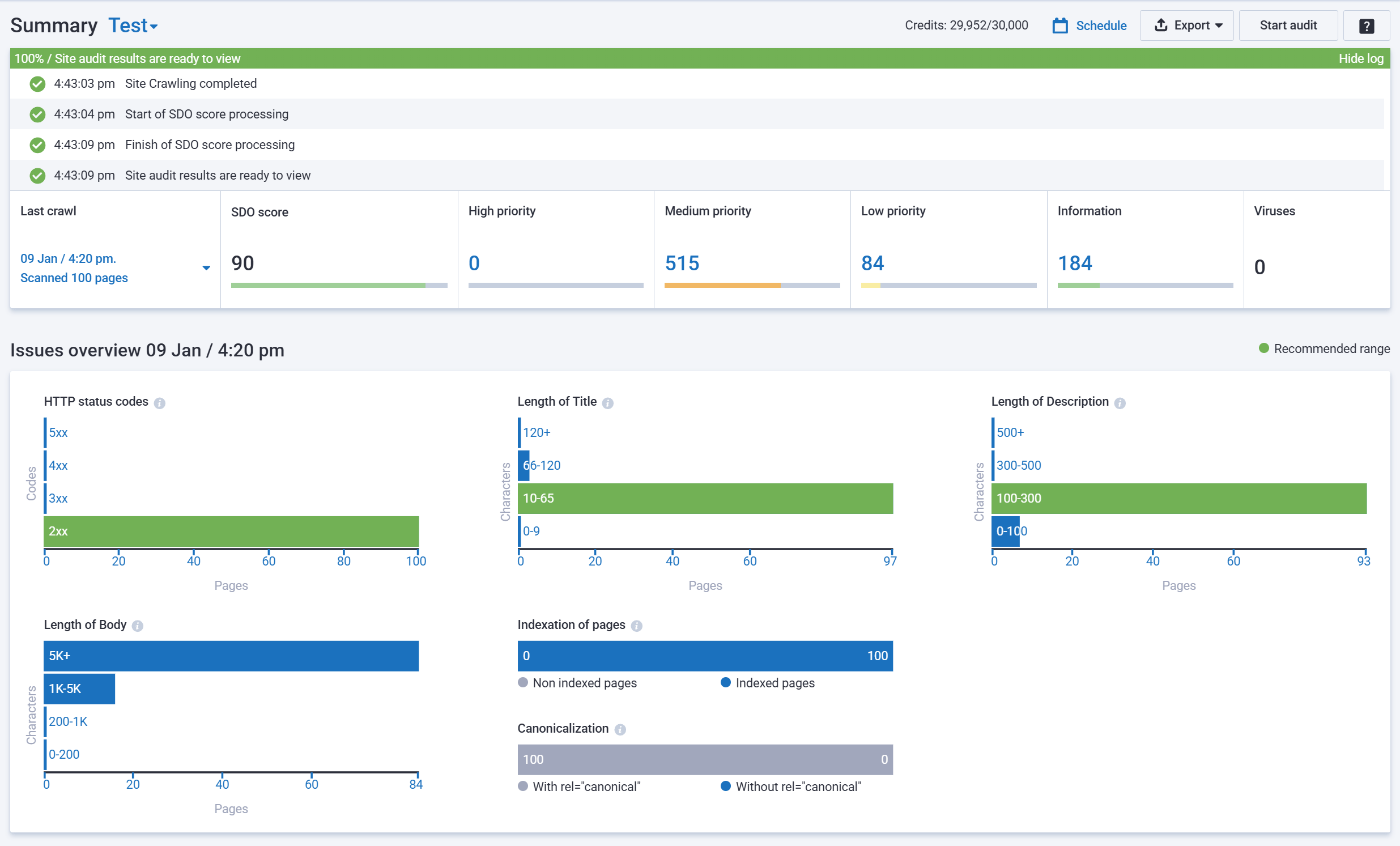
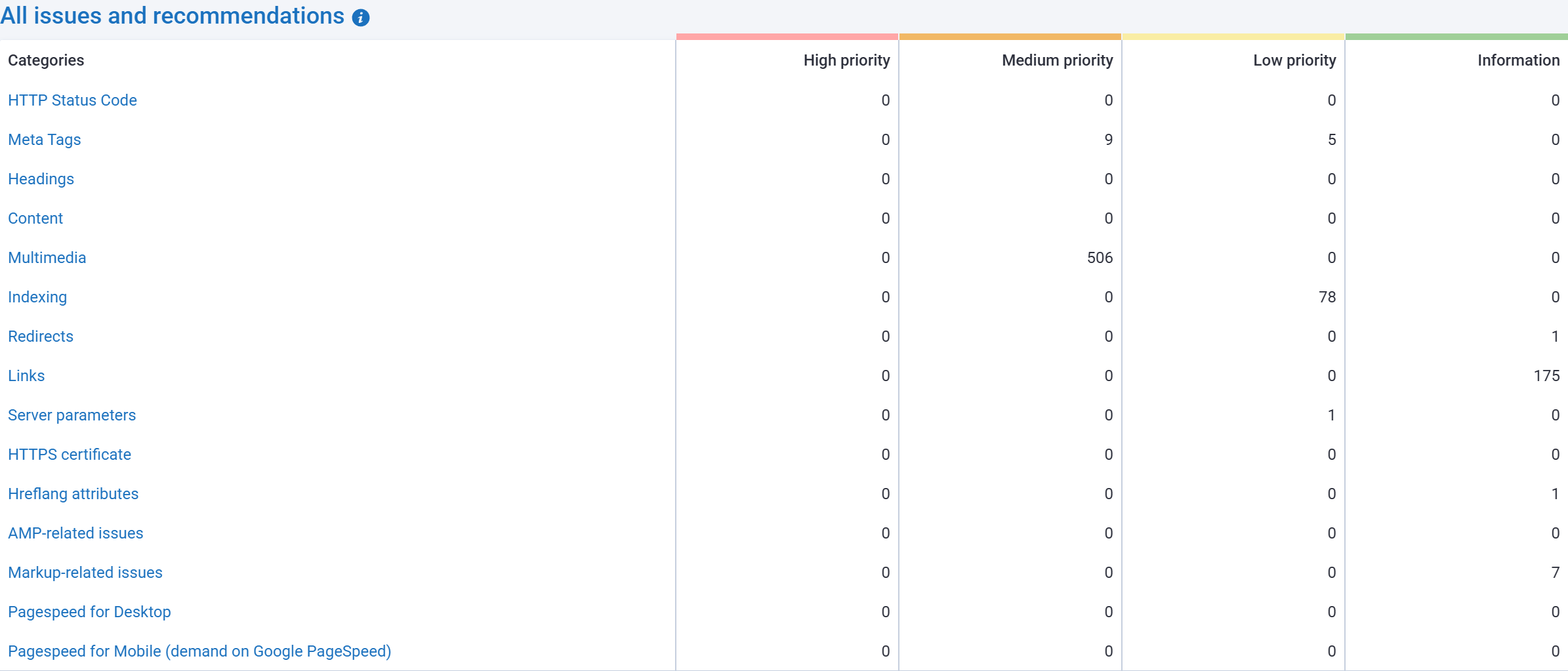
Serpstat Site Audit Overview
Audit Setup: Configuring Crawls Correctly
Before any issues are reported, Serpstat allows configuration of crawl parameters such as crawl depth, page limits, user-agent selection, and inclusion or exclusion rules.
This setup step is critical for ensuring that audit results reflect how search engines actually interact with the site. Misconfigured crawls often lead to misleading diagnostics — a problem Serpstat helps avoid by making key settings accessible and understandable.
Proper crawl configuration mirrors best practices outlined in SEO crawl optimization resources, where alignment with real-world indexing behavior is essential.
Site Health Score
Serpstat assigns a Site Health score to provide a high-level snapshot of technical condition. This score is useful as a trend indicator, not as a performance KPI.
A declining score signals emerging technical debt, while gradual improvement confirms successful remediation. However, Serpstat avoids encouraging optimization for the score itself — a mistake often seen in less mature SEO workflows.
This approach aligns with guidance commonly emphasized in technical SEO prioritization frameworks [internal link], where impact matters more than cosmetic fixes.
Issue Categories and Prioritization
One of the strongest aspects of Serpstat’s Site Audit is how issues are categorized and prioritized. Problems are grouped into logical buckets such as crawlability, indexation, on-page issues, performance, and links.
Common issue types flagged include:
- Broken internal links and redirect chains
- Duplicate or missing meta tags
- Indexation blockers (noindex, canonical conflicts)
- HTTP status code errors
- Page speed and performance warnings
Each issue includes a severity level and a short explanation, making it easier for teams to decide what to fix first. This prioritization supports workflows similar to those described in SEO issue prioritization guide.
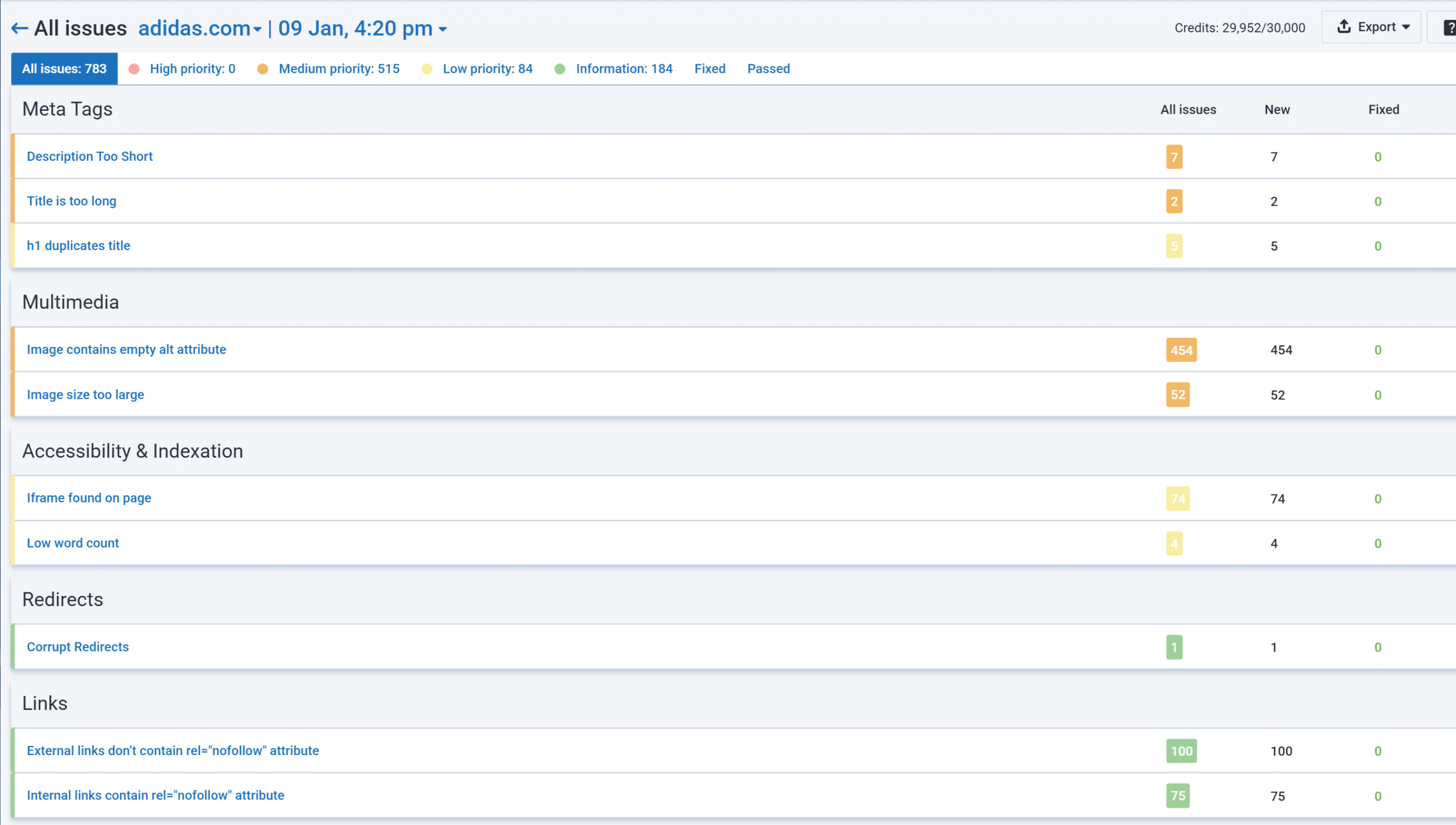
Serpstat Site Audit Showing Issues of Various Priorities
Page-Level Audit: Diagnosing Individual URLs
Beyond site-wide issues, Serpstat allows inspection at the individual page level. This is particularly useful when troubleshooting ranking drops, crawl anomalies, or underperforming pages.
For each URL, Serpstat highlights:
- Meta tag status and duplication
- Header structure issues
- Indexation directives
- Internal and external link counts
This granular view supports targeted fixes and aligns well with structured approaches to page-level SEO analysis.
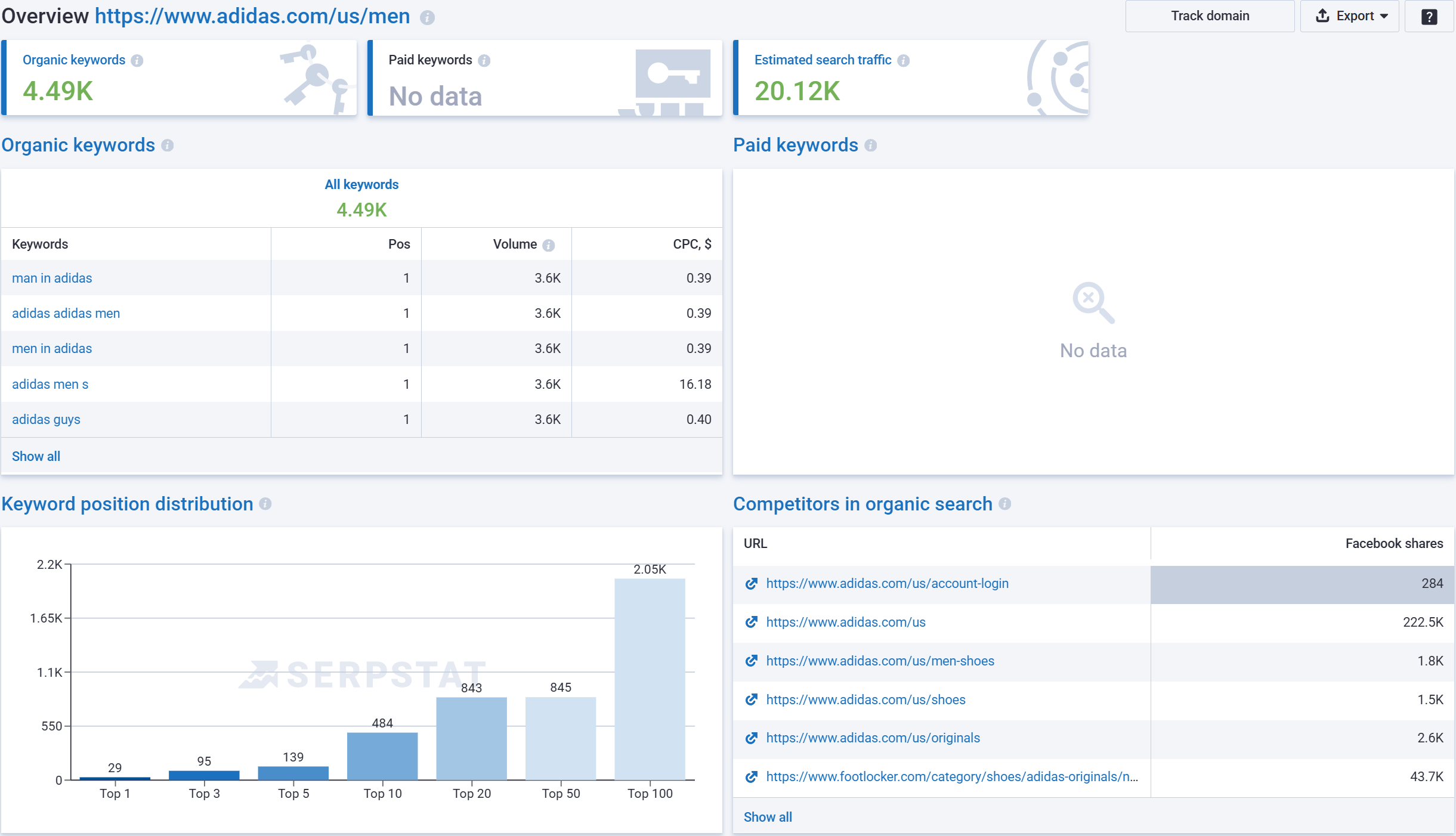
Serpstat URL-specific technical diagnostics
Monitoring Technical SEO Over Time
Serpstat’s Site Audit is not designed as a one-off diagnostic tool. Scheduled crawls allow teams to monitor technical health over time and detect regressions before they affect rankings.
This ongoing monitoring is especially useful for sites undergoing frequent content updates, migrations, or structural changes. Trend-based visibility into technical SEO aligns with best practices discussed in ongoing SEO maintenance strategies.
How Serpstat’s Site Audit Compares to Other SEO Tools
Serpstat’s audit capabilities are not designed to replace enterprise-grade crawling tools. Instead, they aim to provide actionable diagnostics without unnecessary complexity.
Compared to broader platforms, Serpstat:
- Focuses more on prioritization than exhaustive reporting
- Offers faster setup and interpretation
- Avoids overwhelming non-technical users
For many teams, this balance is preferable to deeper but slower audit solutions — especially when technical SEO is part of a broader workflow rather than a standalone discipline.
Strategic Takeaway: Technical SEO That Supports Execution
Serpstat’s Site Audit module is best viewed as a decision-support system for technical SEO.
It helps teams identify impactful issues, prioritize fixes, and track improvements over time without requiring advanced technical expertise. This makes it particularly effective for teams that need technical SEO insights to feed into broader optimization strategies.
If technical SEO needs to be actionable rather than overwhelming, Serpstat’s site audit delivers a practical balance.
Rank Tracking in Serpstat: Measuring What Actually Matters
Rank tracking in Serpstat is built around clarity and consistency, not excessive granularity. The goal is to track keyword performance accurately across locations and devices without introducing unnecessary complexity.
Serpstat allows tracking keywords at the domain, subdomain, or URL level, making it suitable for both broad visibility monitoring and page-specific analysis.
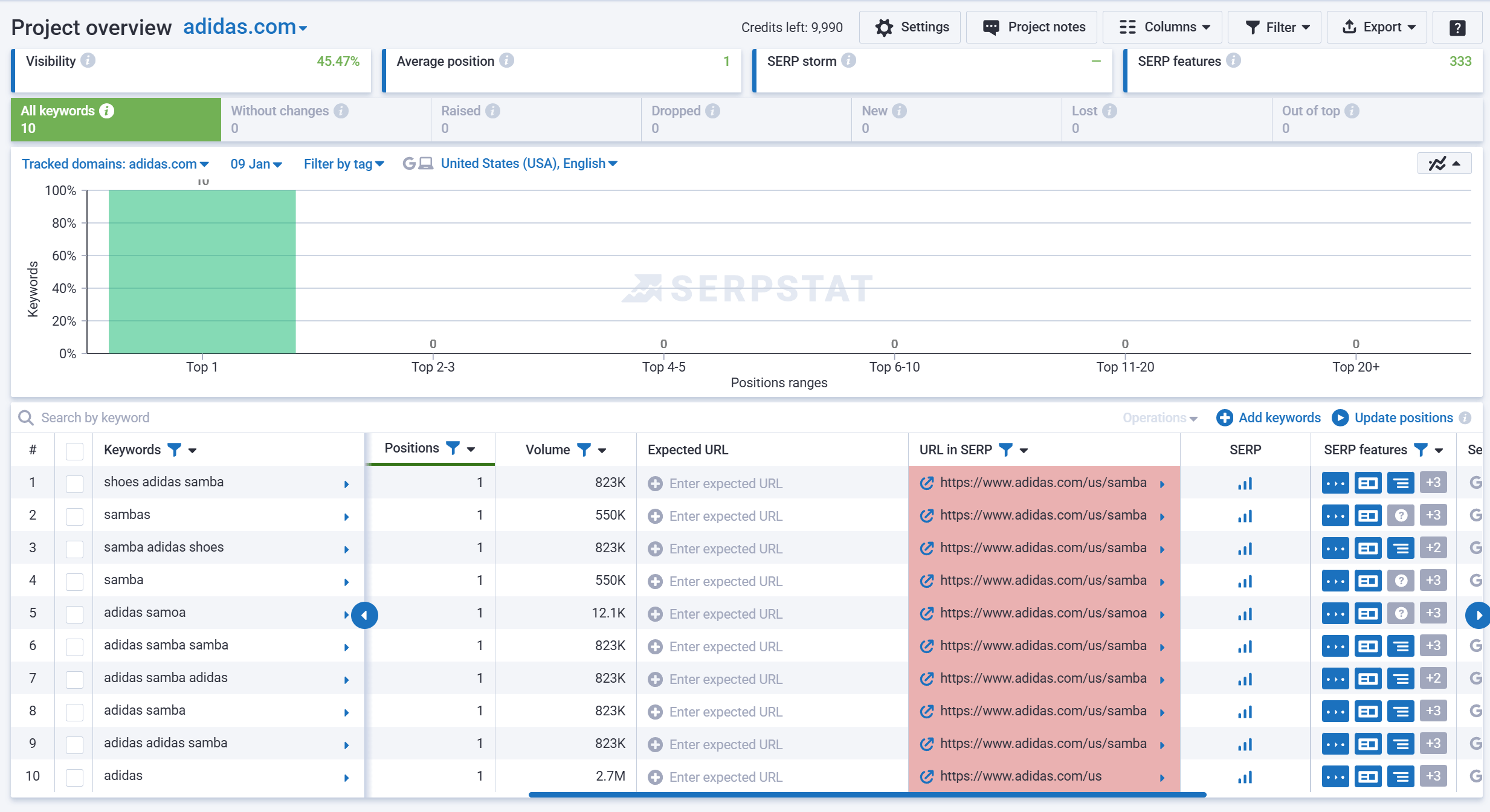
Serpstat Rank Tracker Overview
What Rank Tracking Covers Well
Serpstat’s rank tracker is especially effective for:
- Monitoring keyword movement over time
- Tracking performance across different regions
- Identifying volatility after algorithm updates
- Measuring visibility trends instead of isolated rankings
Position changes are clearly visualized, making it easy to spot patterns rather than reacting to daily fluctuations.
Serpstat Rank Tracker for a Selected Keyword
What the Rank Tracker Is Best Used For
Serpstat’s rank tracking is particularly effective for:
- Monitoring SEO progress over weeks and months
- Detecting visibility shifts after content updates or technical changes
- Comparing performance across regions
- Identifying patterns rather than reacting to daily noise
This approach aligns with long-term measurement principles discussed in SEO performance tracking guide.
Reporting and Exports
Serpstat’s reporting tools are built for clarity and portability. Reports can be generated for keyword rankings, site audit results, competitor comparisons, and visibility trends, then exported for internal reviews or stakeholder updates.
Rather than competing with enterprise BI platforms, Serpstat concentrates on practical reporting — the kind that helps teams understand performance and act on it, without getting distracted by visual polish.
Serpstat Pricing in 2026: Transparent and Predictable
One of Serpstat’s strongest differentiators is pricing clarity. Unlike many enterprise platforms that gate core features behind high-tier plans, Serpstat provides access to essential SEO functionality at comparatively accessible price points.
Note: Prices below reflect publicly listed monthly pricing when billed annually as commonly advertised. Actual pricing may change based on promotions or billing cycles.
| Plan | Monthly Price (Annual Billing) | Best For |
|---|---|---|
| Lite | ~$59 / month | Small sites, solo SEO workflows |
| Standard | ~$119 / month | Growing teams, multiple projects |
| Advanced | ~$239 / month | Established SEO teams, higher limits |
| Enterprise | ~$399 / month | Large teams needing scale and API access |
Across plans, Serpstat includes keyword research, competitor analysis, site audits, and rank tracking, with limits increasing predictably rather than feature access being removed.
For teams focused on SEO ROI rather than tool sprawl, Serpstat’s pricing model is deliberately hard to ignore.
Pros and Cons of Serpstat
Pros
- Strong value for money
- Clear, fast workflows
- Conservative keyword difficulty metrics
- Easy to onboard new users
- Predictable pricing structure
Cons
- Smaller backlink index than premium tools
- Limited PPC and paid media depth
- Fewer AI-driven automation features
- Not designed for enterprise-scale reporting
- Less suitable for paid-search-heavy teams
These trade-offs are intentional and reflect Serpstat’s focus on core SEO execution, not marketing-suite dominance.
Serpstat vs Other SEO Platforms
Serpstat is often compared with platforms like Semrush, but the comparison only makes sense when needs are clearly defined.
Serpstat is not built to cover every marketing channel. It is built to support:
- keyword research grounded in feasibility,
- competitor analysis tied to real SERPs,
- technical SEO monitoring,
- and rank tracking that supports long-term strategy.
For teams whose primary objective is organic search performance, Serpstat frequently proves more efficient — both operationally and financially.
Social Proof: How Serpstat Is Viewed Externally
Feedback from public SaaS review platforms and SEO communities shows consistent themes.
The recurring sentiment is that Serpstat delivers what it promises, without unnecessary complexity.
Frequently Asked Questions
Is Serpstat suitable for long-term SEO strategies?
Yes. Serpstat supports ongoing keyword tracking, competitor monitoring, and technical audits, making it suitable for sustained SEO programs.
How accurate is Serpstat’s data?
Serpstat’s metrics are considered conservative but reliable, particularly for keyword difficulty and competitive analysis.
Can Serpstat replace more expensive SEO tools?
In many SEO-focused workflows, yes. For teams that do not require deep PPC or enterprise reporting, Serpstat often covers all essential needs.
Is Serpstat beginner-friendly?
Yes. Most features are accessible without extensive onboarding, which reduces friction for new users.
Final Verdict: Does Serpstat Make Sense in 2026?
Serpstat succeeds because it stays focused.
It prioritizes actionable SEO data, realistic metrics, and predictable costs, rather than trying to be an all-in-one marketing ecosystem. For teams where organic search is a core growth channel, this focus is a strength, and certainly not a limitation.
If your SEO strategy values efficiency, clarity, and long-term execution, Serpstat is a platform worth committing to in 2026.